
Loitering Munitions: Definition, Law and European Procurement
What a loitering munition is, how it differs from drones and missiles, and how international humanitarian law, export control and European procurement apply.

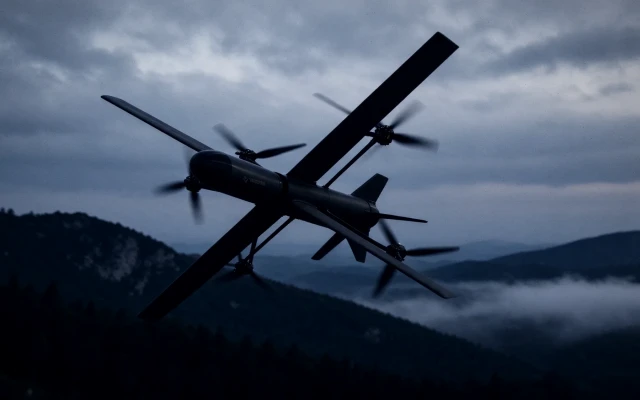
A loitering munition is an unmanned aircraft with an integrated warhead that can wait in an area before a decision is made to use it. Bard College’s Center for the Study of the Drone describes it as designed to engage beyond-line-of-sight ground targets, to remain airborne until the targeter decides when and what to strike, and to detonate on impact rather than be recovered. That persistence is what separates it from a conventional missile, and the expendable warhead is what separates it from a reconnaissance or armed drone.
This article covers the policy and procurement view only: definitions, how the category differs from neighbouring systems, the legal framework, and what European buyers are doing. It contains no design, targeting or employment detail. Information is current as at 9 November 2026.
What a loitering munition is
The terms “loitering weapon”, “loitering munition”, “one-way attack drone” and, in popular usage, “kamikaze drone” overlap heavily. Policy documents prefer “loitering munition” or “loitering weapon” because the term describes a function rather than a nickname.
NATO’s Munitions Safety Information Analysis Center, in a February 2024 publication, describes them as hybrids with both missile and unmanned aircraft characteristics: long endurance, intelligence, surveillance and reconnaissance capability, non-deterministic trajectories and, for some systems, retrievability or reuse.
The category is wide. A 2025 study from Israel’s Institute for National Security Studies describes a family with launch ranges from a few kilometres to thousands of kilometres and warheads of roughly 3 to 50 kg. It also notes that targets may be pre-designated or selected in real time by operators. For procurement purposes, “loitering munition” is therefore a family of capabilities, not one product type.
How the category works in general terms
Public descriptions of fielded systems show the general pattern. The U.S. Army’s ODIN database entry for the Israeli Harop (reviewed 2024) states that it is launched from a ground launcher, flies autonomously to a programmed holding area, reports status over a two-way data link and lets a human operator select a target using video. The same entry says the operator can abort an attack and, if necessary, re-attack with the same munition.
Three features follow from this pattern and matter to policy:
- Persistence. The aircraft can remain over an area, so the decision to use force can come after launch.
- A sensor and data link. Video or other sensing, plus communications, allows a person to supervise, although guidance methods vary. INSS notes that GNSS, electro-optical, radar-homing, laser or anti-radiation guidance are used in different combinations.
- An integrated warhead. The aircraft is the munition, which is why recovery is the exception.
Many are small and portable. Bard notes that portable systems give infantry guided precision munitions and can offer greater precision than a mortar.
How they differ from drones, cruise missiles and other guided weapons
The distinction matters in procurement, because it determines which safety, legal and budget frameworks apply.
| Characteristic | Reconnaissance or armed drone | Loitering munition | Cruise or guided missile |
|---|---|---|---|
| Recovery | Normally recovered and reused | Normally expendable, some can abort or be recovered | Expendable |
| Warhead | None, or carried as an external payload | Integrated | Integrated |
| Time over area | Long | Long, searches or waits | Short flight to a set point |
| Attack decision | Separate weapon release | Can be taken after launch | Normally taken before launch |
The University of Southern Denmark study of May 2023 says loitering munitions blur the line between drone and missile: unlike many missiles, they can stay over an area, permit a later decision and in some cases be aborted before detonation. Bard draws the contrast with ordinary drones, which are generally intended to be recovered.
The persistence gap with older missiles is large. Brookings (2021) contrasts the HARM anti-radiation missile, described as having about 4.5 minutes and roughly 55 miles of flight, with the Harpy, which could search for 2.5 hours and travel more than 300 miles.
Cost is the other axis. An independent 2024 study of the Shahed-136, published through SCIRP, reports that Shahed-type systems are slower, carry substantially less payload and are easier to intercept than cruise missiles, but are cheaper and demand less launch logistics. The study presents cost asymmetry as the main rationale, with such systems complementing rather than replacing missiles.
A short history
The concept began as an answer to air defences. The Bulletin of the Atomic Scientists (2023) traces it to the U.S. DARPA AXILLARY effort begun in early 1973, which sought low-cost explosive-carrying drones that would wait for radar emissions. It reports that AXILLARY and successor programmes produced no operational system but likely contributed to Israel Aerospace Industries’ Harpy in the late 1980s.
Brookings explains that the anti-radiation concept was influenced by Wild Weasel missions, where an unmanned platform could search for air-defence radars while reducing the risk to crewed aircraft. Bard identifies the Harpy, unveiled in the early 1990s, as intended for radar installations and mobile missile launchers.
Roles have since broadened. According to Brookings, loitering munitions now cover attacks once carried out by aircraft or artillery, and portable systems for units such as special forces. The older specialised role has become one use among several.
Legal framework: international humanitarian law
The central legal point is the one between a category of weapon and a particular use of it. A 2025 article in Paragraf, from the University of Łódź, concludes that international humanitarian law does not explicitly prohibit loitering munitions. Their use is governed by distinction and proportionality, and Articles 35 and 36 of Additional Protocol I constrain means and methods of warfare and call for the assessment of new weapons. A loitering munition is not automatically unlawful, but a specific employment can be if it cannot satisfy distinction, proportionality or precautions.
Where autonomy enters, the ICRC’s April 2016 views to the Convention on Certain Conventional Weapons are the standard reference. The ICRC states that obligations under the law cannot be transferred to a machine: human beings remain responsible for compliance and accountability, including when autonomous weapon systems select and attack targets. It also lists the factors relevant to assessing such use: task, target type, operating environment, movement, duration, adaptability, reliability, vulnerability to malfunction or hacking, and the possibility of human supervision or deactivation.
For a procurement team, these factors translate into reviewable questions about any system: what the human supervisor can see, when the human can intervene, and what happens when the data link is lost. Vaubren’s own position on human control is set out on its responsible autonomy page, and the wider framework of control levels is covered in its guide to UAV autonomy levels.
Risks that procurement and safety authorities raise
NATO’s February 2024 publication says the hybrid character of loitering munitions challenges existing safety-and-suitability programmes, including environmental, lifecycle, arming, software and electronics safety assessments. It adds that those programmes do not fit the category well and that no known loitering munition was developed under a conventional airworthiness-certification requirement. For buyers, this means assurance evidence has to be built deliberately.
On the autonomy side, Bard identifies risks from automated target recognition: software errors, insufficient human oversight, accountability gaps and possible failure to distinguish intended targets. The Southern Denmark study adds that sensor-based targeting can heighten uncertainty about where, when and against whom force is used, which can make human control more nominal than meaningful.
Export control considerations
Export of loitering munitions is a licensing matter decided by each exporting state. Complete systems and many components fall under national military or dual-use control lists, and the decision rests on the end-user, the destination and the assessed risk of diversion or misuse. Specific requirements differ by country and change, so exporters and buyers should consult the licensing authority of the state concerned, such as the Export Control Joint Unit in the United Kingdom, rather than rely on a general summary. Reporting on government-to-government sales shows the scale involved: media coverage of a June 2024 U.S. notification for Taiwan, reported by The Defense Post, listed 720 Switchblade 300 systems and 101 fire-control systems at an estimated total of $60.2 million, plus 291 ALTIUS 600M-V systems at an estimated $300 million.
European procurement trends
European interest has moved from evaluation to programmes. The French Colibri effort was reported by Shephard in March 2023 as seeking a fixed-wing system with 40 minutes’ endurance, a 5 km search-area reach and a target unit cost of €20,000. In Germany, Army Recognition reported that the Bundestag budget committee authorised an initial €540 million package on 25 February 2026 for medium-range loitering munitions, with a focus on the German brigade in Lithuania and Helsing and Stark Defence linked to the first tranche.
Three patterns stand out:
- Lower unit cost as a design target. The Colibri figure is a stated goal, not a delivered price.
- Parliamentary oversight. Large purchases are tied to budget committee approval and capped spending.
- Pairing with defence. As attack drones multiply, so does the need for detection, interception and electronic protection, which is why counter-drone programmes grow alongside them.
Programme details change with each budget cycle, so check the relevant ministry before relying on any figure above.
The counter-drone side of the same problem
Any force that fields or faces one-way attack aircraft also needs to find and stop them. Vaubren Systems, a European defence technology company incorporated in Bulgaria, develops systems for that side of the problem and for surveillance and logistics. It does not present itself as a maker of loitering munitions. Its work is organised around three missions: counter-drone, surveillance and logistics.
The systems relevant to this topic are:
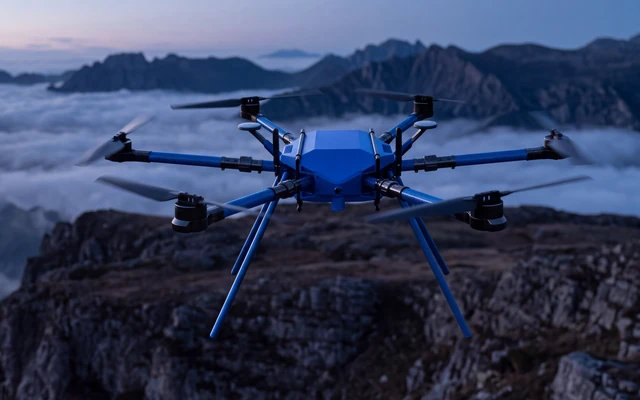
- Ravelin, a fast, printed counter-drone interceptor, a prototype in testing. The buyer’s view of the class is explained in Vaubren’s guide to drone interceptors.
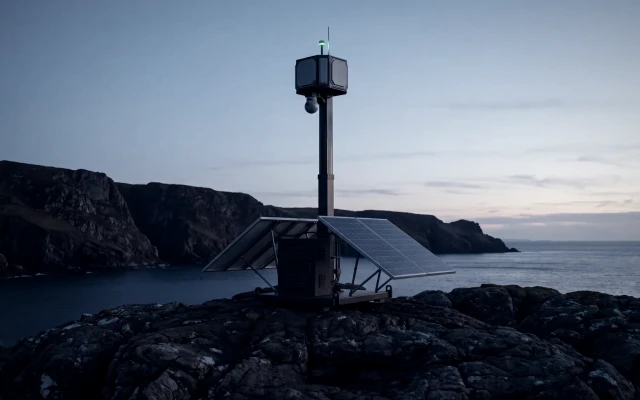
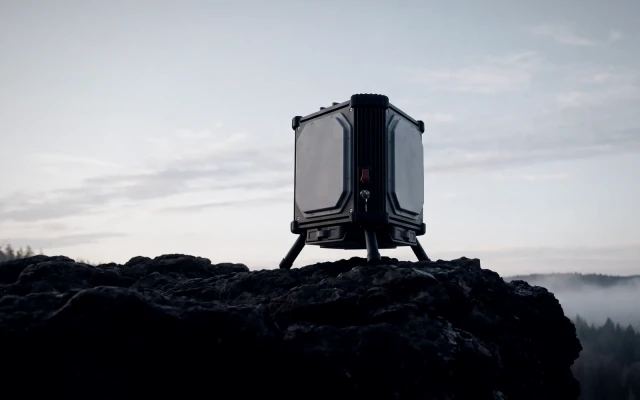
- Bartizan, a self-powered sensing tower with radar, radio detection and cameras for coasts, ports, borders and critical sites, a concept in development. For the underlying sensing methods, see drone detection radar and drone detection systems.
- Stillpoint, a portable counter-drone electronic warfare unit, a concept in development. The background is in Vaubren’s explainer on electronic warfare.
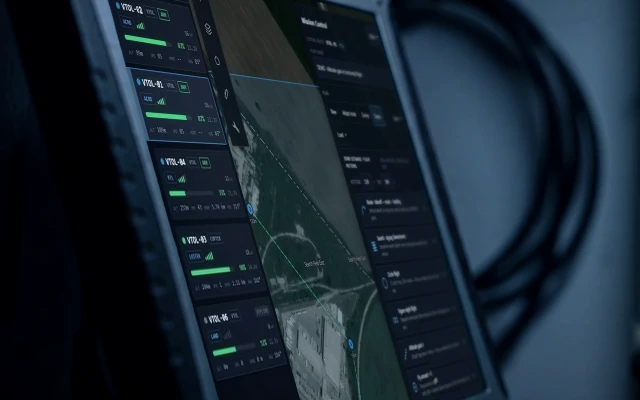
- Redoubt, command and control software that plans missions, shows one live picture and keeps a person in command of every use of force, in development. See also the guide to command and control software for unmanned systems.
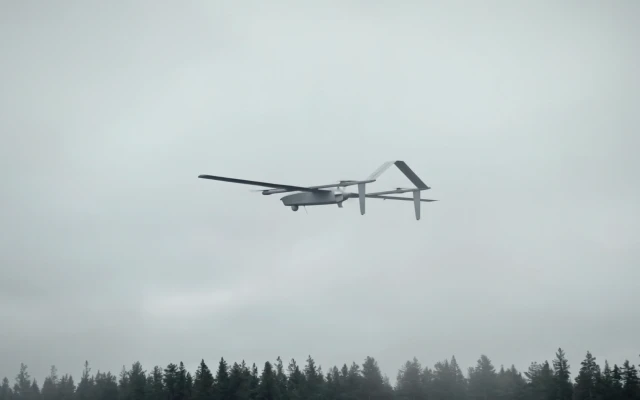
Vaubren also develops Glacis, a long-range vertical take-off aircraft for border, coastal and critical-site watch (a prototype in testing), and Caisson, an uncrewed heavy-lift aircraft for resupply (a tested prototype). Vaubren designs aircraft, sensing, electronic warfare and command software as one integrated system, so that one live picture covers all three missions with a person in command of every use of force. Starfort, Vaubren’s planned development, testing and manufacturing campus in Bulgaria, would keep design, software and manufacturing within one company inside the EU.
The full approach to the mission is described on the counter-drone page and in the overview of counter-drone systems in Europe. Procurement and capability teams assessing the defensive requirement can start with the Vaubren Armory to see how the systems fit together.
How to assess any loitering munition programme
Whatever the supplier, a procurement or policy team can structure its review around the same questions, drawn from the sources above:
- Definition and category. Is the system a one-way weapon, a recoverable drone or a hybrid? NATO’s analysis shows that this changes the safety framework.
- Human control. At which stages can a person supervise, abort or deactivate? The ICRC factors give a ready checklist.
- Legal review. Has the weapon been assessed under the Article 36 obligation, and is there a record of that review?
- Assurance evidence. Given NATO’s observation on airworthiness and safety programmes, what evidence replaces them?
- Export position. Which licensing authority controls the transfer, and are end-user conditions defined?
- Defensive posture. How will detection, interception and electronic protection be integrated with the same command picture?
FAQ
What is the difference between a loitering munition and a drone?
A drone is normally reusable and either carries sensors or releases a separate weapon. A loitering munition has an integrated warhead and is normally expendable, although some systems can abort or be recovered. The shared features are flight, sensors and a data link.
Are loitering munitions legal?
International humanitarian law does not explicitly prohibit them. Each use must satisfy distinction, proportionality and precautions, and states must review new weapons under Article 36 of Additional Protocol I. The ICRC maintains that humans remain responsible for compliance.
Are loitering munitions the same as cruise missiles?
No. Both are guided and expendable, but a loitering munition can remain over an area and permit a later decision, while many missiles follow a shorter flight to a set point. INSS describes them as the younger siblings of cruise missiles, which reflects the relationship without making them identical.
Does Vaubren make loitering munitions?
No. Vaubren Systems develops Ravelin, Glacis and Caisson as aircraft, Redoubt as command software, Bartizan for sensing and Stillpoint for electronic warfare, focused on counter-drone, surveillance and logistics missions.
Which European countries are buying them?
Public reporting shows France pursuing the Colibri programme and Germany approving an initial €540 million package in February 2026. Programmes and budgets change, so consult the relevant ministry for current positions.
Sources
- Loitering Munitions, Bard College Center for the Study of the Drone (2017)
- L-297 Loitering Munitions, NATO MSIAC (February 2024)
- Loitering Munitions (Explosive UAVs), INSS (2025)
- Harop entry, U.S. Army ODIN (2024)
- Loitering Munitions and Unpredictability, University of Southern Denmark (May 2023)
- Loitering munitions preview the autonomous future of warfare, Brookings (2021)
- Cheaper Precision Weapons: Shahed-136 study, SCIRP (2024)
- One way attack, Bulletin of the Atomic Scientists (2023)
- Loitering Munitions in Light of International Humanitarian Law, Paragraf (2025)
- Views of the ICRC on autonomous weapon systems (April 2016)
- Nexter selected to develop loitering munition for France, Shephard (March 2023)
- US Approves Arming Taiwan With $360M in Loitering Munitions, The Defense Post (June 2024)
- Germany Approves €540M Loitering Munition Procurement, Army Recognition (2026)
About Vaubren
Vaubren is a European defence technology company developing aircraft, command software, sensing and electronic warfare as one integrated system, with a person in command of every use of force.
More insights
European UAV Procurement in 2026: Routes, Funding and EntryHow European governments buy unmanned aircraft and counter-drone systems in 2026: EDIP, SAFE, NATO's marketplace, national tenders and what new suppliers need.Aerospace Supply Chains in Bulgaria: Who Makes WhatHow Bulgaria's aerospace and defence supply chain is built: manufacturers, research centres, export controls, logistics and what partners should check.Defence Engineering Careers in Europe: Roles, Routes and PayDefence engineering careers in Europe: the roles that exist, the skills employers want, entry routes from apprenticeships to graduate schemes, and pay.