
Aerospace Supply Chains in Bulgaria: Who Makes What
How Bulgaria's aerospace and defence supply chain is built: manufacturers, research centres, export controls, logistics and what partners should check.

Bulgaria’s aerospace supply chain has two broad parts. The first is a long-established defence industrial base of small arms, ammunition, optics, communications and maintenance, repair and overhaul (MRO) services. The second is a newer civil aerostructures and avionics cluster around Plovdiv and Sofia that supplies Airbus, Embraer, Dassault and Boeing programmes. Unmanned systems sit between the two, and they are where the two parts increasingly meet. This article describes both parts, the research base behind them, the rules that govern export and procurement, and the practical factors a European defence or aerospace organisation should weigh. Information is current as of November 2026 unless a different date is given.
Vaubren Systems, a European defence technology company incorporated in Bulgaria, publishes this guide for defence and aerospace organisations planning work in the country.
How the supply chain is structured
The structure is best understood in layers. At the base sit legacy defence manufacturers and MRO providers. Above them are specialist small and medium-sized enterprises (SMEs) in electronics, optics and engineering services. Alongside them are foreign-owned plants that serve global civil aerospace programmes. A thin research layer, made up of institutes, universities and company R&D departments, connects them.
The Bulgarian Defence Industry Catalogue 2019 describes one example of how the layers join up. The Cluster Aero-Space Technologies, Research and Applications (CASTRA) is presented there as an independent, industry-driven consortium of high-technology SMEs, academic institutions and other stakeholders. Its purpose is to develop technologies, products and services across aerospace supply and value chains, including defence.
The EDA’s Central and Eastern Europe report (2016) gives the wider picture. It characterises Bulgaria’s defence industry as a medium-sized producer of small arms and light weapons, ammunition, communications, optics and military equipment, together with MRO services. It reports around 25,000 workers across 14 core companies that belong to the Bulgarian Defence Industry Association. These are 2016 figures, and a reader building a current supplier map should confirm them with the association and the Ministry of Economy and Industry.
Civil aerostructures and avionics in Plovdiv and Sofia
The most visible aerospace growth in Bulgaria has been in civil programmes. Three plants show how that supply chain works.
Latecoere in Plovdiv
Latecoere’s own announcement states that the Plovdiv plant was inaugurated on 12 September 2018 as an assembly plant for avionic racks and aerostructures sub-assemblies. The announcement gave a total investment budget of around €15 million until 2020, capacity for over 200,000 hours of annual production by the end of 2019, and training for around 200 people, in line with the Airbus A350, A380, A400M and A320 programmes.
A Capital.bg report from April 2025 adds the later position. The plant in the Trakia Economic Zone had grown from 5,000 sq m to 9,000 sq m and employed 447 people by January 2025. It produces doors, fuselages and wings, plus wiring, avionics and electronic systems. By customer share, the report lists Airbus at 46.4%, Embraer at 14.3%, Boeing at 6.9% and Dassault at 6.7%.
Woodward Bulgaria in Sofia
The same Capital.bg report says Woodward Bulgaria in Sofia employs over 300 people and has produced electronic modules and components for aviation since 2016. It also reports a licence for the export and import of defence-related products received in October 2021 and valid until 2026, with military components transferred from the United States expected to continue at least until 2030. Because licence validity changes, any partner should check the current status directly with the Bulgarian authorities.
Liebherr-Aerospace in Plovdiv
Xpert.digital reported in July 2026 that Liebherr-Aerospace has announced a new, considerably larger production facility in Plovdiv. It is intended to make primary flight control actuators, drive shafts for high-lift systems and landing gear actuation systems, with Airbus and Embraer as end customers. This is a company-blog report, so the investment details should be confirmed with Liebherr before they are used in planning.
Taken together, these plants show a pattern: foreign-owned, quality-certified production sites feeding global prime contractors, with Bulgarian engineers and technicians doing the work. For defence integrators, the relevance is the skills pool and the quality culture, not any direct link to military programmes.
Unmanned systems and defence-specific capability
Unmanned aircraft work in Bulgaria is more recent and more varied. The sources show three different models.
| Organisation | Role in the chain | What the source states | Source date |
|---|---|---|---|
| Terem Holding | State-owned MRO and manufacturing | Received a licence from Rarog Aerospace at HEMUS 2024 to manufacture quadcopter FPV UAVs; aims to build a hub of local suppliers for small-drone parts | June 2024 |
| LASA Engineering, Kazanlak | Airborne platform modification | Offers upgrades to reconnaissance and surveillance platforms, manned and unmanned, with its own airfield, production and test facilities including a 2.2 km runway | 2019 |
| Telesys and Kontrax consortium | Systems integration and delivery | Delivered two unmanned aerial systems to the Bulgarian army under a contract worth just under 9 million levs, excluding VAT, signed in July 2023 | June 2025 |
The Janes report from June 2024 on HEMUS 2024 in Plovdiv is useful for supply chain analysis because of its emphasis on local sourcing. It quotes Terem’s head of research and development, Luben Yovchev, on the importance of supply chain security, and says Terem is working to create a hub of local suppliers to produce the parts needed for small drones domestically. A domestic parts base matters to any integrator, because an uncrewed system is only as available as its least available component.
The LASA Engineering entry in the 2019 catalogue describes turnkey airborne intelligence, surveillance and reconnaissance (ISR) solutions integrated into fixed-wing and rotary-wing platforms. This illustrates a different supply chain role: not building airframes from scratch, but integrating payloads and mission systems onto existing platforms.
The Capital.bg report from June 2025 on the Telesys and Kontrax consortium gives specifications for the delivered aircraft: around 50 kg each, up to 4,500 m altitude and up to 10 hours of flight without refuelling, with one drone in each trio carrying a radar for ground surface monitoring.
Research institutions and clusters
The EDA report identifies the Institute of Metal Science, Equipment and Technologies and Kazanlak Science Research Technology Engineering as major Bulgarian research centres, alongside R&D departments inside private defence companies. This matters for supply chains because applied research in materials, metallurgy and engineering feeds directly into component quality.
Clusters such as CASTRA offer a second route. Their model, as the 2019 catalogue describes it, is to bring SMEs and academic partners together so that they can bid for and deliver work that none could take on alone. For a foreign manufacturer looking for a development partner, a cluster can be a quicker route to several capabilities than negotiating with each firm separately.
The skills base is wider than the institutes. Escatec’s June 2026 overview of electronics manufacturing in Bulgaria reports more than 20,000 STEM graduates a year, with technical universities in Sofia, Plovdiv and Varna offering expertise in electronics, mechatronics and automation. These skills sit behind embedded systems, sensing and control software, the disciplines that unmanned aircraft and command software depend on.
Export control, procurement and security requirements
Anyone planning to buy from, or build with, Bulgarian suppliers should start with the regulatory framework. The Schoenherr regulatory overview for Central and Eastern Europe (2025) sets out the main points.
- Export control. Defence-related products and dual-use items are regulated by the Ministry of Economy and Industry, under the Export Control of Defence-related Products and Dual-Use Items and Technologies Act. That Act covers export, import, transfer, transport, carriage and transit, and its controls are aligned with EU and international regimes.
- Licensing. Export and import of defence-related products may be carried out by persons registered under the Bulgarian Commerce Act, after they obtain a licence from the Defence Industry and Supplies Security Interdepartmental Board at the Council of Ministers.
- Procurement. Defence procurement is regulated in part four of the Public Procurement Act. The key difference from civil procurement is that the ordinary rules can be disapplied on specific grounds, including national security information, intelligence activities, and awards made within a cooperation programme based on research and development carried out jointly by at least two Member States.
For readers working across borders, Vaubren’s explainer on dual-use technology and export rules sets out how the dual-use category works in the European context. A supply chain that crosses several jurisdictions should map licence requirements for each component before design decisions are fixed, not after.
Quality certification is a separate matter. Escatec reports that the presence of tier-one automotive, aerospace MRO, medical and defence manufacturers has created an ecosystem of ISO 9001, ISO 13485, ISO 14001, IATF 16949 and EN9100 certified operations. Certification held by one supplier does not transfer to its sub-tier, so each tier should be checked individually.
Cooperation, programmes and industrial partnership
The 2019 catalogue states that the Ministry of Economy strongly encourages cooperation between Bulgarian and foreign companies, and describes industrial partnership as a vital tool for preserving and developing key capabilities. The EDA report adds a record of intergovernmental cooperation: a 2015 defence industrial cooperation agreement with Poland, which opened the way for Polish firms to maintain Bulgaria’s MiG-29 fighters; annual intergovernmental consultation mechanisms established with Romania in 2011; and memoranda of understanding with South Korea, Vietnam, Israel and Turkey.
European funding is the other main route. Vaubren’s guide to the European Defence Fund explains the purpose, budget and calls, and its piece on defence R&D partnerships in Europe covers how consortia are typically formed. The joint-development ground in the Public Procurement Act mentioned above is one reason that cross-border R&D programmes and national procurement rules need to be read together.
Costs, logistics and workforce factors
The evidence on location factors comes largely from commercial commentary, so it is best read as context rather than as a guarantee.
- Transport. Plovdiv lies on an east-west corridor with motorway access to Istanbul and, via Sofia, to Serbia and Central Europe, according to Xpert.digital. Escatec reports that Bulgaria sits on Pan-European Transport Corridors IV, VII, VIII, IX and X, with road transit to Germany of about two days.
- Costs. Xpert.digital (June 2026) reports a corporate tax rate of 10 percent and a flat income tax rate of 10 percent, and says rent, electricity and water cost significantly less than in Germany. Wages remain below the Western European average, although the gap has narrowed.
- Delivery reliability. The same article says companies report shorter delivery times and better reliability compared with distant Asian sources, while limited rail capacity and insufficiently digitised customs processes at external borders remain risks to plan for.
The EDA’s 2016 report also lists internal barriers that a prospective partner should understand: a limited culture of cooperation and trust between government and industry actors, limited understanding of Western defence markets and international procurement, and a loss of qualified personnel after past economic difficulties and limited domestic demand. Since 2016 the picture has changed, with new plants and investment announcements, but these are the issues that due diligence interviews with Bulgarian suppliers should still test.
A practical checklist for supplier selection
- Define the layer you need. Legacy defence production, civil-grade aerostructures, electronics assembly and payload integration are different suppliers with different customers.
- Confirm licences. Check the validity of export and import licences with the Bulgarian authorities, not with the supplier alone.
- Map certification by tier. Request EN9100 or equivalent status for each tier that touches flight hardware.
- Check component origin. Ask where parts for sensors, batteries, motors and flight controllers come from, and whether any are subject to dual-use controls.
- Plan logistics at the border. Customs clearance at external borders is a stated risk, so allow for it in schedules.
- Test the skills pool. Match required disciplines, such as embedded software or composites, against the regional universities and clusters named above.
Where Vaubren fits
Vaubren Systems is a European defence technology company incorporated in Bulgaria, founded by Rafael Zard. It develops aircraft, command software, sensing and electronic warfare systems for European defence across three missions: counter-drone, surveillance and logistics. Its systems are:
- Ravelin, a fast, printed counter-drone interceptor, a prototype in testing.
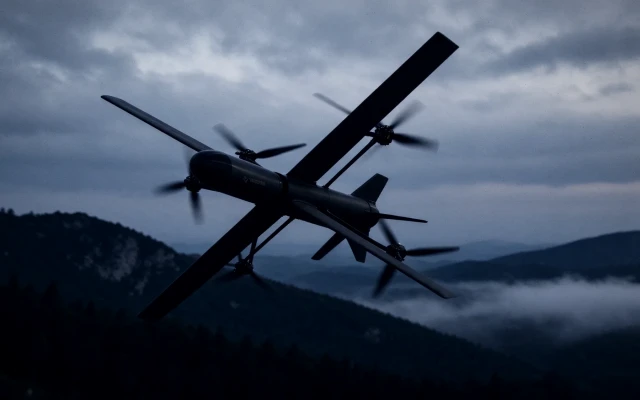
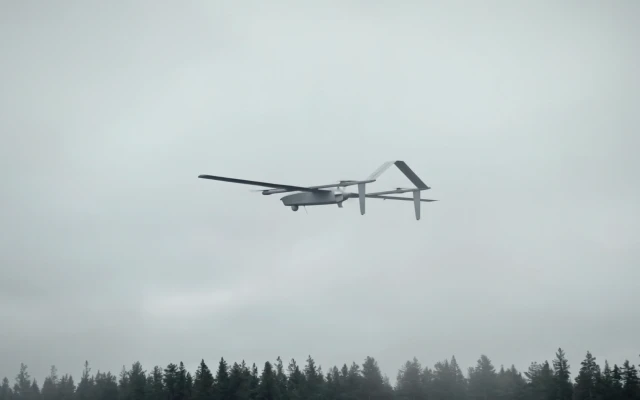
- Glacis, a long-range vertical take-off aircraft for border, coastal and critical-site watch, a prototype in testing. See the border and coastal surveillance page.
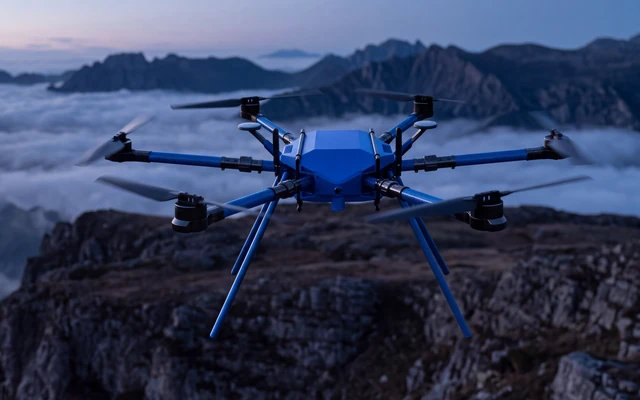
- Caisson, an uncrewed heavy-lift aircraft for resupply, a tested prototype.
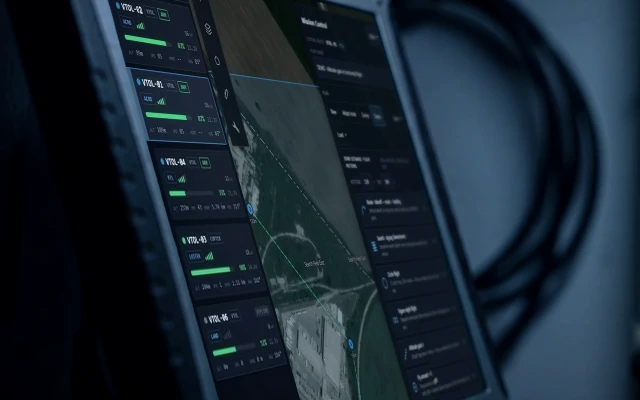
- Redoubt, command and control software that plans missions, shows one live picture and keeps a person in command of every use of force, in development.
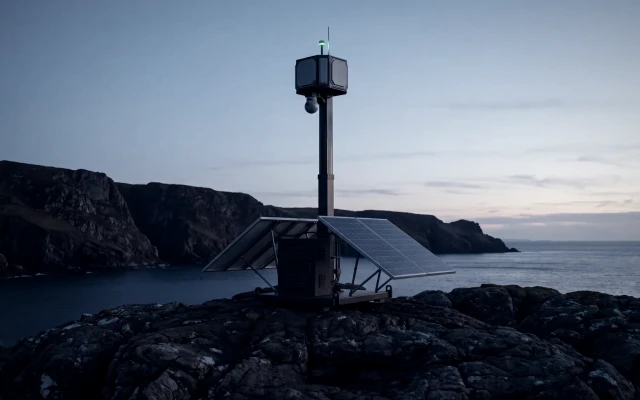
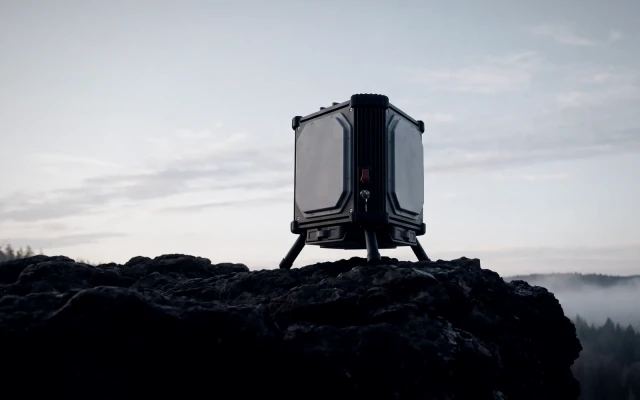
- Bartizan, a self-powered sensing tower with radar, radio detection and cameras, a concept in development.
- Stillpoint, a portable counter-drone electronic warfare unit, a concept in development.
Vaubren designs these as one integrated system rather than separate products. Its planned development, testing and manufacturing campus in Bulgaria, Starfort, is designed to bring that work onto one site. The company page gives background, the Vaubren Armory shows all six systems, and suppliers and partners can read the suppliers and supply chain page.
For readers working on the related operational questions, Vaubren has published guides to counter-drone systems in Europe and drone detection systems. Organisations that want to discuss development or integration partnerships can reach Vaubren through the contact page, and engineers can see open roles in Bulgaria on the careers page.
FAQ
How large is Bulgaria’s defence industry?
The EDA’s 2016 report described it as medium-sized, with around 25,000 workers spread across 14 core companies that belong to the Bulgarian Defence Industry Association. These figures are from 2016, so current employment should be confirmed with the association or the Ministry of Economy and Industry.
Which aerospace manufacturers operate in Bulgaria?
Latecoere in Plovdiv produces aerostructures and onboard electronics, and Woodward Bulgaria in Sofia produces electronic modules and components. Liebherr-Aerospace has announced a larger Plovdiv facility for flight control and landing gear actuation components. Defence-focused firms include Terem Holding and LASA Engineering.
What licences are needed to trade in defence products from Bulgaria?
Export and import of defence-related products requires a licence issued by the Defence Industry and Supplies Security Interdepartmental Board at the Council of Ministers, under an Act aligned with EU and international regimes. Dual-use items fall under the same Act. Anyone planning a transaction should take advice from the Ministry of Economy and Industry or a qualified Bulgarian lawyer.
Is Bulgaria a practical location for drone component supply?
The sources point to an electronics and mechatronics skills base, certified quality systems and road access to Germany in about two days. Terem Holding has stated an aim to build a local supplier hub for small-drone parts. Limited rail capacity and customs digitisation at external borders are risks that should be built into plans.
Sources
- Bulgarian Defence Industry Catalogue 2019
- EDA Central and Eastern Europe report, technical annex (2016)
- Latecoere opens new plant in Bulgaria (2018)
- Capital.bg: Woodward and Latecoere plants in Bulgaria (April 2025)
- Capital.bg: Telesis and Kontrax deliver Bulgarian drones to the army (June 2025)
- Janes: HEMUS 2024, Terem Holding in deal to build Ukrainian UAVs in Bulgaria (June 2024)
- Xpert.digital: Plovdiv and German SMEs (July 2026)
- Xpert.digital: Away from Asia (June 2026)
- Escatec: EMS in Bulgaria (June 2026)
- Schoenherr: CEE Regulatory Overview, Defence and National Security (2025)
About Vaubren
Vaubren is a European defence technology company developing aircraft, command software, sensing and electronic warfare as one integrated system, with a person in command of every use of force.
More insights
European UAV Procurement in 2026: Routes, Funding and EntryHow European governments buy unmanned aircraft and counter-drone systems in 2026: EDIP, SAFE, NATO's marketplace, national tenders and what new suppliers need.Defence Engineering Careers in Europe: Roles, Routes and PayDefence engineering careers in Europe: the roles that exist, the skills employers want, entry routes from apprenticeships to graduate schemes, and pay.NATO DIANA: How the Defence Innovation Accelerator WorksNATO DIANA explained from NATO's own sources: purpose, challenge programmes, accelerator sites, test centres, eligibility, funding and how companies apply.