



NATO DIANA: How the Defence Innovation Accelerator Works
NATO DIANA explained from NATO's own sources: purpose, challenge programmes, accelerator sites, test centres, eligibility, funding and how companies apply.

NATO DIANA, the Defence Innovation Accelerator for the North Atlantic, is the Alliance’s programme for finding dual-use deep technology and helping it reach military users. It runs competitive challenge calls, gives selected companies non-dilutive funding, and opens a network of accelerator sites, test centres, mentors and investors across NATO nations. This guide sets out what DIANA does, who can apply, what selected companies receive and how an application is assembled, using NATO’s own pages. Information is current as of 3 November 2026; DIANA revises its calls and figures each year, so the official pages govern the current position.
Vaubren Systems, a European defence technology company incorporated in Bulgaria, publishes this guide for procurement, partnership and industry readers.
What NATO DIANA is and what it is for
NATO describes DIANA as an organisation established to find and accelerate innovation that provides defence and security effects for the Alliance, while also supporting adoption. That second part matters. DIANA is not a research grant scheme that ends with a prototype: its stated mission includes the route to operational use, which is why it embeds military expertise in the programme.
The focus is on dual-use technology, meaning technology aimed at commercial markets that also has defence and security applications. NATO’s DIANA overview lists technological areas of interest that include artificial intelligence, autonomy, quantum technologies, biotechnologies and human enhancement, hypersonic systems, space, novel materials and manufacturing, energy and propulsion, and next-generation communications networks. Readers who want the regulatory side of the term can read Vaubren’s explanation of dual-use technology and export rules.
How DIANA differs from a conventional procurement route
DIANA does not buy finished systems in the way a national procurement agency does. It funds and supports development, connects companies with end users, and offers a route towards adoption. NATO describes the organisation as a connector that brings together accelerators, test centres and mentors, and engages investors and military end users directly, including through real-world operational exercises, as set out in its 2026 programme kickoff.
Challenge programmes: how the calls work
DIANA’s accelerator programmes are delivered through challenge calls. According to NATO’s DIANA overview, selected innovators receive non-dilutive grants and gain access to accelerator sites and test centres across the Alliance. Each call publishes a set of challenge problems, and applicants choose the one their technology addresses.
DIANA says it seeks to launch challenges yearly and posts calls on its website and social media. The timing therefore recurs, but the exact opening and closing dates change from one year to the next, so any company planning an application should check the current call page rather than rely on last year’s calendar.
The 2026 cohort
NATO announced its largest cohort to date for 2026. The programme kickoff of 3 February 2026 describes 150 innovators, and a December 2025 announcement said that, starting in January 2026, selected companies would receive contractual funding and gain access to DIANA’s expanding network. A later DIANA update of 2 September 2026 states that the 2026 cohort of 150 companies was selected from more than 3,600 proposals, and that 15 of them advanced to a Mission Track focused on adoption, with €300,000 in non-dilutive funding.
Those figures show the scale of competition: roughly one proposal in twenty-four reached the cohort, going by the two numbers NATO has published. They also show that DIANA has more than one stage, which the next sections describe.
Accelerator sites and test centres
The physical network is a central part of the offer. DIANA’s accelerator sites provide training, networking and business support, while its test centres are the laboratories, testbeds and field environments where technologies are tested, evaluated, validated and verified. NATO says test centres are available to innovators selected into challenge programmes.
The size of the network has grown, and different NATO pages give different figures because they were published at different times:
| Source and date | Accelerator sites | Test centres |
|---|---|---|
| NATO network update, 14 March 2024 | 23 (up from 11) | 182 (up from 90), across 28 Allied countries |
| DIANA support FAQ | Not stated | Around 180 |
| DIANA home page | Over 200 accelerator sites and test centres combined; innovators in the Challenge Call may access 16 accelerator sites | Included in the combined figure |
| NATO kickoff, 3 February 2026 | Not stated | An ecosystem including 200 test centres |
Readers should treat these as dated snapshots and not as a single current count. For procurement or partnership due diligence, the useful point is that the network spans Allied countries and covers many technology types, so a company can usually test close to its own base.
Who can apply
DIANA’s challenge call Q&A states the company requirements plainly. A company must be incorporated, headquartered and have its principal place of business in a NATO nation, be majority owned and controlled by NATO nationals, and qualify to enter public contracts where it does business. Universities and individuals are not the usual applicants described there, so research organisations should read the call terms for their own situation.
Technology readiness and team size
DIANA generally looks for technologies with a defence application at around technology readiness level (TRL) 4 or above, often TRL 5 or 6. Its eligibility page adds that lower-TRL solutions with potentially disruptive impact will be considered. The Q&A also states that TRL and revenue are not assessed to determine eligibility.
On capacity, DIANA expects selected innovators to be able to take part in the six-month accelerator. Its ideal profile includes at least three full-time people involved, which the Q&A frames as a capacity expectation and not a strict exclusion rule.
What selected companies receive
According to DIANA’s support FAQ, selected innovators receive:
- €100,000 in contractual funding, paid before Accelerator Programme Phase 1, to support development during the first six months;
- business development support and access to a transatlantic pool of investors;
- access to around 180 specialised test centres;
- a network of business, defence, technical and legal mentors;
- exposure to end users and buyers across NATO.
The same page notes that innovators may seek additional funds through competitive processes for testing, evaluation, validation and verification. NATO’s 2026 kickoff describes an ecosystem with more than 600 mentors. On market access, DIANA says top performers gain exposure to government and military buyers in 32 Allied nations.
What the programme asks in return
Participation carries obligations. The FAQ states that accelerator programming includes mandatory travel to sites across the Alliance. DIANA’s terms and conditions of bidding say selected innovators are expected to work closely with NATO stakeholders and others to prepare a demonstration within six months of framework contract award. A company should therefore plan staff time and travel before applying, not after selection.
How to apply
The process, as described on DIANA’s how to apply page, has a small number of parts:
- Provide company information.
- Select the challenge problem the solution addresses.
- Submit a one-page Quad chart summarising the solution.
- Submit a four-page proposal.
Providing a DUNS number or US Unique Entity ID is optional at submission, but applicants must provide it before receiving a grant award, so it is sensible to register early.
Evaluation panels include DIANA team members, NATO science and technology experts, NATO defence and security end users, and trusted investors. The mix is informative: a proposal is read both for technical merit and for whether a military user could adopt it. Applicants should write for that audience, stating the operational need the technology meets and the evidence that it works, without relying on commercial claims alone.
Preparing a proposal: practical points
These are practical points drawn from the published requirements, not official NATO guidance:
- Map the technology to one challenge problem. A proposal that tries to answer several problems is harder to assess against the panel’s criteria.
- Show dual-use logic. DIANA’s remit covers technology with both commercial and defence applications, so the commercial path deserves as much space as the defence one.
- State readiness honestly. DIANA says TRL is not an eligibility test, so overstating maturity gains nothing and complicates later demonstration.
- Plan the demonstration. With a demonstration expected within six months of contract award, the proposal should already identify what will be shown and where.
- Check ownership and public contract eligibility early. These are explicit requirements and cannot be fixed within a call window.
From accelerator to adoption: Rapid Adoption Service and Mission Track
DIANA has added routes aimed at the gap between a successful pilot and a purchase. NATO’s December 2025 Rapid Adoption Service update explains that the model enables co-development, prototyping and fielding in operational settings before large-scale procurement or acquisition. After a successful demonstration, procurement or acquisition can occur without further competition. The 2026 kickoff describes the service as a streamlined pathway for military end users to test, validate, refine and procure new technologies.
The Mission Track, announced in 2026, is the adoption-focused stage that NATO describes in its 2 September 2026 update. Fifteen companies from ten Allied countries were selected, working in areas that include uncrewed vehicles, space, communications, cybersecurity and maritime defence. For industry readers, this is the clearest signal that DIANA now measures success by movement towards fielding, not by cohort size.
What DIANA means for European defence industry readers
DIANA sits alongside, not in place of, national procurement and European Union funding. It is a NATO route, open to companies from Allied countries, and its funding is modest per company compared with the cost of a full development programme. Its value lies in access: test centres in many countries, mentors, investors and military end users in one structure.
For established manufacturers and suppliers, it is also a way to find innovators to work with. Vaubren’s own guidance on defence R&D partnerships in Europe covers how integration partnerships are usually approached, and its page for suppliers and the supply chain sets out how it engages with industry partners.
Counter-drone, surveillance and logistics technologies fall naturally within DIANA’s autonomy and communications interests, though each call defines its own challenge problems and these change each year. Readers following those mission areas can read Vaubren’s overview of counter-drone systems in Europe for the sector context.
Vaubren’s work in context
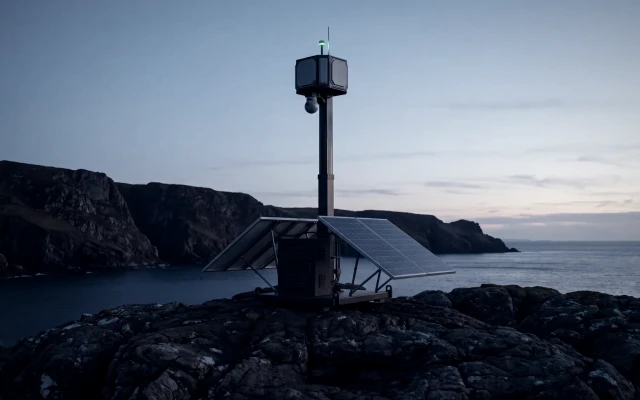
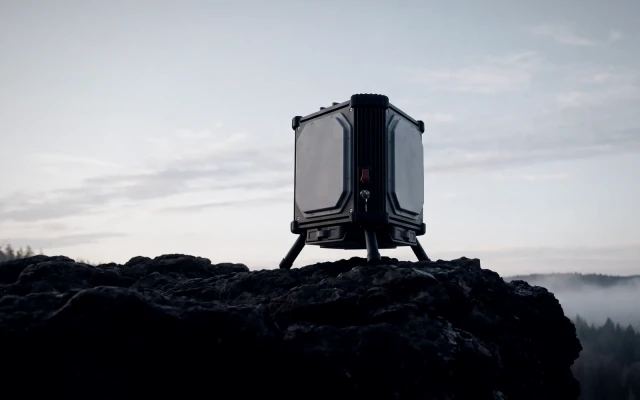
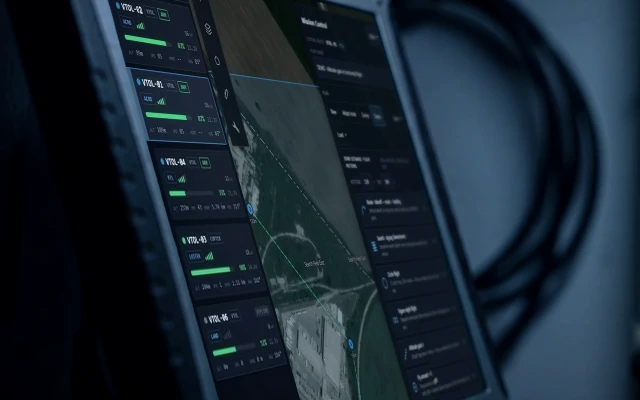
Vaubren Systems develops Ravelin, a printed counter-drone interceptor, and Glacis, a long-range vertical take-off aircraft for border, coastal and critical-site watch, both prototypes in testing. It also develops Caisson, a tested uncrewed heavy-lift prototype, and Redoubt, command and control software in development and evaluation. Bartizan, a sensing tower, and Stillpoint, a counter-drone electronic warfare unit, are concepts in development. The six systems are designed to work as one integrated whole across counter-drone, surveillance and logistics missions, with a person in command of every use of force. Starfort, the planned development, testing and manufacturing campus in Bulgaria, is planned to bring development, testing and manufacturing together on one site.
Procurement and partnership teams can read the Vaubren company page for background and see the full range in the Vaubren Armory. Teams with a specific requirement can reach Vaubren through the contact page.
FAQ
What does NATO DIANA stand for?
DIANA stands for Defence Innovation Accelerator for the North Atlantic. It is an organisation established by NATO to find and accelerate innovation that provides defence and security effects for the Alliance, and to support its adoption.
Can a company outside NATO apply?
No, not as a company. DIANA’s Q&A requires incorporation, headquarters and principal place of business in a NATO nation, majority ownership and control by NATO nationals, and eligibility to enter public contracts where the company does business. A company that does not meet these conditions should read the current call terms before investing time in a proposal.
How much funding does DIANA provide?
Selected innovators receive €100,000 in contractual funding, paid before Accelerator Programme Phase 1, according to DIANA’s support FAQ. NATO’s September 2026 update states that companies advancing to Mission Track receive €300,000 in non-dilutive funding. Further funds for testing and validation may be sought through competitive processes.
Does DIANA require a certain technology readiness level?
DIANA generally seeks technologies at around TRL 4 or above, often TRL 5 or 6, and will consider lower levels with potentially disruptive impact. It states that TRL and revenue are not assessed to determine eligibility.
When do applications open?
DIANA says it seeks to launch challenges yearly and posts calls on its website and social media. The dates differ each year, so the current call page on the DIANA website is the reliable source for the present window.
Sources
- NATO DIANA home page
- NATO: Defence Innovation Accelerator for the North Atlantic
- NATO: Kicking off NATO DIANA’s 2026 Programme
- NATO: DIANA doubles the size of its transatlantic network, 14 March 2024
- NATO: Rapid Adoption Service update, December 2025
- DIANA: What support can I expect
- DIANA: Who can apply
- DIANA: Challenge Call Q&A
- DIANA: How to apply
- DIANA: What does DIANA do
- DIANA: Terms and Conditions of Bidding
- DIANA: Mission Track cohort announcement, 2 September 2026
About Vaubren
Vaubren is a European defence technology company developing aircraft, command software, sensing and electronic warfare as one integrated system, with a person in command of every use of force.
More insights
European UAV Procurement in 2026: Routes, Funding and EntryHow European governments buy unmanned aircraft and counter-drone systems in 2026: EDIP, SAFE, NATO's marketplace, national tenders and what new suppliers need.Aerospace Supply Chains in Bulgaria: Who Makes WhatHow Bulgaria's aerospace and defence supply chain is built: manufacturers, research centres, export controls, logistics and what partners should check.Defence Engineering Careers in Europe: Roles, Routes and PayDefence engineering careers in Europe: the roles that exist, the skills employers want, entry routes from apprenticeships to graduate schemes, and pay.