
Counter-Drone Systems in Europe: How They Work in 2026
How counter-drone systems work in Europe in 2026: the detect, track, identify and defeat chain, sensors, effectors, command software and the EU rules.
A counter-drone system, also called counter-UAS or C-UAS, is a set of sensors, software and effectors that detects unmanned aircraft, tracks and identifies them, and, where the law allows, stops or disrupts them. No single sensor or effector covers every threat, so a working capability is a layered one, held together by command and control software. This overview, current as of 24 October 2026, explains each layer, the main limits of each method, and the European rules that decide who may use them.
Vaubren Systems is a European defence technology company incorporated in Bulgaria. It is named here where its work is relevant. Everything about the sector comes from the cited public sources; everything about Vaubren comes from vaubren.com.
What a counter-drone system is for
The US Department of Homeland Security’s C-UAS technology guide, published in September 2019, describes counter-UAS technologies as tools to counter the use of unmanned aircraft. It lists threats that range from nuisance misuse to unpermitted surveillance, contraband delivery and terrorist attack. The guide covers only small aircraft under 55 lb at takeoff, but the range of intent it describes applies well beyond that class.
That range matters for design. A system for an airport that must tell a careless hobbyist from a hostile operator has different requirements from one protecting a military position. The European Commission’s Joint Research Centre (JRC) notes in its 2024 report on counter-drone systems and data fusion that civilian systems generally focus on detection, tracking and identification, while military systems commonly add neutralisation and post-incident forensics.
The US Government Accountability Office summarised the field in its March 2022 spotlight: the technology detects unauthorised or unsafe drones and can jam, capture or disable them.
The chain: detect, track, identify, defeat
Most descriptions of a counter-drone capability follow four steps. Understanding where each can fail is more useful than memorising the labels.
- Detect. A sensor declares that an unmanned aircraft may be present. DHS explains that depending on the thresholds set, an alert may in fact be a bird, an aircraft or another object.
- Track. The system holds a position over time, so that an operator sees a path rather than a flicker.
- Identify. The system classifies the object: drone or not, which type, and where possible whether it is friendly, authorised or hostile.
- Defeat. Where authorised, an effector disrupts, captures or destroys the aircraft, or the site takes protective measures.
The weakest step is usually the second and third, not the first. Raising sensitivity finds more drones but also raises false alarms, and a system that cries wolf is switched off or ignored. This is why integration and software, covered below, carry so much weight.
Sensor types and what each can miss
The US Congressional Research Service identifies electro-optical, infrared and acoustic sensors, radar and RF sensors as the principal detection modalities, often combined in a layered capability. The table summarises how each behaves, drawing on the DHS, GAO and JRC material cited in this article.
| Sensor | What it senses | Main strength | Main limitation |
|---|---|---|---|
| Radar | Reflected radio energy from the airframe | Detects objects that emit nothing | Small, slow aircraft can be confused with birds and clutter |
| RF detection | The control and video links between drone and operator | Can identify manufacturer or model from signatures | Sees nothing if the drone is autonomous and silent |
| Electro-optical and infrared | Visible light and heat | Supports visual confirmation and classification | Limited by weather, range and field of view |
| Acoustic | Sound of the motors | Passive and low cost in principle | Short range and sensitive to ambient noise |
Radar
Radar is the most common choice for wide-area detection because it does not depend on the drone transmitting anything. The GAO reported that radar and RF were the most common detection technologies in the 2019 study it cited. The JRC adds that autonomous drones without radio emissions require methods such as radar or passive radar.
RF detection
Passive RF systems analyse communications signatures. DHS states that they may identify manufacturers or models using signature libraries, and that common geolocation methods include direction finding, received signal strength (RSSI), and time and frequency difference of arrival (TDOA and FDOA). The JRC notes that such systems can use software-defined radios, but that RF detection is challenging over large areas, that datasets covering many drone models are needed, and that much research remains limited to single-drone laboratory tests.
Electro-optical and infrared
Cameras and thermal imagers are rarely the first sensor to detect a drone, but they are often the one that lets a person confirm what the radar or RF sensor has flagged. The GAO describes infrared heat sensing among the detection technologies in use.
Acoustic
The GAO also lists acoustic recognition of drone motors. Acoustic sensors are useful as a supplementary layer in quiet settings, but the same sources show them as one of several modalities rather than a stand-alone answer.
Sensor fusion: why layers beat single sensors
The JRC states that single-sensor systems are constrained and that multi-sensor fusion can improve the accuracy of detection, tracking and identification. It also names the difficulties: heterogeneous sensors, timing misalignment between them, and the high volume of multimodal data.
In practice, fusion means that a radar track, an RF signature and a camera image are treated as evidence about the same object, and the system reports one track with a confidence level instead of three separate alerts. A reader evaluating a system should ask how it handles disagreement between sensors, because that is where false alarms and missed detections arise.
Defeat methods: soft kill and hard kill
The Congressional Research Service lists jamming, guns, nets, directed energy and traditional air-defence systems among defeat methods, and notes that jammers range from man-portable devices to vehicle-mounted or fixed systems.
Soft kill and what drone jamming is
Soft kill disrupts the aircraft without physically destroying it. Jamming is the best-known example: it interferes with the radio link between operator and drone, or with satellite navigation signals the aircraft relies on. The GAO explains that jamming can break the operator link and trigger landing or return-to-operator behaviour.
Jamming has real limits. The GAO warns that interference with nearby communications, limited effective range and unpredictable manoeuvres can make mitigation unsafe or ineffective. A drone flying a pre-programmed route may not depend on a link at all. Because jamming emits radio energy that can affect other users, it is a regulated activity, and this article gives no guidance on building or operating jammers. Anyone who needs such a capability should speak to their national spectrum regulator and the competent defence or police authority.
Hard kill and interceptor drones
Hard kill physically disables or destroys the aircraft. The GAO says nets and kinetic effects can do so, and also warns that falling or exploding drones and errant projectiles can make mitigation unsafe, particularly near people and infrastructure.
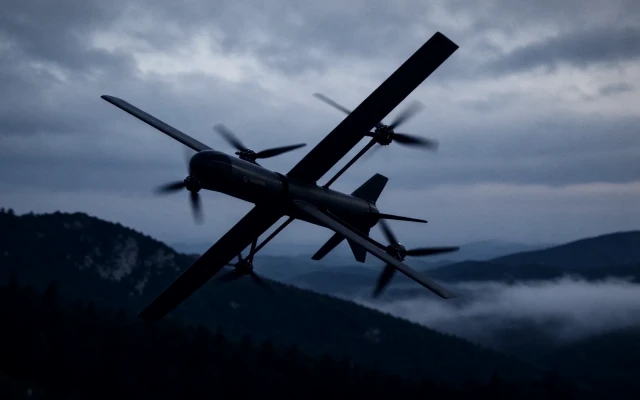
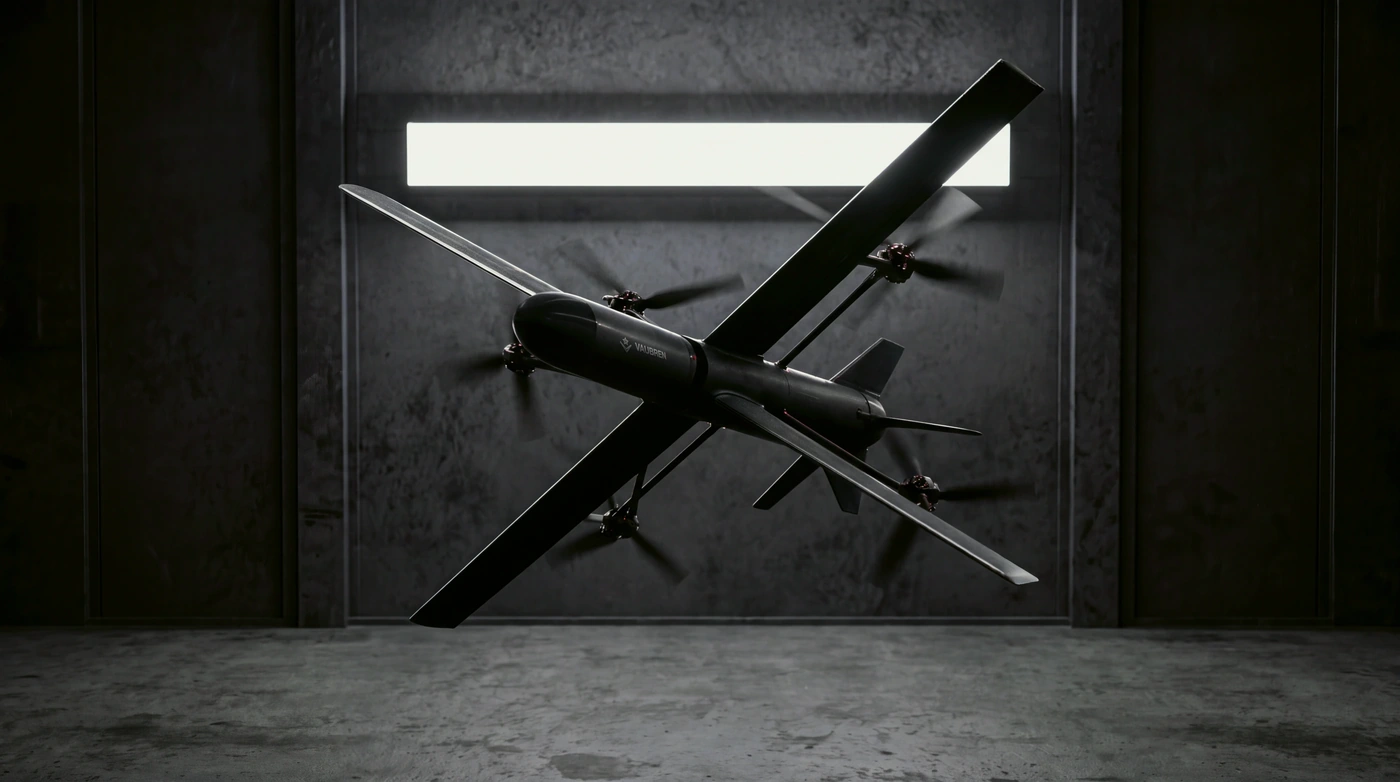
Interceptor drones are one hard-kill approach that has drawn growing attention because they are an aircraft-based effector that can be directed by a person in response to a track. Vaubren’s Cobra is a fast, printed counter-drone interceptor. It is a prototype in testing, and no performance figures are published here. More detail is on the Cobra page.
No universal method
The Royal United Services Institute (RUSI), in its October 2024 force-protection study, states that no active or passive sensor and no soft-kill or hard-kill method is universally applicable. Effective coverage requires several techniques used together. That finding is the reason the next layer, command and control, deserves as much attention as the sensors and effectors.
Command and control: the layer that ties it together
RUSI argues that software is as important as hardware for detection, classification, identification and the allocation of effects, and recommends distributing capabilities across tactical echelons instead of relying only on point defence. It also recommends integrating C-UAS with wider air-defence and electromagnetic-spectrum command and control, with deconfliction at brigade level and fusion into the common air picture at division level.
For a procurement team, several practical questions follow:
- Does the software accept feeds from sensors made by different suppliers?
- Does it show one picture to every operator, or one screen per sensor?
- Where is the decision to use an effector taken, and by whom?
- Can the system be updated as the threat changes, without replacing hardware?
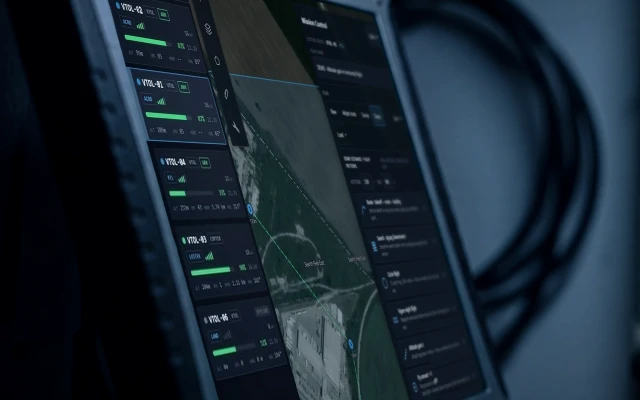
RUSI’s Jack Watling warns against buying specialised systems that are poorly integrated or unable to evolve with the threat, while treating C-UAS as a basic operational requirement for modern land forces. Vaubren’s Citadel is command and control software that plans missions, shows one live picture and keeps a person in command of every use of force. It is in development and evaluation. For background on the interface side of unmanned operations, see the Vaubren note on UAV ground control stations.
EU rules and airspace constraints
Two layers of regulation shape counter-drone work in Europe: rules on how drones are flown, and rules on who may act against them.
Rules on drone operation
The JRC notes that EU rules include Regulations 2019/945 and 2019/947. EASA states in its guidance on drone incident management at aerodromes (March 2021) that these regulations address safety, privacy, the environment and public security, and that the proposed mandatory U-space services include network identification, geo-awareness, flight authorisation and traffic information. Services of this kind help a detection system separate registered, authorised flights from unknown ones, which reduces the number of alerts that need human attention.
Rules on neutralisation
The harder question is who may act. A Royal Military Academy study, published on 19 December 2025, found that C-UAS rules are fragmented across EU Member States. It reported that civilian and critical-infrastructure operators typically lack the authority to neutralise drones, and that jamming, spoofing and kinetic intervention are generally restricted to military or specialised police units.
The GAO makes a parallel point for the United States, listing effectiveness, unintended effects, legal authority and privacy as the main challenges and policy concerns. For a European site operator, the practical consequence is that detection is often within reach, while defeat usually runs through a state authority. National rules differ, so the competent national authority is the source to consult, not a supplier’s brochure.
Evaluating a system: testing, interoperability and cost
A useful public example of how a European body tests these systems comes from Frontex. A procurement notice published on 27 June 2025 sought live adversarial trials of up to five C-UAS solutions in a controlled environment near Lisbon, with an estimated value of €480,000 excluding VAT and award weighting of 60% quality and 40% price. The notice shows two things worth copying: systems are judged in live trials rather than on documents alone, and quality outweighs price in the scoring.
A short evaluation checklist, based on the sources above:
- Detection quality: how the system handles birds, clutter and drones that emit no radio signal.
- Fusion: how it combines sensors and what happens when they disagree.
- Effectors and safety: what the unintended effects are near people, aircraft and other communications.
- Legal fit: whether the intended user holds the authority to use the effector in the intended place.
- Integration: whether it connects to existing air-defence and command systems and can evolve with the threat.
- Evidence: whether the supplier will take part in live trials with independent scoring.
European companies in the field
Several European companies work on drones, sensing, air defence and related software, including Helsing, STARK, Quantum Systems, Tekever, Dedrone, MBDA and Rheinmetall. They differ in size, product focus and maturity, and they are listed here in no order. A buyer should compare them on the criteria above, using each company’s own published material and test evidence.
Vaubren’s approach: one integrated counter-drone system
Vaubren Systems designs aircraft, sensing, electronic warfare and command software as one integrated system for European defence instead of as separate products. For counter-drone work, four of its systems apply, and their status is stated as on vaubren.com:
| System | Role in the chain | Status |
|---|---|---|
| Cobra | Fast, printed interceptor | Prototype in testing |
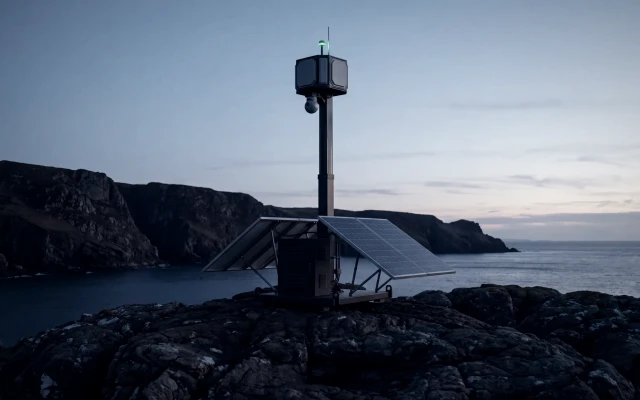
| Headland | Self-powered sensing tower with radar, radio detection and cameras | Concept in development |
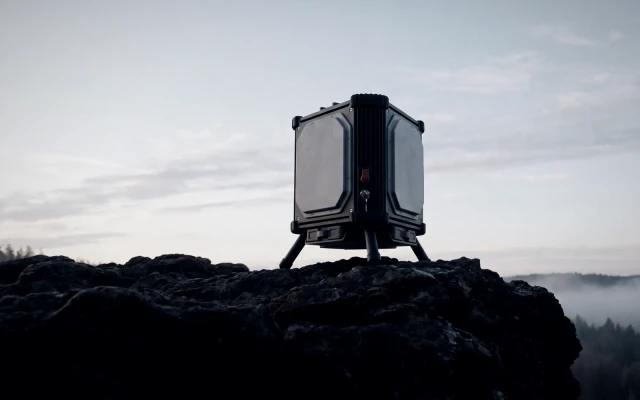
| Stillpoint | Portable electronic warfare unit | Concept in development |
| Citadel | Command software: mission planning, one live picture, a person in command of every use of force | In development and evaluation |
The design logic follows the evidence in this article: sensing that combines radar, radio detection and cameras, an electronic warfare layer subject to the legal limits above, an aircraft-based effector, and software that keeps a person in command. Vaubren’s own overview is on the counter-drone page, and the full set of systems is on the armory page. Images on vaubren.com are design visualisations unless marked.
Vaubren also plans Starfort, a development, testing and manufacturing campus in Bulgaria. It is planned and is not an operating facility. Vaubren states that keeping design, software and planned manufacturing within one company gives European customers sovereign control of the whole stack.
Promo: talk to Vaubren about the system
Procurement, capability and innovation teams, and manufacturers seeking integration or research partners, can review the Vaubren systems and make contact through vaubren.com. For how joint work is usually structured, see the note on defence R&D partnerships in Europe.
FAQ
What is an anti-drone system?
It is a combination of sensors, software and effectors that detects, tracks and identifies unmanned aircraft and, where authorised, disrupts or stops them. The US GAO describes the technology as detecting unauthorised or unsafe drones and as able to jam, capture or disable them. Most real systems layer several sensor types, because none is reliable alone.
What is drone jamming?
Jamming interferes with the radio link between a drone and its operator, or with navigation signals. According to the GAO, it can trigger landing or return-to-operator behaviour, but it can also disturb nearby communications and may not affect a drone flying autonomously. In the EU it is generally restricted to military or specialised police units, according to the 2025 Royal Military Academy study.
Can a company or airport in Europe neutralise a drone itself?
Generally not. The same study found that civilian and critical-infrastructure operators typically lack the authority to neutralise drones, and that national rules are fragmented. Operators can usually detect and report, and should check with their national aviation, police or defence authority about what is permitted.
How should a defence team compare counter-drone systems?
Use live trials, and judge detection quality, sensor fusion, effector safety, legal fit and integration with existing command systems. The Frontex notice of June 2025 is a public example: it weighted quality at 60% and price at 40% and called for live adversarial trials of up to five solutions.
Sources
- Counter Unmanned Aircraft Systems (C-UAS) Tech Guide, US Department of Homeland Security, September 2019
- Science & Tech Spotlight: Counter-Drone Technologies, US GAO, March 2022
- Department of Defense Counter-Unmanned Aircraft Systems, Congressional Research Service, May 2022
- Counter-drone systems and data fusion, European Commission Joint Research Centre, 2024
- Protecting the Force from Uncrewed Aerial Systems, RUSI, October 2024
- Drone incident management at aerodromes, EASA, March 2021
- Mapping of regulatory needs towards C-UAS in the EU, Royal Military Academy, December 2025
- Frontex procurement notice, TED, June 2025
About Vaubren
Vaubren is a European defence technology company developing aircraft, command software, sensing and electronic warfare as one integrated system, with a person in command of every use of force.
More insights
 Dual-Use Technology: Meaning, Export Rules and Defence UseWhat dual-use technology means, how EU Regulation 2021/821 and UK export controls apply, and how civil and defence innovation feed each other in Europe.
 Drone Detection Systems: How They Work and How to ChooseHow drone detection systems work: radar, radio frequency, cameras and acoustic sensors, sensor fusion, false alarms and coverage for critical sites.
 UAV Ground Control Station: Components, Standards and DesignWhat a UAV ground control station is, its components, STANAG 4586 interoperability, security and human factors, and how to evaluate one.