
Dual-Use Technology: Meaning, Export Rules and Defence Use
What dual-use technology means, how EU Regulation 2021/821 and UK export controls apply, and how civil and defence innovation feed each other in Europe.

Dual-use technology is any good, software or technology with a legitimate civil purpose that can also serve a military one. The European Commission defines dual-use items as goods, software and technology that can be used for both civilian and military applications. In Europe that definition has two consequences: the same innovation can serve commercial and defence markets, and the same innovation can need an export licence.
What dual-use technology means
The term describes how a technology can be used, not where it came from. A navigation receiver, a radar component, a machine-learning model or a lightweight composite can be built for a commercial customer and still matter to a defence customer. The European Commission's overview of dual-use technologies names artificial intelligence, advanced materials, quantum technologies, space and satellite technologies, and drones among the areas with both civil and defence applications.
One term, two purposes
There is no single definition for every purpose. The Commission's 2024 White Paper on technologies with dual-use potential points out that the EU lacks a common definition of "dual use" for research and development funding. The export-control definition was written for a narrower goal: stopping civil items from being misused or diverted for military purposes, internal repression or serious violations of human rights.
The practical result is that "dual-use" means one thing to an export-control officer and another to a funding programme. A product can be a controlled item without qualifying for dual-use funding, and the reverse is also true.
Examples of dual-use technology
The clearest examples come from official lists. The table draws on the Commission's research overview and on the categories of the UK Dual-Use List.
| Area | Typical civil use | Listed by |
|---|---|---|
| Artificial intelligence | Data analysis, automation, image recognition | European Commission |
| Advanced materials | Lightweight structures, energy, transport | European Commission |
| Quantum technologies | Computing, sensing, secure communications | European Commission |
| Space and satellite technologies | Earth observation, navigation, communications | European Commission |
| Drones | Inspection, mapping, delivery | European Commission |
| Telecommunications and information security | Networks, encryption | UK Dual-Use List, Category 5 |
| Sensors and lasers | Industrial measurement, cameras | UK Dual-Use List, Category 6 |
| Navigation and avionics | Civil aviation, positioning | UK Dual-Use List, Category 7 |
Two points follow. Software and know-how count as well as physical products, which is why export regimes control technical data and technical assistance. And the areas that dominate European defence planning today, uncrewed aircraft, sensing, software and communications, are the same areas where civil industry moves fastest.
Uncrewed systems, sensing and software
Uncrewed aircraft are the clearest case. Commercial operators use them for inspection, mapping and logistics, and many of their components, flight controllers, radios, cameras and navigation software, are sold on open markets. The European Parliament lists drones among dual-use goods and warns that such goods could be used by authoritarian regimes to control their populations or by terrorist groups to stage attacks. That is why the same products appear in export-control debates.
EU rules: Regulation (EU) 2021/821
The EU's common regime is Regulation (EU) 2021/821. According to the Commission's page on exporting dual-use items, the EU controls the export, transit, brokering and technical assistance of dual-use items. Member States must take national measures for some provisions, such as enforcement and penalties, and may add controls on non-listed items for public security or human rights reasons.
In practice the regime reaches further than a single export licence:
- Export of listed items outside the EU generally needs authorisation.
- Transit and brokering are controlled, so an item passing through the EU or traded by an EU broker can be caught.
- Technical assistance is controlled, so sharing know-how with a partner abroad can need a licence.
- Non-listed items can still be caught through national measures.
The control list itself sits in Annex I of the Regulation and is updated by Commission delegated regulation, most recently in September 2026. Classifications should be checked against the current version, and against the guidance of the competent authority in the Member State where the organisation is established, because national implementation differs.
Why controls exist
The Commission's White Paper explains that export controls address the risk of civil technology being misused or diverted for military purposes, to undermine peace or security, or in connection with internal repression or serious violations of human rights and international humanitarian law. The concern is not that a product is useful to civilians, but that a legitimate product can be repurposed for harm.
UK rules for dual-use items
Organisations in Great Britain work under a separate system. The government's UK Strategic Export Control Lists, dated 16 December 2025, consolidate the UK Military List and the UK Dual-Use List, including Annexes I and IV of the assimilated Dual-Use Regulation No. 428/2009, last amended by SI 2025/1197. The dual-use categories run from Category 0, nuclear materials, through electronics, computers, telecommunications and information security, sensors and lasers, and navigation and avionics, to Category 9, aerospace and propulsion.
An item can be controlled in the UK, in the EU, in both or in neither, so a company trading across the Channel must check each list. Lists are amended, so a classification should be reviewed whenever the product or the list changes. A specialist export-control adviser can confirm the classification of a specific item.
Why civil and defence innovation feed each other
The flow runs both ways, and NATO states it plainly. Its 2025 Science and Technology Strategy says scientific research is initially application-agnostic and very few technologies are defence-specific, and it calls for a whole-of-science approach to adapting dual-use technologies for defence.
The strategy sets out what defence and security science and technology provide:
- A foundation for future capabilities.
- Interoperability across military domains and nations.
- Evidence-based advice for policy, defence planning and procurement.
- Trusted partnerships.
- Stronger defence industries and sovereign decision-making for Allies.
The Commission takes the same view from the civil side: dual-use technologies strengthen the Union's competitiveness, improve resilience and enhance its defence readiness. As of October 2026, its dual-use technologies page points applicants to instruments including the European Innovation Council and a dedicated dual-use call under the Research Fund for Coal and Steel. Proposals focused on defence applications fall under the European Defence Fund.
The funding question
The White Paper suggests that the export-control definition may need to be adapted before it can define what EU funding should support. For applicants, the lesson is simple: read the specific call text. Export-control status does not decide funding eligibility.
What to assess before adopting or partnering
The White Paper calls for close attention to security requirements, the selection of projects and participants, security scrutiny procedures, the possible classification of research results and compliance with EU restrictive measures. As a working checklist for a procurement or research team:
- Classification. Is the item, software or technical data on a control list, and in which jurisdiction?
- Destination and end use. Who will receive it, where, and for what stated purpose?
- Participants. Who in the consortium or supply chain has access to technical data?
- Results. Could outputs be classified, and who holds the right to use them?
- Restrictive measures. Is any partner, destination or end user subject to EU sanctions?
Vaubren's note on defence R&D partnerships in Europe covers how to structure joint work, and its supplier page sets out what it expects from partners in its supply chain.
Where Vaubren Systems fits
Vaubren Systems is a European defence technology company incorporated in Bulgaria and founded by Rafael Zard. It designs aircraft, sensing, electronic warfare and command software as one integrated system, across three missions: counter-drone, surveillance and logistics. All six systems are in development:
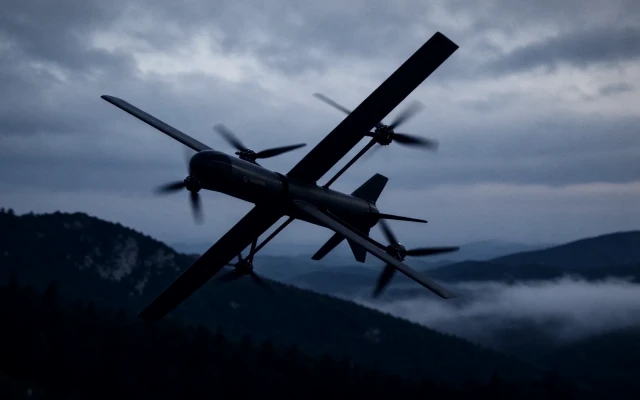
- Cobra, a fast, printed counter-drone interceptor. Prototype in testing.
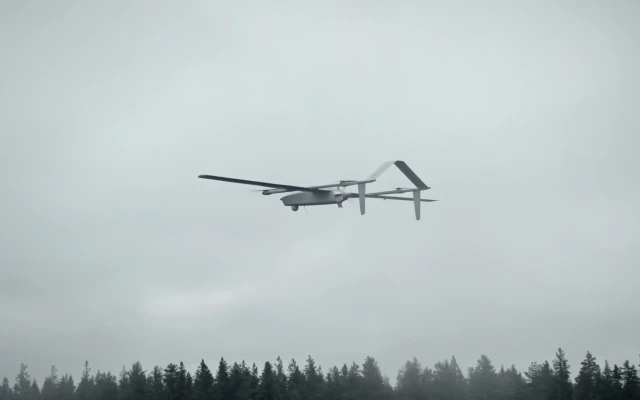
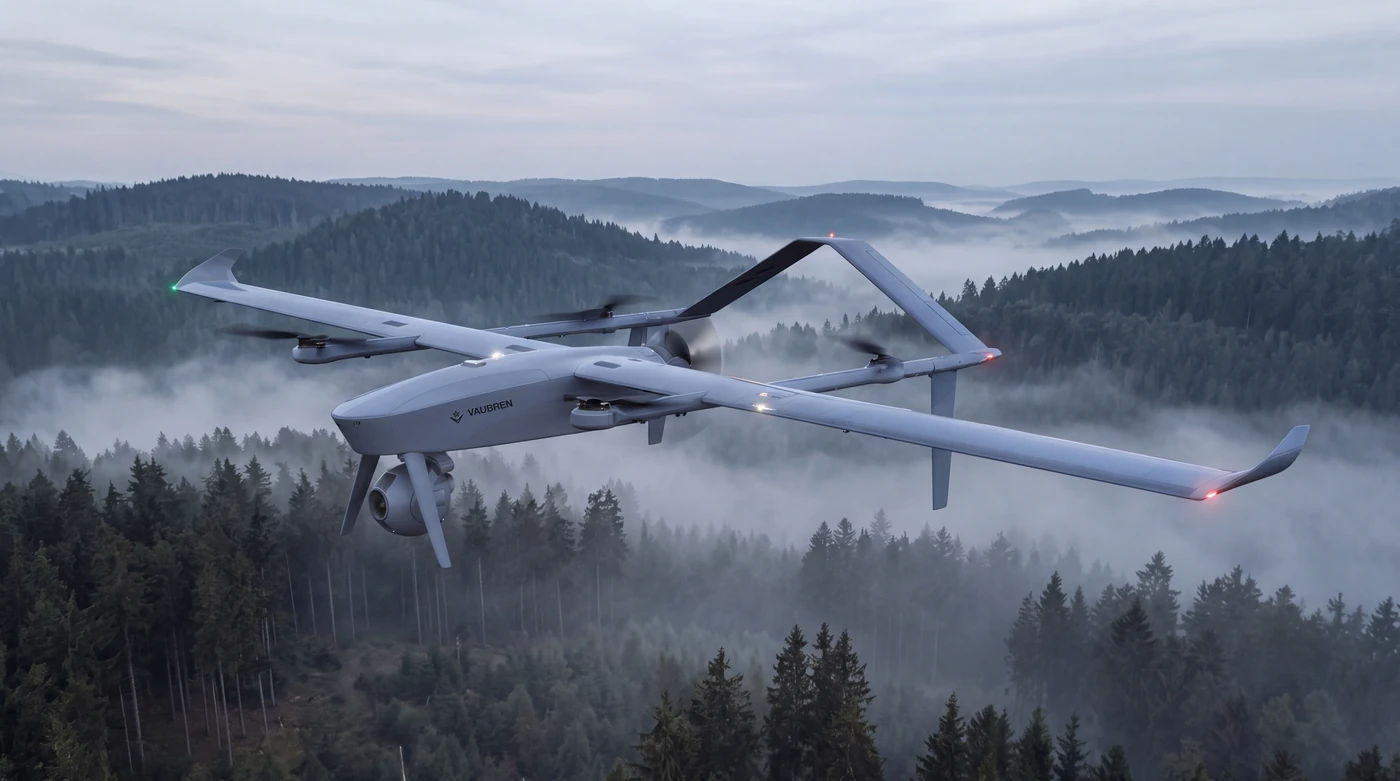
- Glacis, a long-range vertical take-off surveillance aircraft for borders, coasts and critical sites. Prototype in testing.
- Caisson, an uncrewed heavy-lift aircraft for resupply that carries up to 100 kg. Prototype tested.
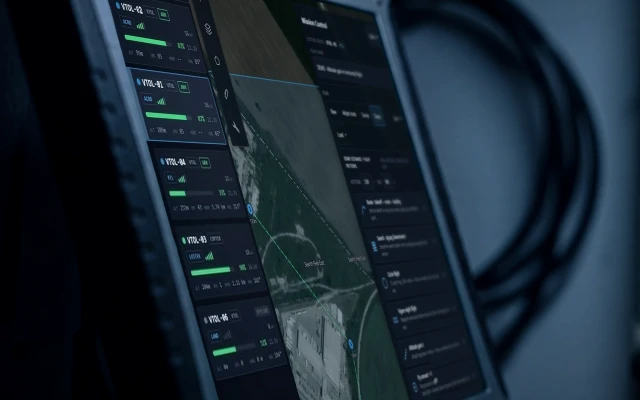
- Citadel, command and control software that plans missions, shows one live picture and keeps a person in command of every use of force.
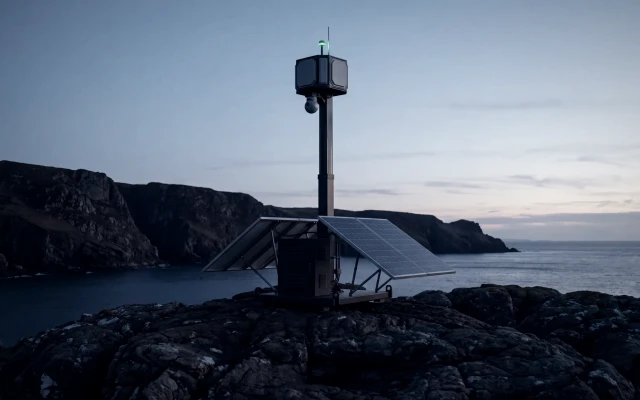
- Headland, a self-powered sensing tower for coasts, ports, borders and critical sites. Concept in development.
- Stillpoint, a portable counter-drone electronic warfare unit. Concept in development.
These systems sit squarely in the categories that export-control lists address: uncrewed aircraft, sensors, navigation, telecommunications and software. Any transfer, collaboration or supply involving them is subject to the licensing and compliance rules described above. Starfort, Vaubren's planned development, testing and manufacturing campus in Bulgaria, is intended to keep design, software and production under one European roof.
The full range is on the Armory page. Supply and research partners can start with the supplier page.
FAQ
What are dual-use goods?
Dual-use goods are items, including software and technology, that can be used for both civilian and military applications. This is the European Commission's definition for its export-control regime. Whether a specific item is controlled depends on whether it appears on a control list or is caught by a provision for non-listed items.
What are the UK dual-use regulations?
Great Britain applies the UK Strategic Export Control Lists, which include the UK Dual-Use List and the assimilated Dual-Use Regulation No. 428/2009, last amended by SI 2025/1197. The list is divided into ten categories, from nuclear materials to aerospace and propulsion. Check GOV.UK for the current version before exporting.
Does dual-use technology always need an export licence?
No. Controls apply to listed items and, in some circumstances, to non-listed items. In the EU, Regulation (EU) 2021/821 also covers transit, brokering and technical assistance, and Member States may add national controls. A classification check with the competent authority confirms whether a licence is needed.
Why do defence organisations value dual-use technology?
Because very few technologies are defence-specific. NATO's 2025 strategy notes that research is initially application-agnostic, so adapting civil advances is a main route to new defence capability. The Commission adds that dual-use technologies strengthen competitiveness, resilience and defence readiness together.
Sources
- Exporting dual-use items, European Commission, Trade and Economic Security
- Dual-use technologies, European Commission, Research and Innovation
- White Paper on options for enhancing support for research and development involving technologies with dual-use potential, European Commission, 2024
- Dual-use goods: what are they and why are new rules needed? European Parliament
- NATO Science and Technology Strategy, 2025
- UK Strategic Export Control Lists, GOV.UK, December 2025
About Vaubren
Vaubren is a European defence technology company developing aircraft, command software, sensing and electronic warfare as one integrated system, with a person in command of every use of force.
More insights
Defence R&D Partnerships in Europe: A Practical Starting PointA practical guide to European defence R&D partnerships: programme fit, project scope, intellectual property and evaluation. Drone Detection Systems: How They Work and How to ChooseHow drone detection systems work: radar, radio frequency, cameras and acoustic sensors, sensor fusion, false alarms and coverage for critical sites.
 UAV Ground Control Station: Components, Standards and DesignWhat a UAV ground control station is, its components, STANAG 4586 interoperability, security and human factors, and how to evaluate one.