

Defence Engineering Careers in Europe: Roles, Routes and Pay
Defence engineering careers in Europe: the roles that exist, the skills employers want, entry routes from apprenticeships to graduate schemes, and pay.

A career in European defence engineering is open to electrical, software, systems, sensor, cyber and manufacturing engineers, and the entry routes run from apprenticeships to senior technical posts at multinational agencies. Employers range from national procurement bodies and prime contractors to specialist technology companies, and the requirements are set vacancy by vacancy: a degree is common, but not the only route. This guide sets out the roles, the skills in demand, the qualifications asked for, published pay examples, eligibility rules and where to look for current openings. Figures are drawn from official employer pages and were current when this article was prepared in November 2026.
What engineering roles exist in European defence
Defence engineering is not a single job family. The work spans the whole life of a piece of equipment: concept, design, test, production, support and disposal. The EU Defence Careers brochure published by the European defence skills programme in 2019 describes work across all stages of the equipment life cycle, drawing on STEM and non-STEM backgrounds alike, and notes that multinational programmes, including remotely piloted aircraft systems, give staff the chance to work in different countries and languages.
A clear example of the breadth comes from the UK’s Defence Equipment and Support organisation (DE&S). Its engineering function lists expertise in electrical and electronics, environmental engineering, product safety, quality, sensors, software, security and cyber, and systems engineering, with posts from apprentice and graduate level upwards. The same page puts its engineering staff at around 3,400.
| Discipline | What the work typically involves | Where it appears |
|---|---|---|
| Systems engineering | Defining requirements, managing interfaces between subsystems, planning integration and test | Procurement bodies, prime contractors, technology developers |
| Software engineering | Mission planning, data fusion, user interfaces, embedded and flight software | Command and control, uncrewed aircraft, sensing |
| Electrical and electronics | Power, avionics, radio frequency hardware, signal processing | Aircraft, radar, electronic warfare |
| Sensors | Radar, radio frequency detection, electro-optical payloads | Surveillance, detection, counter-drone work |
| Security and cyber | Securing networks, software and supply chains | Every segment |
| Product safety and quality | Evidence that equipment is safe and meets its specification | Procurement, manufacturing, test |
| Manufacturing and test | Production processes, additive manufacturing, flight and ground test | Aircraft and component makers |
Specialisms employers say they need
The industry body ASD Europe, which represents aerospace, security and defence manufacturers, sets out the skills in demand across the sector. Its emphasis falls on AI, cybersecurity, systems engineering and advanced manufacturing. Domain-specific skills it lists include electronic warfare, space technologies, secure communications and cryptography, and the maintenance and sustainment of advanced defence systems.
The pressure on the labour market is documented. An ASD report published in December 2024 and covered by the Financial Times found the combined aerospace, security and defence workforce reached an all-time high of 1.1 million in 2024, and that companies were competing for software and systems engineering specialists.
The direction of travel is not new. The European Defence Agency’s skills report, published in 2009, already recorded a shift from manual workers towards professionals, technicians, engineers and programmers across land, naval, aerospace and electronics, and a growing weight of computer skills in every occupation. Its figures are dated, so treat them as evidence of a long trend rather than a current headcount.
Skills that cross employers
Several capabilities recur in the sources above and are worth building whichever employer you target:
- Systems thinking: understanding how a sensor, an aircraft, a radio link and a piece of software behave together.
- Software and data skills, including embedded work and fusing inputs from several sensors into one picture.
- Radio frequency and signal processing knowledge, which underpins both detection and electronic warfare.
- Cybersecurity awareness, since networked systems must be protected throughout their life.
- Evidence habits: documentation, test records and safety cases, which procurement bodies rely on.
Qualifications and requirements
Requirements vary by employer, but the published examples show a consistent pattern: a degree is the common baseline, with room for experience-based alternatives.
The European Space Agency states that for most professional vacancies at A-grade level it requires a Master’s degree in a relevant field. Some vacancies call for a PhD, and others accept a Bachelor’s degree plus four years of relevant professional experience. ESA recruits at all stages, from recent graduates to professionals with up to 20 years of experience.
A senior example from the NATO Support and Procurement Agency (NSPA) shows what experienced-hire criteria look like. Its vacancy LM327, a Senior Technical Officer post, lists an engineering degree or equivalent experience, at least five years in engineering and logistic support of complex military equipment, project and cost management skills, and fluent English, with French desirable. This is one vacancy, not a standard for the sector, but it illustrates how senior posts reward programme experience.
Routes in: apprenticeships, graduate schemes and experienced hire
Apprenticeships
The UK offers the clearest published ladder. DE&S lists a software engineering degree apprenticeship lasting four years, with work-based placements while the apprentice completes a BSc in Digital Technology Solutions. The page gives a starting salary of £26,320 and entry conditions of GCSE English language and Maths at grade 4 plus A-level or UCAS points requirements.
For a technician route, the engineering advanced apprenticeship runs for three years towards a Level 3 Engineering and Manufacturing Support Technician Apprenticeship and a Level 4 HNC in General Engineering. It lists a starting salary of £23,280 and an initial ten months of full-time college attendance.
Graduate schemes
The DE&S Engineering Graduate Scheme lasts two years, is based at MOD Abbey Wood in Bristol and lists a starting salary of £30,080. Graduates rotate through four or five placements, building evidence towards professional registration as an Incorporated or Chartered Engineer. Applicants are encouraged to apply to the specialism that best matches their background.
Experienced hire
Engineers with several years in aerospace, automotive, telecoms, robotics or embedded software often move into defence through programme roles. Employers usually look for demonstrable work on complex systems, safety-critical or regulated environments, and the ability to work with documentation and test evidence. Multinational bodies such as ESA and NSPA also hire across career stages, as the vacancies above show.
Pay and working conditions
Pay differs sharply by country, employer type and contract form, so a single European figure would mislead. The published examples give a sense of range:
| Post | Employer | Published pay | Source year |
|---|---|---|---|
| Engineering advanced apprenticeship | DE&S, UK | £23,280 starting salary | 2026 |
| Software engineering degree apprenticeship | DE&S, UK | £26,320 starting salary | 2026 |
| Engineering Graduate Scheme | DE&S, UK | £30,080 starting salary | Current page |
| Senior Technical Officer, LM327 | NSPA | €9,674.26 basic monthly salary, tax-free, before insurance and pension contributions | 2026 |
The NSPA figure comes with conditions: the vacancy describes an initial three-year contract, a tax-free salary under Article 19 of the Ottawa Agreement and extra benefits for expatriate staff where applicable. International organisations are not comparable with national civil service or industry pay, and industry salaries in each country should be checked on the employer’s own vacancy.
Eligibility, nationality and security vetting
Who can apply depends on the employer. ESA, for example, accepts applications from citizens of its Member States, Associate Members and Canada as a Cooperating State, and for graduate traineeships and research fellowships it publishes the list of eligible countries in each vacancy footer.
National defence employers generally apply their own nationality and vetting rules, and posts touching sensitive programmes may require clearance before work starts. The practical step is to read the eligibility paragraph of each vacancy and, if you hold dual nationality or have lived abroad, to ask the employer’s recruitment team how the process applies to you before investing in an application.
Why the sector is hard to enter
Interest is high but conversion is low. A study backed by the European Commission and cited by the Financial Times in June 2026 found that 58% of students and young professionals see a defence career as attractive, yet only 6% were actively pursuing one. Respondents pointed to opaque recruitment, limited awareness of non-technical roles and ethical concerns.
For an applicant, this suggests three practical habits: read vacancy requirements closely, because they are specific; look at the full range of roles, including safety, quality, test and software; and form a view on the ethical questions before applying, since interviewers in this sector may ask about them.
Where to find current vacancies
The most reliable listings are the employers’ own careers pages: national procurement bodies, international agencies such as ESA and NSPA, prime contractors and specialist technology companies. Aggregated job boards list defence roles by country and sector, and security-cleared job boards cover posts that need vetting. Vacancies change weekly, so use a board for discovery, then confirm details on the employer’s page before applying.
It also helps to follow the programmes that create work. The European Defence Fund and the European Defence Industry Programme shape collaborative research and industrial projects across member states, and companies that join them tend to recruit engineers for the resulting work. Those seeking partnerships rather than employment can read the guide to defence R&D partnerships.
Where Vaubren Systems fits
Vaubren Systems is a European defence technology company incorporated in Bulgaria and founded by Rafael Zard. It develops aircraft, command software, sensing and electronic warfare systems as one integrated system across three missions: counter-drone, surveillance and logistics. The engineering disciplines in the table above map directly onto that work.
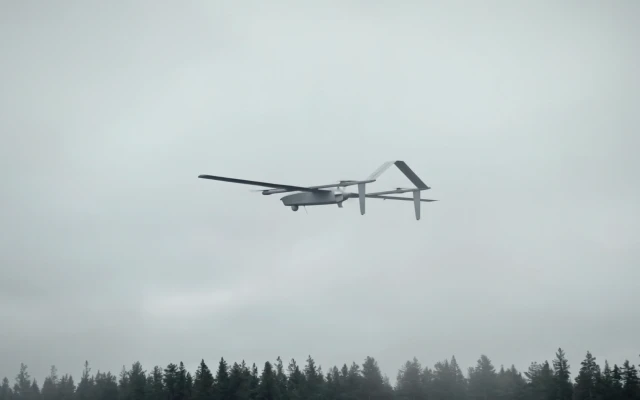
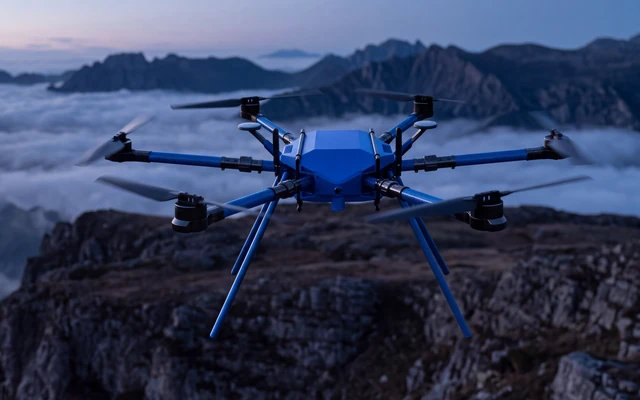
- Aircraft: Ravelin, a printed counter-drone interceptor, and Glacis, a long-range vertical take-off aircraft for border and coastal watch, are prototypes in testing. Caisson, an uncrewed heavy-lift aircraft for resupply, is a tested prototype. See the Ravelin page and the Caisson page.
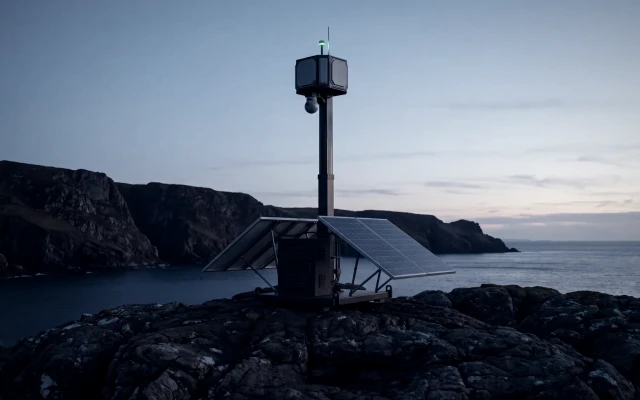
- Sensing: Bartizan, a self-powered sensing tower combining radar, radio detection and cameras, is a concept in development, described on the Bartizan page.
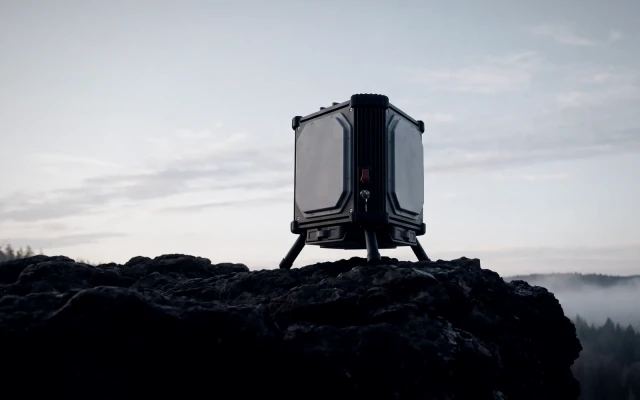
- Electronic warfare: Stillpoint, a portable counter-drone electronic warfare unit, is a concept in development, described on the Stillpoint page.
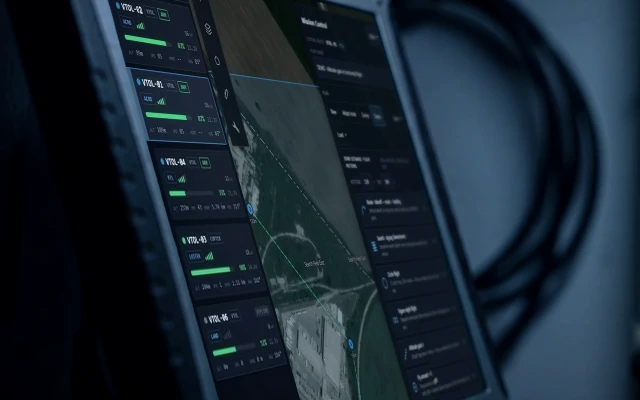
- Command software: Redoubt plans missions, shows one live picture and keeps a person in command of every use of force. It is in development and evaluation, and the Redoubt page explains the approach.
Vaubren also plans Starfort, a development, testing and manufacturing campus in Bulgaria. For background on the work, the Vaubren mission page and the full systems overview set out how the pieces connect. Engineers interested in the field can also read the guides on counter-drone systems and electronic warfare to understand the technical vocabulary employers expect.
Vaubren is hiring in Bulgaria. Its careers page lists open roles in systems engineering, guidance, navigation and control, radio frequency and electronic warfare, avionics, robotics software, sensor integration, flight test, quality and manufacturing, each with the skills it asks for.
A practical plan for applicants
- Choose a discipline from the table and check it against the vacancy language of three employers.
- Close skill gaps that appear repeatedly: systems engineering, embedded software, radio frequency or cyber.
- Match your route to your stage: apprenticeship, graduate scheme, or experienced hire with a programme record.
- Check nationality and vetting rules before you apply.
- Prepare evidence of work on complex or regulated systems, including test records and documentation, and be ready to discuss the ethical dimension of the sector.
FAQ
Do I need a degree to work in defence engineering?
Not always. DE&S offers an advanced apprenticeship that leads to a Level 3 qualification and an HNC, and ESA accepts a Bachelor’s degree plus four years of relevant experience for some vacancies. Many professional posts, however, ask for a Master’s degree or an equivalent engineering qualification.
Which engineering skills are most in demand?
ASD Europe highlights AI, cybersecurity, systems engineering and advanced manufacturing, along with electronic warfare, secure communications and cryptography. Software and systems engineering are the areas where the Financial Times reported employers competing hardest for candidates.
How much do defence engineers earn in Europe?
It depends on country, employer and contract. Published UK DE&S starting salaries range from £23,280 on the advanced apprenticeship to £30,080 on the graduate scheme, while the NSPA vacancy LM327 states a basic tax-free monthly salary of €9,674.26 for a senior post. Check each vacancy for current figures.
Can citizens of any country apply?
No. ESA accepts citizens of its Member States, Associate Members and Canada, and national employers apply their own nationality and vetting rules. Each vacancy states who may apply.
Sources
- Engineering Roles, Defence Equipment and Support
- Skills in demand in the European defence industry, ASD Europe
- Skills report, European Defence Agency
- Defence companies climb FT ranking of top European employers, Financial Times
- Who we are looking for, European Space Agency
- LM327 Senior Technical Officer, NSPA
- Software engineering degree apprenticeship, DE&S
- Engineering advanced apprenticeship, DE&S
- Engineering Graduate Scheme, DE&S
- EU Defence Careers brochure, European defence skills programme
About Vaubren
Vaubren is a European defence technology company developing aircraft, command software, sensing and electronic warfare as one integrated system, with a person in command of every use of force.
More insights
European UAV Procurement in 2026: Routes, Funding and EntryHow European governments buy unmanned aircraft and counter-drone systems in 2026: EDIP, SAFE, NATO's marketplace, national tenders and what new suppliers need.Aerospace Supply Chains in Bulgaria: Who Makes WhatHow Bulgaria's aerospace and defence supply chain is built: manufacturers, research centres, export controls, logistics and what partners should check.NATO DIANA: How the Defence Innovation Accelerator WorksNATO DIANA explained from NATO's own sources: purpose, challenge programmes, accelerator sites, test centres, eligibility, funding and how companies apply.