
European Defence Industry Programme (EDIP) Explained
EDIP in plain terms: aims, the €1.5 billion budget, timeline, who is eligible and what the programme means for European defence suppliers, sourced from the EU.

The European Defence Industry Programme (EDIP) is an EU programme that provides €1.5 billion in grants for 2025 to 2027 to strengthen the competitiveness and responsiveness of Europe’s defence industry and to encourage common procurement. The Council of the EU adopted it on 8 December 2025, and it is now in its implementation phase. This guide sets out what EDIP funds, who can take part, how the money is released and what it means for suppliers. Information is current as at 31 October 2026.
Vaubren Systems is a European defence technology company incorporated in Bulgaria.
What EDIP is and why it exists
EDIP is the first operational measure of the European Defence Industrial Strategy (EDIS), which the Commission presented in March 2024. The European Parliament briefing on EDIS states that the strategy was unveiled on 5 March 2024 and aims to raise the EU’s defence readiness, in particular its defence industrial base.
The programme builds on two earlier emergency instruments, the European Defence Industry Reinforcement through Common Procurement Act (EDIRPA) and the Act in Support of Ammunition Production (ASAP). According to the Council of the EU, EDIP implements several measures proposed in EDIS and extends the approach of those two instruments into a longer framework.
The legal basis is Regulation (EU) 2025/2643, adopted by the European Parliament and the Council on 16 December 2025 and published in the Official Journal on 29 December 2025. Its full title refers to both the programme and a framework of measures to ensure the timely availability and supply of defence products.
Budget and timeline
The budget is €1.5 billion in grants for the period 2025 to 2027, funded within the EU’s 2021 to 2027 multiannual financial framework. The Council confirms that €300 million of this total supports Ukraine’s defence industry.
| Item | Detail | Date of source |
|---|---|---|
| Programme budget | €1.5 billion in grants, 2025 to 2027 | Council of the EU, 2025 |
| Ukraine allocation | €300 million, via the Ukraine Support Instrument | Council of the EU, 2025 |
| Council adoption | 8 December 2025 | Council press release |
| Legal act | Regulation (EU) 2025/2643, 16 December 2025 | Official Journal, 29 December 2025 |
| Work programme | Adopted 30 March 2026 | European Commission, 2026 |
| Production funding | Over €700 million for reinforcing European defence production | European Commission, 2026 |
The Commission adopted the €1.5 billion multiannual work programme on 30 March 2026, and the first calls opened the same day. The first call, on energetic components, closed in mid-June 2026. Later calls follow the work programme, so the official page is the place to confirm current deadlines.
The sums are modest against the scale of European defence spending. The scalable structure matters more than the first budget: the programme creates rules, bodies and instruments that later budgets can fill.
What EDIP funds
The Council lists four main areas of support: common procurement, measures to ramp up defence manufacturing capacity, European Defence Projects of Common Interest, and the defence industry of Ukraine. Several instruments sit under these headings.
Common procurement
Grants go to common procurement actions carried out by at least three countries, of which at least two are EU member states, as stated by the Council of the EU. The aim is to reduce fragmented national orders and to give manufacturers larger, more predictable demand.
Production capacity
More than €700 million of the work programme is dedicated to reinforcing European defence production, according to the Commission. This is where manufacturers and their suppliers will find most of the calls aimed at them directly.
European Defence Projects of Common Interest
These projects are meant to develop critical military capabilities that no single member state would build alone. The Defence Industrial Readiness Board oversees project identification and alignment with EU strategic priorities, as set out in the text of the Regulation.
Security of supply and the SEAP
EDIP introduces the first EU-wide security of supply regime for crisis-relevant products. It also creates the Structure for European Armament Programme (SEAP), a legal toolbox for long-term armaments cooperation between member states, according to the Council.
European military sales mechanism
The mechanism is intended to centralise product catalogues and to support equipment pools for faster delivery, as outlined in the Commission’s factsheet. For suppliers, a listing in a shared catalogue is a route to visibility with buyers in several countries.
Ukraine Support Instrument
The instrument encourages cooperative procurement with Ukraine and finances the expansion of manufacturing capacity for Ukrainian companies, again according to the Commission factsheet.
Who is eligible
Eligibility is built around keeping funded work under European control. Under the Council’s summary, a company receiving EDIP support must:
- be established, and have its executive management structures, in the EU or an associated country;
- use infrastructure, facilities, assets and resources located in the EU or an associated country;
- source at least 65% of component costs from the EU or associated EEA countries; and
- generally hold product design authority in the EU.
The Regulation allows some flexibility. Recital 24 of Regulation (EU) 2025/2643 says that common procurement involving one subcontractor from outside, allocated between 15% and 35% of the contract value, can be eligible under a certain condition. It also allows entities that use assets outside the Union, or are controlled from a non-associated third country, to take part as recipients if strict security and defence conditions are met.
Funding rates under the work programme range from 35% to 100% of eligible costs, depending on the call, according to the Commission. A supplier should therefore read the specific call text before building a budget.
What EDIP means for European suppliers
Demand is aggregated. Because grants favour purchases by three or more countries, a supplier’s product needs to meet interoperable requirements, not a single national specification. Standards, data formats and command interfaces matter earlier in the design process than before.
Supply chains are examined. The 65% component rule and the design authority condition put the origin of subsystems on the table in any proposal. Suppliers with documented European sourcing are better placed than those that cannot show where parts come from.
Consortia are the normal route. Many calls are written for groups of companies and member states. Mid-sized component makers, software firms and research organisations typically join a consortium led by a prime contractor, which is why partnership groundwork pays off. Vaubren’s own note on defence R&D partnerships in Europe covers how those relationships usually begin, and its suppliers and supply chain page sets out how the company works with component and subsystem partners.
Skills sit behind capacity. Ramping up production depends on engineers and technicians. Industry-sponsored study support, such as the Rheinmetall Denel Munition bursary listed on a bursary database, shows one way manufacturers build that pipeline, although each scheme has its own eligibility rules.
Dual-use products are in scope of procurement thinking. Many of the capabilities buyers want, such as sensing, navigation and software, also have civil uses. Vaubren’s explainer on dual-use technology and export rules sets out how that affects development and sales.
Where Vaubren fits
Vaubren Systems develops aircraft, command software, sensing and electronic warfare systems for European defence, designed as one integrated system across three missions: counter-drone, surveillance and logistics. Its company structure is described on the company page, and the planned Starfort campus in Bulgaria for development, testing and manufacturing is planned.
The systems relevant to the capability areas EDIP addresses are:
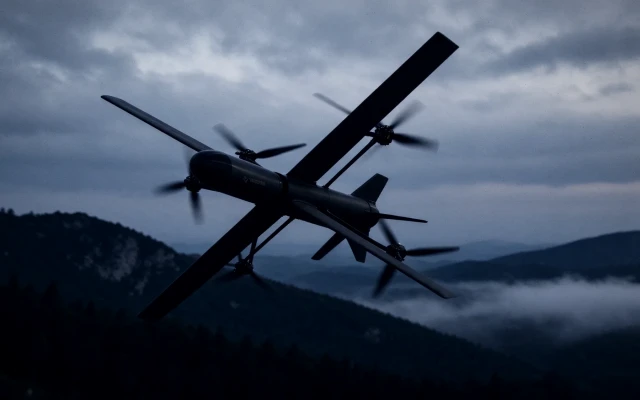
- Ravelin, a fast, printed counter-drone interceptor, a prototype in testing.
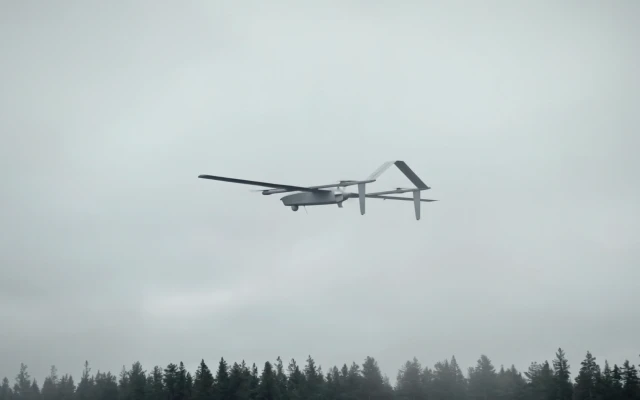
- Glacis, a long-range vertical take-off surveillance aircraft for borders, coasts and critical sites, a prototype in testing.
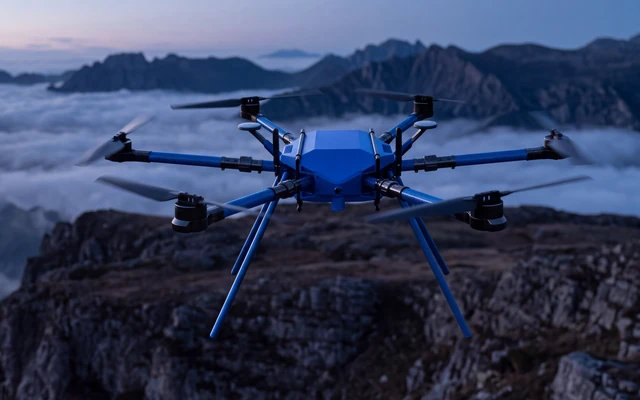
- Caisson, an uncrewed heavy-lift aircraft for resupply, a tested prototype.
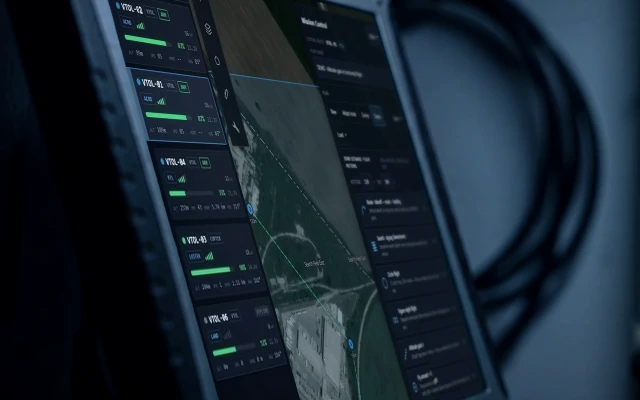
- Redoubt, command software that plans missions, shows one live picture and keeps a person in command of every use of force, in development and evaluation.
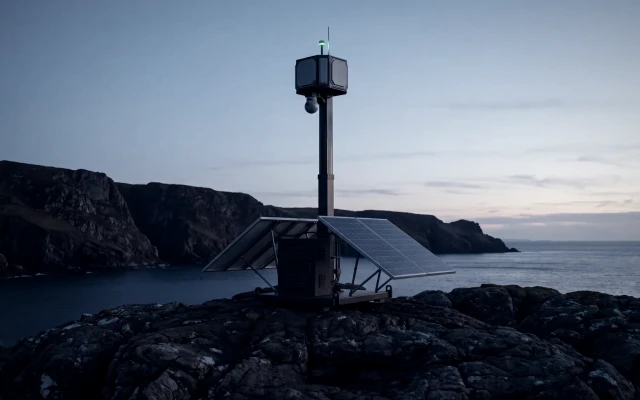
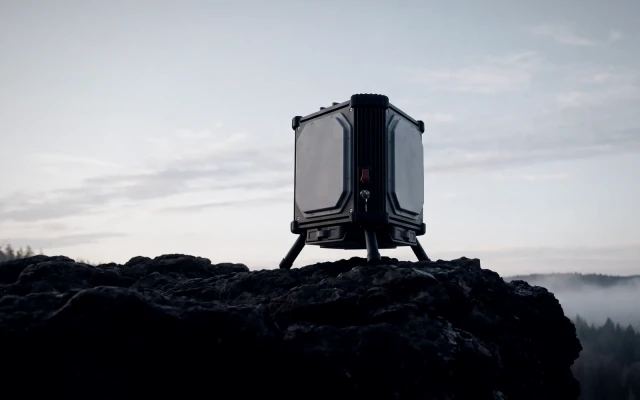
- Bartizan, a self-powered sensing tower with radar, radio detection and cameras, a concept in development.
- Stillpoint, a portable counter-drone electronic warfare unit, a concept in development.
For background on how these categories work in practice, see Vaubren’s guides to counter-drone systems in Europe, drone interceptors and mobile surveillance towers.
Next step for procurement and partnership teams
Procurement, capability and industry teams who want to discuss prototype aircraft, command software or a joint development effort can start from the Vaubren Systems home page and its contact route. Engineers interested in careers in European defence technology will find current openings there too.
How to read an EDIP call
A practical sequence for any supplier:
- Find the call on the Commission’s defence industry and space site and note its funding rate, which can be anywhere from 35% to 100%.
- Check the consortium rules, including the minimum number of countries for common procurement.
- Map each component against the 65% origin threshold and confirm where design authority sits.
- Check whether any third-country subcontractor falls inside the 15% to 35% band described in the Regulation, and what condition applies.
- Confirm the current deadline on the official page, since calls open and close on their own schedules.
FAQ
What is EDIP in one sentence?
EDIP is the EU’s European Defence Industry Programme, which provides €1.5 billion in grants for 2025 to 2027 to support defence production, common procurement and security of supply. The Council adopted it on 8 December 2025, and it is established by Regulation (EU) 2025/2643.
How much money does EDIP provide?
The budget is €1.5 billion in grants, including €300 million for Ukraine’s defence industry. The Commission’s 2026 work programme dedicates over €700 million to reinforcing European defence production.
Who can receive EDIP funding?
Companies must be established in the EU or an associated country, have their executive management there and use infrastructure located there. At least 65% of component costs must originate from the EU or associated EEA countries, with limited, conditional flexibility for some third-country subcontracting.
How much of a project does EDIP pay for?
Funding rates in the 2026 work programme range from 35% to 100% of eligible costs, depending on the call. The call document states the rate that applies.
Does EDIP replace earlier EU defence instruments?
Not entirely. It implements measures proposed in the European Defence Industrial Strategy and builds on EDIRPA and ASAP, adding a longer framework with a security of supply regime and the SEAP.
Sources
- European defence industry programme, Council of the EU
- Council gives final approval, press release of 8 December 2025
- EDIP Work Programme adopted, European Commission, 30 March 2026
- The European Defence Industry Programme, Commission factsheet
- Regulation (EU) 2025/2643, EUR-Lex
- Regulation (EU) 2025/2643, Official Journal text
- European defence industrial strategy, European Parliament briefing
About Vaubren
Vaubren is a European defence technology company developing aircraft, command software, sensing and electronic warfare as one integrated system, with a person in command of every use of force.
More insights
European UAV Procurement in 2026: Routes, Funding and EntryHow European governments buy unmanned aircraft and counter-drone systems in 2026: EDIP, SAFE, NATO's marketplace, national tenders and what new suppliers need.Aerospace Supply Chains in Bulgaria: Who Makes WhatHow Bulgaria's aerospace and defence supply chain is built: manufacturers, research centres, export controls, logistics and what partners should check.Defence Engineering Careers in Europe: Roles, Routes and PayDefence engineering careers in Europe: the roles that exist, the skills employers want, entry routes from apprenticeships to graduate schemes, and pay.