
European UAV Procurement in 2026: Routes, Funding and Entry
How European governments buy unmanned aircraft and counter-drone systems in 2026: EDIP, SAFE, NATO's marketplace, national tenders and what new suppliers need.

European governments buy unmanned aircraft in 2026 through four overlapping routes: national tenders, joint purchasing among several states, EU funding instruments such as EDIP and SAFE, and NATO’s new counter-drone marketplace. The first three are shaped by Brussels and national ministries, the fourth by the Alliance. A supplier needs to know which route fits its product, because eligibility, timing and evidence requirements differ for each. Vaubren Systems, a European defence technology company incorporated in Bulgaria, develops aircraft, sensing, electronic warfare and command software, and this guide sets out the routes as they stood on 10 November 2026.
What European UAV procurement covers
The European Parliament’s research service defines an unmanned aircraft system as the aircraft, a ground-based controller and a communication link. A remotely piloted aircraft system adds a remote pilot station and command-and-control functions. The same briefing lists reconnaissance, strikes, logistics, naval and ground operations among military uses, along with decoys, communication relays and transport (EPRS briefing, May 2025).
In practice, procurement teams buy across three groups of requirement:
- Aircraft, from micro-drones to long-endurance surveillance platforms and heavy-lift resupply aircraft.
- Counter-drone capability: detection, identification, interception and electronic protection.
- Command software that plans missions, fuses sensor data and records decisions.
The EPRS assessment also explains why low-cost expendable drones draw attention. European forces lack the large stockpiles seen in Ukraine and Russia, and fleets of high-end medium-altitude long-endurance aircraft alone are poorly suited to sustained contested operations. That shapes volume requirements as much as technical ones.
The four procurement routes in 2026
| Route | Who buys | Funding or mechanism | Typical use |
|---|---|---|---|
| National tender or framework | One ministry, police force or agency | National budget | Specific national requirements |
| Common procurement under EDIP | Consortium of three or more contracting authorities | EU grant of up to 25% of value, capped at €20 million per project | Counter-drone and other shared capabilities |
| SAFE-backed purchasing | Member States | EU-backed loans of up to €150 billion | Priority capabilities bought jointly |
| NATO catalogue | Allies | Direct purchase from selected solutions | Counter-UAS |
National tenders and frameworks
National procurement remains the largest route by number of contracts. Frameworks let one authority place repeated orders with approved suppliers. In August 2026, for example, the Swedish Police Authority published a procurement for a framework agreement covering its unmanned aircraft needs, a reminder that civil authorities buy alongside armed forces. Tender documents are usually published on national portals and the EU’s tender platform, and the technical annexes often matter more to a supplier than the headline notice.
The French defence procurement agency illustrates how a national buyer signals demand. Its 2026 notice on naval, underwater and surface drones says the industrial base must offer everything from operator-controlled independent drones to sensors and effectors integrated into complex combat systems. It also asks suppliers to combine military-specific technology with civil off-the-shelf products and to maintain sovereign industrial capacity. The same notice describes the sector as fragmented and asks for multi-year orders, rapid incremental upgrades and early identification of production bottlenecks (French DGA, 2026).
Regional pooling: the Nordic example
On 22 October 2025 the Nordic defence materiel agencies of Denmark, Finland, Norway and Sweden signed an agreement enabling joint procurement, research and development, training and information exchange on unmanned aircraft. It foresees a micro-drone purchase through NATO’s Support and Procurement Agency and a mini-drone purchase through Denmark’s framework agreement (Swedish FMV). The pattern is useful for suppliers: one qualification can open several national markets.
EDIP common procurement
The European Defence Industry Programme is the EU’s instrument for strengthening the defence industrial base. Its Common Procurement Actions support consortia of contracting authorities from at least three Member States or Norway. EU grants cover up to 25% of the estimated common-contract value, capped at €20 million per project (EDIP common procurement factsheet, March 2026).
The Commission’s 2026 call, adopted on 30 March 2026, allocated €30 million to counter-drone systems and €60 million to ammunition, missiles and other explosive weapons. An eligible counter-drone action must have an estimated common-procurement value of at least €20 million, rest on a binding agreement among the participating states with an appointed procurement agent, and finish no later than 31 December 2033 (Commission decision C(2026) 2174). The applicants are governments, not companies. A supplier’s task is to be the system those governments want to name in a joint requirement. For the programme’s structure, see our explainer on the European Defence Industry Programme.
SAFE loans
On 27 May 2025 the Council adopted the regulation creating Security Action for Europe, an instrument offering Member States financial assistance of up to €150 billion to support defence industrial production through common procurement of priority capabilities (Council of the EU). The money is lent to states, which then place the orders. In 2026 the Commission was also reported to be preparing a drone procurement initiative for Ukraine using unspent SAFE funds of up to €10 billion, so check the Commission’s current announcements before relying on that figure.
NATO’s counter-UAS marketplace
On 5 November 2026 NATO announced a counter-UAS marketplace through which Allies can procure selected solutions directly from a NATO catalogue, without running another tender. The first selection comprised 16 solutions from five companies: Alta Ares, Axon Enterprise, Northrop Grumman, OSL UK and Quantum Systems. They cover static, transportable and on-the-move systems (NATO, 5 November 2026). For companies not in that first selection, the announcement shows what a catalogue entry rewards: a documented, deployable system that an Ally can order quickly.
What the EU is prioritising in 2026
The Commission’s 2026 Action Plan on Drone and Counter Drone Security sets several priorities: scaling production, improving identification and registration, assessing high-risk suppliers, creating an EU trusted-drone label, establishing an industrial forum and expanding counter-drone testing capacity. It also includes a €250 million call for land and maritime border surveillance, development of European dual-use AI command-and-control systems, EU-level exercises and support for Frontex drone and counter-drone operations (European Commission).
A separate initiative, DronE and Counter-Drone European Resolve, identifies indicative overall investment of €3.5 billion to €5 billion for modern, adaptable, scalable and interoperable drone and counter-drone systems across domains (Commission factsheet, 2026).
For surveillance suppliers the border call is the most concrete signal. For software suppliers it is the reference to dual-use command and control. Readers who need the wider funding picture can consult the European Defence Fund guide and the explanation of dual-use technology and export rules.
How big the market is
Figures differ by definition, so each should be read with its scope.
- The Commission forecasts the commercial airborne-drone market segment at around €14.5 billion by 2030 and potentially more than €50 billion by 2033 (EUR-Lex, 2026).
- The EPRS briefing reports a global military UAS market of USD 13.2 billion in 2022, forecast to reach USD 27.7 billion by 2032, and a global commercial UAS market of about USD 22.98 billion in 2023, forecast at USD 57.16 billion by 2030 (EPRS, May 2025).
- Mordor Intelligence, a commercial research firm, places the European tactical UAV market at USD 1.73 billion in 2026 and USD 3.07 billion in 2031, a compound annual growth rate of 12.18% (Mordor Intelligence forecast). Its segmentation puts fixed-wing aircraft at 65.80% of 2025 revenue, with hybrid vertical take-off systems growing fastest at 15.88%.
Public forecasts are useful for scale, but procurement teams buy against requirements and budgets, not market reports.
What buyers ask of suppliers
NATO’s DIANA challenge on autonomy and unmanned systems lists the technical themes buyers are weighing in 2026: multi-platform sensor fusion, real-time machine-learning analysis, navigation in contested and GPS-denied environments, protection against cyber attack and jamming, redundant systems, modular energy storage and human-machine interfaces (NATO DIANA, 2026).
Regulation adds further requirements. The Commission’s 2026 communication points to a proposed extension of registration and direct remote identification to drones above 100 g, continued U-space deployment and geographical-zone information, and mandatory cybersecurity requirements for most drones under the Cyber Resilience Act from December 2027, including the use of trusted chips. It also notes that U-space deployment remains uneven across the Union (EUR-Lex, 2026).
A practical checklist for a team evaluating a supplier:
- Integration: does the system share data with a common operating picture and with allied systems?
- Human control: is operator authorisation built in for any use of force?
- Supply chain: where are the components, software and manufacturing located, and who controls them?
- Cybersecurity and spectrum resilience: how does the system behave under jamming and attack?
- Maturity: what has been tested, by whom, and what remains in development?
- Industrial path: can the supplier move from prototype to series production?
Opportunities and constraints for new suppliers
Capstone, an investment advisory firm, sees opportunity for suppliers of sensors, motors, radio-frequency equipment, batteries and radio communications, plus jammers and radio-frequency or radar detection. Its constraints are domestic-procurement preferences, security restrictions on foreign suppliers and limited European component production. Its perspective favours component and subsystem suppliers, who can sell across fragmented national markets at lower overhead while still facing localisation and compliance demands (Capstone, 2026).
An account of the 2026 Riga Drone Summit names fragmented markets, cumbersome procurement, limited finance and insufficient common standards as obstacles. Participants argued that European and NATO systems must exchange information for coalition operations, and that the central bottleneck is the speed of the cycle from innovation to production rather than invention (Eastflank, 2026).
The implication for newcomers is plain. Qualification is slow, joint buyers want interoperable systems, and credibility comes from testing evidence and a clear manufacturing plan. Established names such as Helsing, STARK, Quantum Systems, Tekever and Dedrone each publish their own accounts of their products, and buyers will compare any new supplier against that public record.
Where Vaubren fits
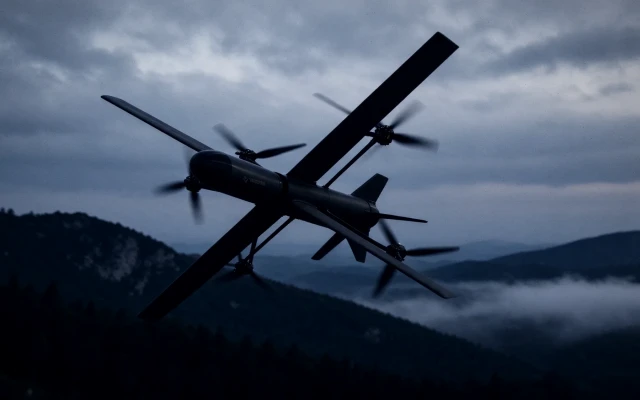
Vaubren designs aircraft, command software, sensing and electronic warfare systems as one integrated system for European defence, across counter-drone, surveillance and logistics missions. The six systems are:
- Ravelin, a fast, printed counter-drone interceptor, a prototype in testing. Buyers assessing interception can read the guide to drone interceptors.
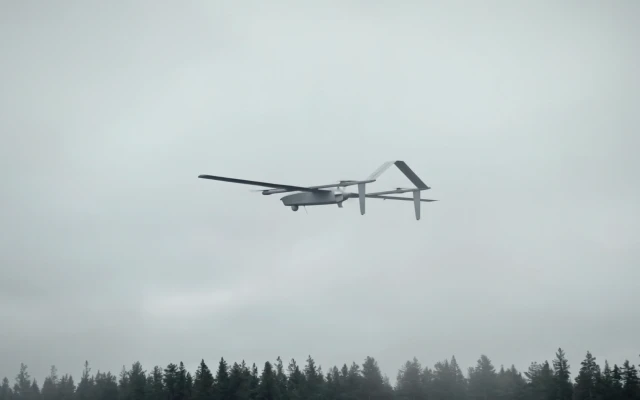
- Glacis, a long-range vertical take-off aircraft for border, coastal and critical-site watch, a prototype in testing.
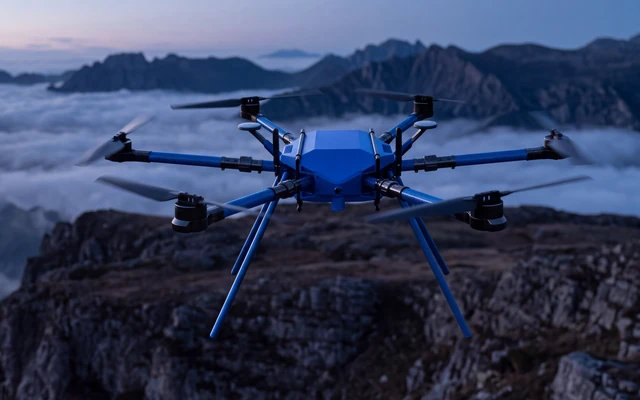
- Caisson, an uncrewed heavy-lift aircraft for resupply, a tested prototype.
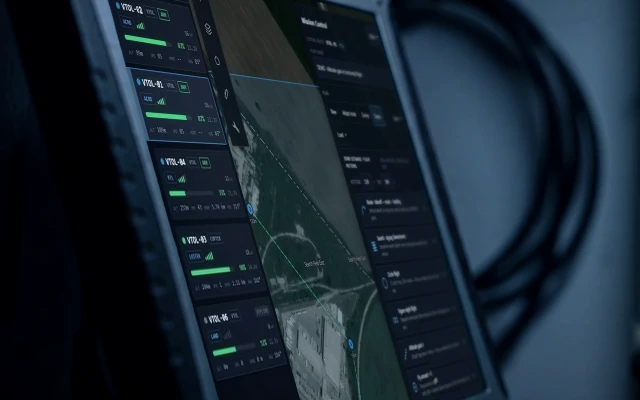
- Redoubt, command and control software that plans missions, shows one live picture and keeps a person in command of every use of force. It is in development.
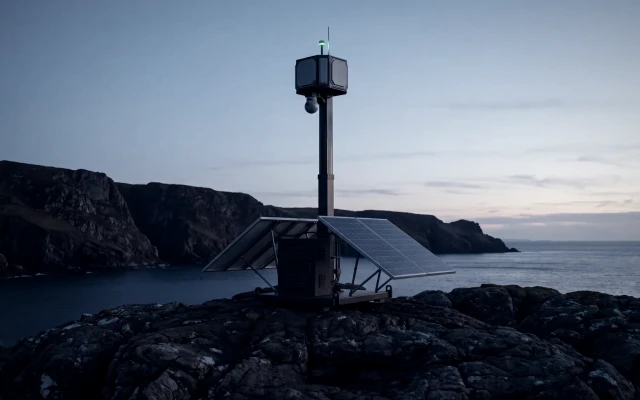
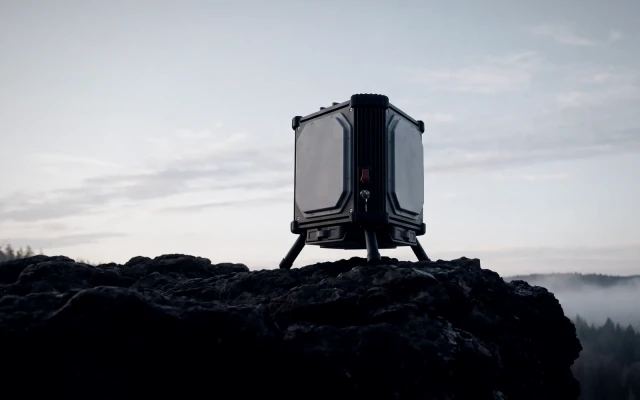
- Bartizan, a self-powered sensing tower with radar, radio detection and cameras for coasts, ports, borders and critical sites, a concept in development. The drone detection guide explains how such sensing is assessed.
- Stillpoint, a portable counter-drone electronic warfare unit, a concept in development. The electronic warfare explainer covers the spectrum basics.
The design, software and planned manufacturing at Starfort, Vaubren’s planned development, testing and manufacturing campus in Bulgaria, sit in one company, within the EU on NATO’s eastern flank. For European customers, that supports sovereign control of the whole stack, which is the requirement the French notice and the Commission’s trusted-drone work both point towards. Related pages cover counter-drone systems and protecting critical infrastructure from drones.
Procurement and capability teams can review the full range on the Vaubren systems page and open a discussion on integration or development partnership through the contact page.
FAQ
Who actually applies for EDIP common procurement funding?
Contracting authorities apply, not manufacturers. A consortium needs authorities from at least three EU Member States or Norway, a binding agreement and an appointed procurement agent. Suppliers influence the outcome by meeting the requirement the consortium writes.
Can a supplier sell to NATO members without a separate tender in each country?
In counter-UAS, NATO’s marketplace announced on 5 November 2026 lets Allies buy selected solutions from a catalogue without another tender. Only the companies selected can be bought this way. Check NATO’s current announcements for how further solutions are added.
What is the minimum size of an EDIP counter-drone project?
Under the 2026 call, an eligible counter-drone action needs an estimated common-procurement value of at least €20 million. The EU contribution is capped at €20 million per project, and actions must complete by 31 December 2033.
Which regulatory changes matter most for drone suppliers?
The Commission’s 2026 communication points to wider registration and remote identification for drones above 100 g, U-space deployment and Cyber Resilience Act requirements from December 2027. Suppliers should design cybersecurity and identification in from the start.
Sources
- European Parliament research service: Military drone systems in the EU and global context (May 2025)
- European Commission: Action Plan on Drone and Counter Drone Security
- European Commission: DronE and Counter-Drone European Resolve factsheet
- European Commission: EDIP common procurement call decision C(2026) 2174
- European Commission: EDIP common procurement factsheet (March 2026)
- Council of the EU: SAFE press release (27 May 2025)
- NATO: counter-drone procurement marketplace (5 November 2026)
- Swedish FMV: Nordic cooperation on drone procurement
- EUR-Lex: Commission communication 52026DC0081
- NATO DIANA: Autonomy and Unmanned Systems challenge
- French DGA: naval, underwater and surface drones notice
- Mordor Intelligence: Europe tactical UAV market
- Capstone: European drone and counter-drone demand
- Eastflank: Europe and drones
About Vaubren
Vaubren is a European defence technology company developing aircraft, command software, sensing and electronic warfare as one integrated system, with a person in command of every use of force.
More insights
Aerospace Supply Chains in Bulgaria: Who Makes WhatHow Bulgaria's aerospace and defence supply chain is built: manufacturers, research centres, export controls, logistics and what partners should check.Defence Engineering Careers in Europe: Roles, Routes and PayDefence engineering careers in Europe: the roles that exist, the skills employers want, entry routes from apprenticeships to graduate schemes, and pay.NATO DIANA: How the Defence Innovation Accelerator WorksNATO DIANA explained from NATO's own sources: purpose, challenge programmes, accelerator sites, test centres, eligibility, funding and how companies apply.