

Electronic Warfare Explained: Spectrum, Jamming and Protection
What electronic warfare is, how electronic attack, protection and support work, and how it shapes drone and counter-drone operations, explained for non-specialists.

Electronic warfare is military action that uses the electromagnetic spectrum to gain situational awareness and to create effects against an adversary, while protecting one’s own use of that spectrum. NATO’s own definition says the same thing in different words: exploiting electromagnetic energy to provide situational awareness and create offensive and defensive effects. This guide explains the idea at a non-operational level: what the spectrum is, the three functions of electronic warfare, how it shapes drone and counter-drone work, and which rules apply in Europe. It is written by Vaubren Systems, a European defence technology company, and the information is current as of 28 October 2026.
What electronic warfare means
The electromagnetic spectrum is the full range of electromagnetic energy, from low-frequency radio waves through microwaves and infrared to visible light. Military forces use it for radar, radio communications, satellite navigation, data links, optical sensors and a good deal else. Anything that transmits, receives or reflects energy in that range can be detected, exploited, disrupted or protected.
NATO’s topic page explains that the Alliance has shifted towards the phrase electromagnetic warfare to emphasise the importance of the spectrum as an operating environment, and notes that the terms are often used interchangeably. The practical meaning is unchanged: control of the spectrum is a precondition for using sensors, communications and uncrewed systems at all.
The term is sometimes confused with cyber operations. The two overlap, since both involve information and networks, but electronic warfare acts through the physical transmission of energy, whereas cyber operations act on data and software.
The three functions of electronic warfare
United States joint doctrine, which NATO partners widely use as a reference, divides the field into electronic attack, electronic protection and electronic warfare support. The publication is dated 8 February 2012, so national and NATO terminology has moved on in places, but the three-part division remains the standard way to teach the subject.
| Function | Plain meaning | Non-operational examples |
|---|---|---|
| Electronic attack | Using electromagnetic energy to degrade or deny an adversary’s use of the spectrum | Jamming of communications or navigation signals; deception |
| Electronic protection | Keeping one’s own forces able to use the spectrum despite interference | Frequency agility, signal design, shielding, emission control |
| Electronic warfare support | Searching for, intercepting and locating emitters to build awareness | Signal detection, direction finding, intelligence collection |
The same publication lists jamming, electronic masking, intelligence collection and navigation warfare among the examples of the field.
Electronic attack
Electronic attack is the function most people picture. Jamming works by putting enough energy on a frequency that a receiver can no longer separate the signal it wants from noise. The effect is temporary and local: when the source stops, the receiver recovers. Deception is the other family of techniques, where a receiver is given false information it accepts as genuine.
This guide deliberately stops there. How to construct or operate a jammer is outside its scope, and in most European countries the public use of such devices is unlawful, as the rules section below explains.
Electronic protection
Electronic protection is less visible and arguably more important. A force that cannot protect its own links loses the benefit of every sensor and every uncrewed aircraft it fields. Protection measures include designing signals to be hard to disrupt, switching frequencies, limiting how much a system radiates and managing which friendly systems transmit at the same time.
Protection also includes the discipline of not interfering with oneself, which brings the discussion to coordination.
Electronic warfare support
Support is the listening function: detecting that a transmission exists, classifying it and finding where it comes from. It is the electronic equivalent of a lookout. For drone defence it matters because most commercial and many military drones emit a control link, a video link or both, and those emissions can be detected without any active transmission by the defender. Detection of this kind is the basis of radio frequency drone detection, described in more depth in Vaubren’s guide to how drone detection systems work and how to choose one.
How electronic warfare shapes drone and counter-drone operations
Uncrewed aircraft rely on the spectrum in at least three ways: a command link between operator and aircraft, a payload link carrying video or sensor data, and satellite navigation for position. Each is a dependency, and each is therefore a point where electronic warfare can apply.
This produces a recurring cycle. Operators design links to resist interference, defenders develop ways to detect and disrupt them, and designers respond with new protection measures. Publicly reported experience from recent conflicts has pushed many programmes towards greater autonomy, alternative navigation and more resilient links, although open sources rarely give reliable detail and any single claim should be read with care.
For a defender protecting a port, a power station or a border crossing, the questions are practical:
- Can the site detect an aircraft early, using more than one kind of sensor?
- Can it tell a hostile aircraft from a harmless one, so that false alarms do not erode operator trust?
- What responses are lawful at that location, and who may authorise them?
- Will any response interfere with friendly systems, such as air traffic, emergency radios or the site’s own links?
The fourth question is where electronic warfare differs from kinetic defence. Its effects are not confined to a target. Energy radiated to disrupt one link can disturb others nearby, which is why doctrine treats coordination as a core task rather than an afterthought. A wider view of the layered approach to this problem is in Vaubren’s overview of counter-drone systems in Europe.
Integration: why electronic warfare cannot stand alone
Modern doctrine treats the spectrum as something to be managed, not just used. United States Air Force doctrine on electromagnetic spectrum operations, published on 14 December 2023, describes electromagnetic battle management as bringing multiple platforms and capabilities into a networked system and coordinating their use across intelligence, operations and communications. The same document points to electromagnetic interference, legal and policy constraints, and coordination and deconfliction as the main matters to manage so that friendly systems and operations are protected.
For a land force, the United States Army’s publication ATP 3-12.3 (January 2023, changed 18 September 2024) gives doctrinal guidance on integrating electronic warfare into operations, including military decision-making and targeting. Its owners state that it will be reviewed and updated as needed to keep pace with evolving threats, which is a reminder that doctrine in this field is revised regularly.
Three practical consequences follow for procurement and capability teams.
- Shared picture. An electronic warfare capability that cannot feed what it detects into the same operational picture as radar, cameras and aircraft will be underused. Detection data has value only when an operator can see it alongside everything else.
- Deconfliction. Any capability that emits energy needs a way to be planned, scheduled and, if necessary, restrained, so that it does not disturb friendly users.
- Human authority. Because effects on the spectrum can spread beyond the intended target, decisions to use active measures need clear authorisation chains and a record of what was done.
From its public materials, Vaubren Systems designs its aircraft, sensing, electronic warfare and command software as one integrated system for this reason. Redoubt, its command and control software, is in development and evaluation. It is intended to plan missions, present one live picture and keep a person in command of every use of force. More detail is on the Redoubt page.
Electronic warfare on crewed and uncrewed platforms
Electronic warfare is not confined to dedicated ground units. It can be applied from the air, the sea, the land or space, by crewed and uncrewed systems alike, as the general reference on the subject summarises.
Combat aircraft are the best-known example. The F-35’s AN/ASQ-239 system, according to the Joint Strike Fighter programme’s public page, provides integrated radar warning, targeting support and self-protection, with options to evade, engage, counter or jam threats. So the answer to a common question is yes: the F-35 conducts electronic warfare as an integral function rather than through a bolt-on pod. In December 2021, BAE Systems was awarded a $493 million contract by Lockheed Martin to upgrade that suite with more powerful hardware and improved signal processing for the Block 4 programme. These are United States programme details and are given here as examples of how central the function is to a modern aircraft, not as a benchmark for any other system.
Smaller uncrewed platforms follow a different logic. They are cheaper, more numerous and often expendable, so their electronic warfare function tends to be narrower: a sensor that listens, a link that must survive, or a payload that supports a specific task.
European rules on the spectrum
The spectrum is shared, and in peacetime it is heavily regulated. Three points matter for a European reader.
Civil radio equipment rules. The Radio Equipment Directive 2014/53/EU has applied since 13 June 2016. The European Commission’s guide to the directive explains that Member States may restrict the putting into service or use of radio equipment for reasons relating to efficient use of the spectrum, avoidance of harmful interference, avoidance of electromagnetic disturbances or public health. The guide also discusses jamming devices in this context. In practice, a private operator cannot simply install a device to disrupt radio services, and a site owner who wants protection against drones needs the competent national authority’s approval for any active measure.
Military use. Armed forces generally operate under national frequency allocations and exemptions, coordinated through national spectrum authorities and, in alliance operations, NATO procedures. Details are national and often not public, and teams evaluating equipment should ask their own authority which frequencies and effects are permitted in which locations.
Exports. Many electronic warfare and detection components are dual-use, meaning they have both civil and military applications and can be subject to export licensing. Vaubren’s explainer on dual-use technology, export rules and defence use sets out the general framework.
These rules are the reason a responsible counter-drone design starts with detection and identification, and treats any active spectrum effect as a controlled, authorised and recorded step.
Where Vaubren fits
Vaubren Systems is a European defence technology company incorporated in Bulgaria, founded by Rafael Zard. It develops aircraft, command software, sensing and electronic warfare systems across three missions: counter-drone, surveillance and logistics.
| System | Role | Status as published |
|---|---|---|
| Ravelin | Printed counter-drone interceptor | Prototype in testing |
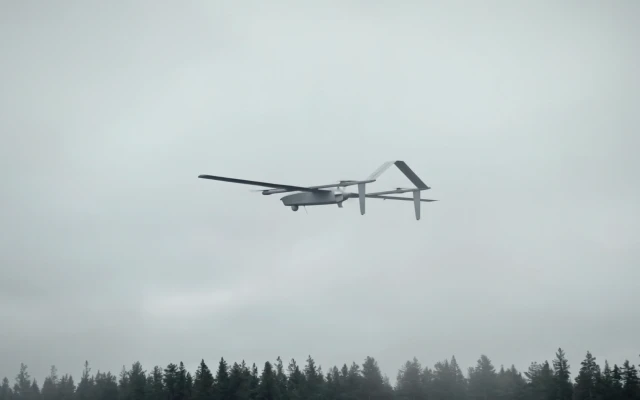
| Glacis | Long-range vertical take-off surveillance aircraft | Prototype in testing |
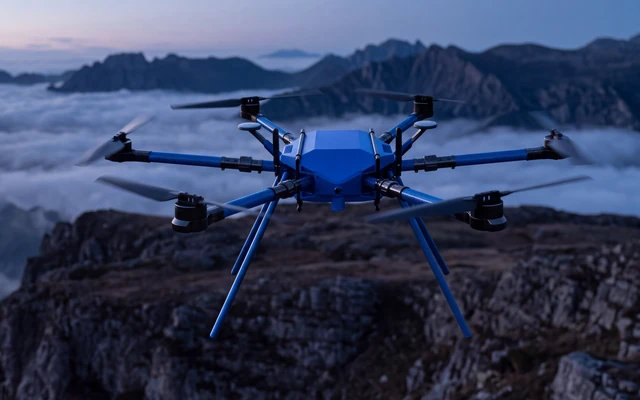
| Caisson | Uncrewed heavy-lift resupply aircraft | Prototype tested |
| Redoubt | Command and control software | In development and evaluation |
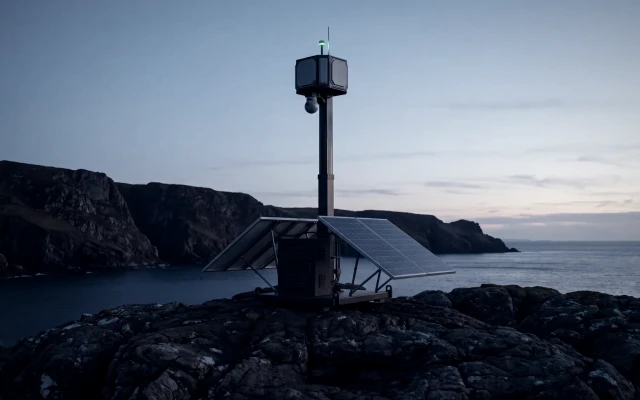
| Bartizan | Self-powered sensing tower with radar, radio detection and cameras | Concept in development |
| Stillpoint | Portable counter-drone electronic warfare unit | Concept in development |
The electronic warfare support function described earlier maps most closely to Bartizan, the sensing tower concept that combines radar, radio detection and cameras for coasts, ports, borders and critical sites. The protective and active functions relate to Stillpoint, the portable counter-drone electronic warfare unit. Ravelin addresses the physical interception of drones, and Redoubt is the layer intended to bring these together under human command. Glacis supports border and coastal surveillance, and Caisson is covered on the heavy-lift logistics page.
Starfort is Vaubren’s planned development, testing and manufacturing campus in Bulgaria.
Questions a procurement team should ask
Whatever the supplier, a team evaluating electronic warfare or counter-drone equipment can use the same criteria, drawn from the doctrine above.
- Which functions does the system perform? Support only, protection, or attack as well? Each has different legal and authorisation implications.
- How does it handle deconfliction? Ask how the system avoids disturbing friendly links, and how its emissions are planned and logged.
- Does it share data into a common picture? Isolated sensors add workload; integrated ones reduce it.
- How are false alarms measured and reported? Request evidence from independent trials, not only supplier claims.
- Who authorises active effects? The answer should name a person or role, not a default setting.
- How does it fit national spectrum rules? Confirm with the national authority before trials, not after.
- What is the supply chain? Sovereign control of design, software and manufacture simplifies assurance. Vaubren’s suppliers page describes its approach.
Talk to Vaubren
Teams assessing counter-drone sensing, electronic warfare or command software for a site, a border or a programme can review the integrated Vaubren Armory or the counter-drone systems page, then make contact through vaubren.com. No prices are published for any system.
FAQ
What are examples of electronic warfare?
Publicly documented examples include jamming of communications or navigation signals, electronic masking, intelligence collection from radio and radar emissions, and navigation warfare. Each belongs to one of the three functions: attack, protection or support. Doctrine such as United States joint publications lists these categories.
What is the difference between electronic warfare and electromagnetic warfare?
In practice, very little. NATO states that it now prefers electromagnetic warfare to emphasise the importance of the spectrum, and that the two terms are often used interchangeably. Electronic warfare remains the more common phrase in industry and in search results.
Can the F-35 do electronic warfare?
Yes. The programme’s public page says the aircraft’s AN/ASQ-239 system provides radar warning, targeting support and self-protection, with options to evade, engage, counter or jam threats. A 2021 contract to upgrade the suite was reported at $493 million.
Who is considered the father of electronic warfare?
The title is informal, and the attribution is most often given to the British physicist R. V. Jones. His Second World War work in scientific intelligence is widely described as central to Britain’s early countermeasures against German technology. Other individuals and nations also contributed, so the label is a convention rather than an established fact.
Is it legal to jam drones in the UK or the EU?
Not for private individuals or site owners. Radio equipment rules allow Member States to restrict equipment that causes harmful interference, and active drone countermeasures normally require authorisation from the national authority. Anyone protecting a site should consult that authority and a qualified legal adviser before considering any active measure.
Sources
- Electromagnetic warfare, NATO topic page
- Electronic Warfare, United States joint doctrine, 8 February 2012
- AFDP 3-85 Electromagnetic Spectrum Operations, 14 December 2023
- ATP 3-12.3, January 2023, changed 18 September 2024
- F-35 electronic warfare, Joint Strike Fighter programme
- BAE Systems contract to upgrade the F-35 electronic warfare suite, Air and Space Forces Magazine, 15 December 2021
- Guide to the Radio Equipment Directive 2014/53/EU, European Commission
- Electronic warfare overview
- The Scientist who Outsmarted the Luftwaffe, History is Now Magazine
About Vaubren
Vaubren is a European defence technology company developing aircraft, command software, sensing and electronic warfare as one integrated system, with a person in command of every use of force.
More insights
 European UAV Procurement in 2026: Routes, Funding and EntryHow European governments buy unmanned aircraft and counter-drone systems in 2026: EDIP, SAFE, NATO's marketplace, national tenders and what new suppliers need.Aerospace Supply Chains in Bulgaria: Who Makes WhatHow Bulgaria's aerospace and defence supply chain is built: manufacturers, research centres, export controls, logistics and what partners should check.Defence Engineering Careers in Europe: Roles, Routes and PayDefence engineering careers in Europe: the roles that exist, the skills employers want, entry routes from apprenticeships to graduate schemes, and pay.