
Drone Interceptors: How They Work and How Buyers Assess Them
A drone interceptor explained: how it fits a counter-drone system, what it costs against missiles, and how European buyers assess risk and value.
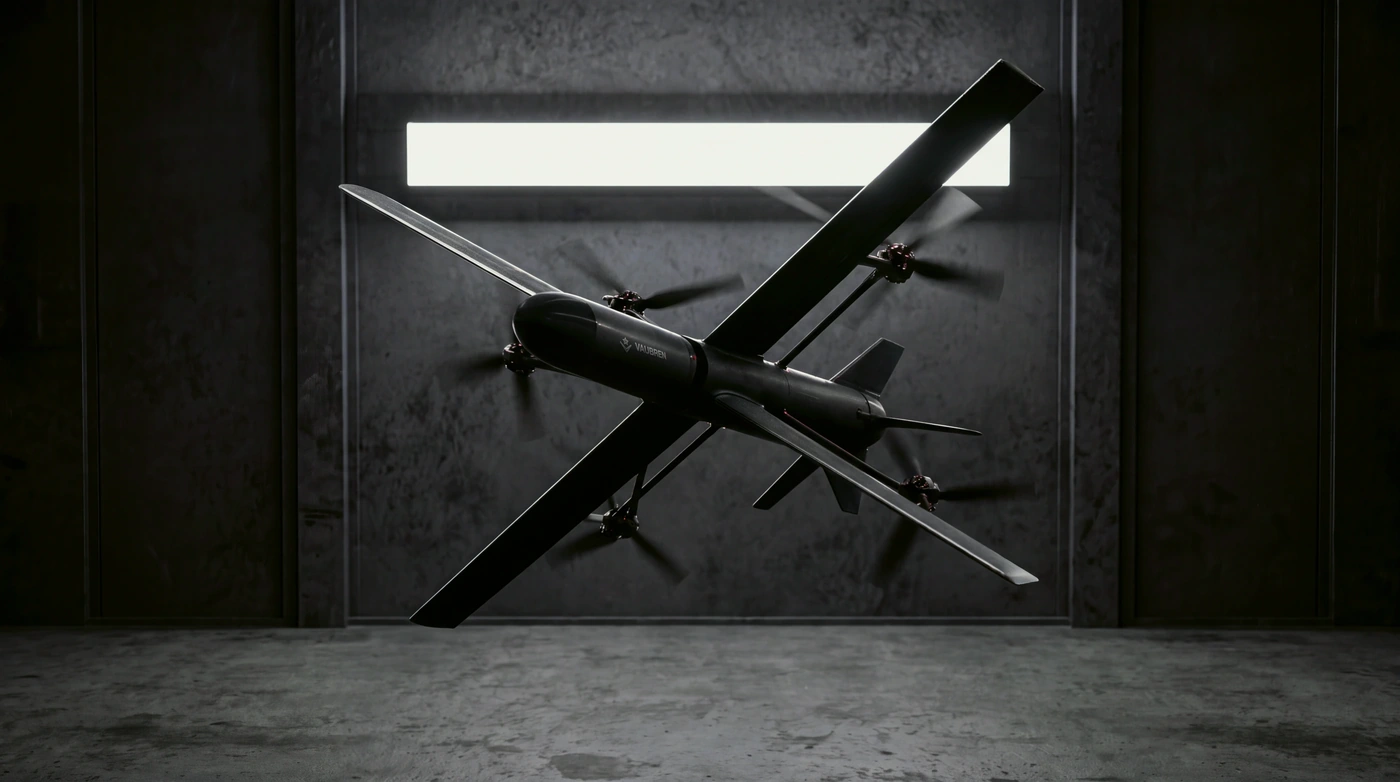
A drone interceptor is an uncrewed aircraft built to find and stop another uncrewed aircraft, usually by colliding with it or acting at very close range. It is one effector inside a layered counter-drone system: sensors cue it, software manages it and a person authorises its use. This guide explains how interceptors fit into that chain, what they cost against missiles, the risks buyers weigh and how European procurement teams assess them. Information is current as of October 2026.
What a drone interceptor is
An interceptor drone sits at the end of the counter-drone chain. Its job is to reach a hostile aircraft and neutralise it, as opposed to a ground-based jammer, a net launcher or a gun system acting from a fixed point.
The term covers several designs. Some are small, fast multirotors flown by an operator using a camera feed. Others are fixed-wing or rocket-assisted aircraft launched from a rail or tube and guided automatically for most of the flight. What they share is a single task: closing quickly on a small aircraft at a cost that makes sense against the target.
No interceptor works in isolation. Joint Interagency Task Force 401, the United States counter-drone organisation, published a handbook in July 2026 whose director stated that there is no silver bullet against drones, and the handbook presents a layered approach as the most effective defence. The European Commission’s 2026 counter-drone action plan follows the same logic, giving detection its own pillar alongside response. An interceptor that performs well on a range still fails if detection and identification are weak.
How an interceptor fits into a counter-drone system
Detection and cueing
Something has to see the target first. Detection draws on radar, radio frequency monitoring, electro-optical and infrared cameras and, at short range, acoustic sensors. Each has gaps. Radar can struggle with small, slow aircraft against clutter. Radio frequency monitoring hears nothing from a drone flying a pre-programmed route with its link silent. Cameras are limited by weather and line of sight.
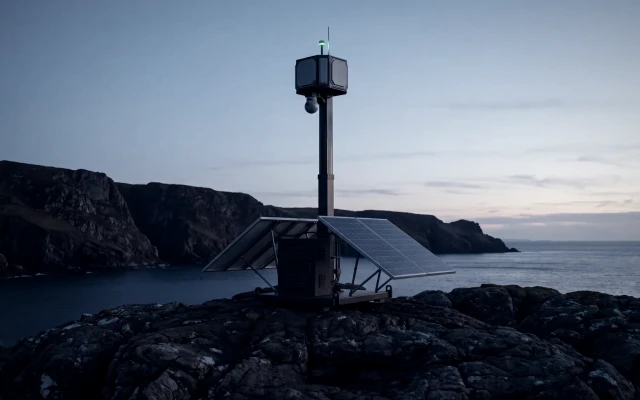
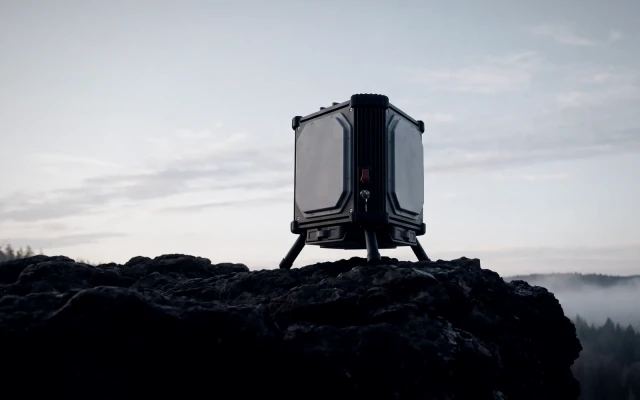
Sensor fusion combines these inputs into one track with a stated confidence, which reduces false alarms and gives the interceptor a reliable cue. Vaubren’s Bartizan, a self-powered sensing tower for coasts, ports, borders and critical sites, is a concept in development aimed at this part of the chain. Vaubren’s guide to drone detection systems covers the sensors in more depth.
Identification and the human decision
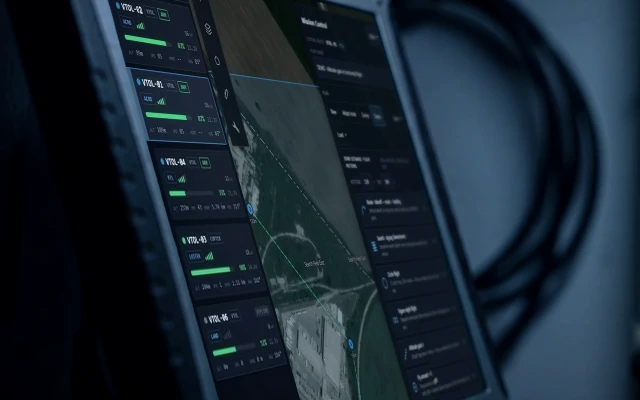
A track is not yet a target. The system must establish whether the object is a drone, and whether it is hostile, a hobbyist’s aircraft, a bird or a friendly platform. For European armed forces and security services, a person decides before any active response. That is why command software belongs in any interceptor evaluation. Redoubt, Vaubren’s command and control software, is designed to plan missions, show one live picture and keep a person in command of every use of force.
Guidance
Once launched, the interceptor’s guidance decides whether it reaches the target. There are three broad approaches:
- Operator in the loop: a pilot flies the interceptor from a live camera feed. Flexible, but dependent on the radio link and the pilot’s skill.
- Cued autonomous guidance: ground sensors hand over a track and an onboard seeker takes over for the final approach.
- Fully onboard guidance: the interceptor uses its own sensors from launch. Less dependent on a link, but it raises harder questions of authorisation and assurance.
Each choice trades speed against control. Most European buyers expect a person to authorise the engagement even when the terminal phase is automated.
Kinetic interception
Kinetic interception stops the target through physical contact or a close-range physical effect, rather than through the radio spectrum. Its main operational advantage is simple. Jamming and spoofing depend on the target responding to a disrupted link or navigation signal. An interceptor does not, which makes it relevant against drones that fly autonomously or without an active link.
Interceptors compared with other counter-drone methods
No single method suits every threat or site. The table summarises the trade-offs at a general level.
| Method | How it acts | Main strength | Main limitation |
|---|---|---|---|
| Interceptor drone | Physical contact or close effect | Works without the target’s link; low cost per engagement | Needs good cueing; debris risk; launch readiness |
| Jamming | Disrupts command link or navigation | Can act on several targets at once; no debris from the effector | Can interfere with legitimate communications; weak against autonomous drones |
| Spoofing | Feeds false navigation or control signals | Can steer a target away intact | Legally restricted; target-specific |
| Net or capture systems | Physically entangles the target | Can recover the aircraft | Short range; precise aiming needed |
| Guns and airburst rounds | Projectiles | Fast reaction; mature | Debris and collateral risk in built-up areas |
Electronic warfare is a separate layer, not a rival. Vaubren’s Stillpoint, a portable counter-drone electronic warfare unit, is a concept in development for that layer. A layered design lets a site use non-kinetic means first where lawful and safe, and keep a physical effector for targets that do not respond.
Cost per engagement
The economic case rests on one asymmetry. Defense News reported in March 2026 that a single Patriot interceptor costs over $3 million. In the same month, Al Jazeera reported Ukrainian interceptor drones at about $1,000 to $2,000 each, and President Zelenskyy cited a price of about $3,000 to $5,000 per interceptor drone. Spending a missile on every small drone is not sustainable at scale.
These are press figures for specific products and moments, so they show the order of magnitude rather than a benchmark. Unit price is also only part of the total. A sound comparison covers four items:
- the effector itself;
- the sensors that cue it;
- the people, training and software that control it;
- the expected number of effectors needed per target.
Vaubren publishes no prices for Ravelin or any other system.
Risks and limitations buyers should weigh
- False positives and negatives. An interceptor launched on a false track wastes an effector. A missed track leaves a site exposed.
- Falling debris. A drone stopped by physical means falls somewhere. Near people, roads or industrial plant, that needs assessing before a system is approved for the site.
- Hazardous wreckage. An intercepted drone may carry explosives or a damaged lithium-ion battery, which shapes how recovery teams approach it.
- Launch readiness. An interceptor that takes minutes to prepare is of little use against a target that crosses the site in seconds.
- Saturation. Several targets at once test the software and the supply of effectors as much as the aircraft.
These are the reasons an interceptor sits inside a layered design with a human decision point, rather than serving as a reflex response.
European programmes and rules
Does the UK have drone interceptors?
The UK is funding their development. On 13 July 2026 the Ministry of Defence announced contracts worth £3.16 million in total to Frankenburg Technologies, Greenjets and Cambridge Aerospace under its Low-Cost Air Defence Effectors (LCADE) programme. The three companies will develop and trial their designs. LCADE forms part of LEAP, the Low-Cost Effectors and Autonomous Platforms effort the UK runs with Poland, France, Italy and Germany, and the UK was the first of the five partners to award contracts. These are development and trial awards, not fielded service.
EU counter-drone policy
In February 2026 the European Commission presented its Action Plan on Drone and Counter Drone Security, COM(2026) 81. It focuses on civilian internal security, strengthens civil-military cooperation and is built on four pillars: prepare, detect, respond and strengthen. For suppliers, the practical message is that interoperability with civil and military command systems will weigh heavily in future European procurement.
Are drone interceptors legal in Europe?
It depends on who operates them and where. Use by armed forces and state security bodies follows national authority. Civilian testing and training fall under EU drone rules: Implementing Regulation (EU) 2019/947 requires an operational authorisation for ‘specific’ category operations, subject to stated exceptions. Jamming and spoofing are restricted in most countries. Any organisation planning a trial should agree the test area, frequencies and airspace with its national aviation authority before flying an effector.
How defence buyers evaluate interceptors
A structured evaluation avoids choosing on a demonstration alone. Procurement and capability teams tend to work through the same questions.
- Cueing and integration. Can the interceptor take tracks from sensors already in service, through open interfaces? A proprietary sensor adds cost and a new point of failure.
- Human control. Where is the authorisation point, how is it recorded and how is an engagement aborted?
- Performance against realistic targets. Trials should cover several target types and conditions, reported against agreed criteria rather than single best runs.
- False alarm handling. When the cue is wrong, the system should abort or recover safely.
- Safety. Debris, battery and payload hazards assessed for the intended site.
- Whole-life cost. Training, maintenance, storage, replenishment and staff.
- Supply and sovereignty. Spares, updates and design control within Europe. Production capacity matters as much as the prototype.
- Scaling. Whether the software manages several simultaneous targets without overloading the operator.
Where Vaubren’s Ravelin fits
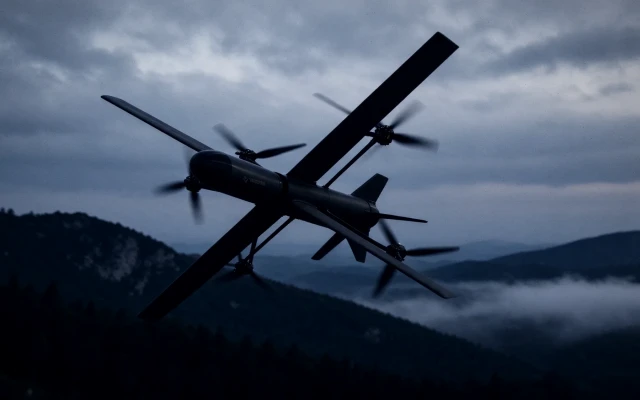
Vaubren Systems is a European defence technology company that designs aircraft, sensing, electronic warfare and command software as one integrated system. Its interceptor, Ravelin, is a fast, printed counter-drone interceptor, currently a prototype in testing. Within Vaubren’s counter-drone mission, Bartizan provides sensing, Stillpoint provides electronic warfare and Redoubt keeps one live picture with a person in command of every use of force.
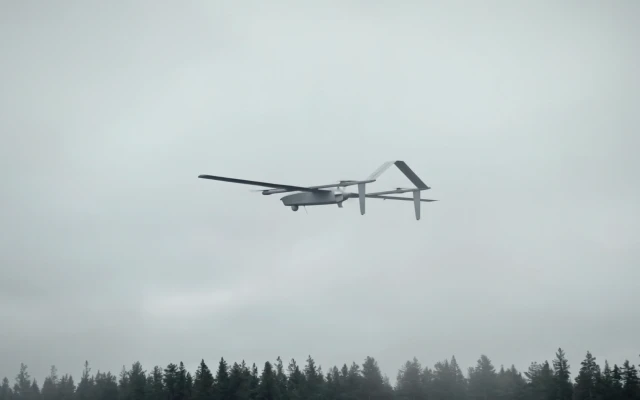
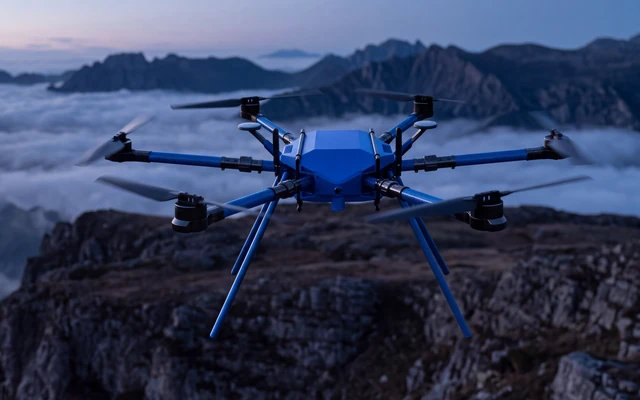
The same architecture supports Vaubren’s other missions: Glacis, a long-range vertical take-off aircraft for border and coastal watch, and Caisson, an uncrewed heavy-lift aircraft, are both prototypes. Development, testing and manufacturing are planned at Starfort, Vaubren’s campus in Bulgaria. The full set of systems is on the Armory page.
Procurement and research teams assessing interceptors can contact Vaubren.
FAQ
What is a drone interceptor?
An uncrewed aircraft designed to stop a hostile drone, usually through physical contact or a close-range effect. It is the last step of a counter-drone chain that detects, identifies and tracks the target and waits for a human decision.
How much does a drone interceptor cost?
Press reports in March 2026 put Ukrainian interceptor drones at roughly $1,000 to $5,000 each, against more than $3 million for a Patriot interceptor. Sensors, training and maintenance add to the total.
Does the UK have drone interceptors?
The UK is developing them. In July 2026 the Ministry of Defence awarded LCADE contracts to Frankenburg Technologies, Greenjets and Cambridge Aerospace to develop and trial interceptors.
Is a drone interceptor better than jamming?
Neither is better in every case. Jamming can act on several drones at once but may disrupt legitimate communications and is weak against autonomous aircraft. Interceptors do not depend on the target’s link but need good cueing and bring debris risk, so layered systems combine both.
Sources
- UK Ministry of Defence, UK leads Europe with contracts for low-cost air defence systems (13 July 2026)
- European Economic and Social Committee, Action Plan on Drone and Counter Drone Security, COM(2026) 81
- Commission Implementing Regulation (EU) 2019/947, consolidated 4 April 2022
- U.S. Army, Joint Interagency Task Force 401 publishes counter-drone handbook (9 July 2026)
- Defense News, Novel interceptor drones bend air defence economics in Ukraine’s favour (5 March 2026)
- Al Jazeera, What are the Ukrainian drone interceptors sent to counter Iranian attacks? (10 March 2026)
About Vaubren
Vaubren is a European defence technology company developing aircraft, command software, sensing and electronic warfare as one integrated system, with a person in command of every use of force.
More insights
Counter-Drone Systems in Europe: How They Work in 2026How counter-drone systems work in Europe in 2026: the detect, track, identify and defeat chain, sensors, effectors, command software and the EU rules. European UAV Procurement in 2026: Routes, Funding and EntryHow European governments buy unmanned aircraft and counter-drone systems in 2026: EDIP, SAFE, NATO's marketplace, national tenders and what new suppliers need.Aerospace Supply Chains in Bulgaria: Who Makes WhatHow Bulgaria's aerospace and defence supply chain is built: manufacturers, research centres, export controls, logistics and what partners should check.