
Mobile Surveillance Towers: Borders, Ports and Critical Sites
How a mobile surveillance tower works: sensors, power and links, the GDPR and EU rules that apply, and how towers pair with aircraft and command software.
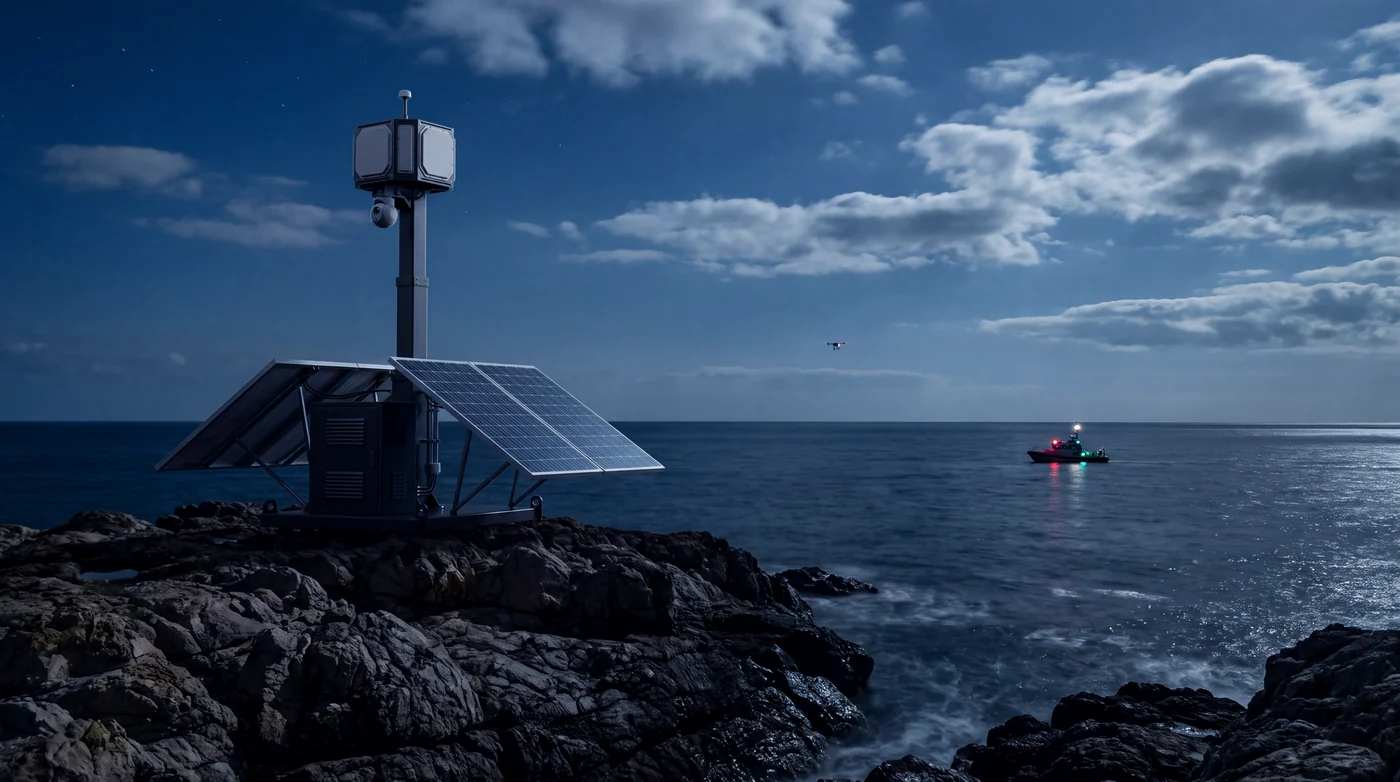
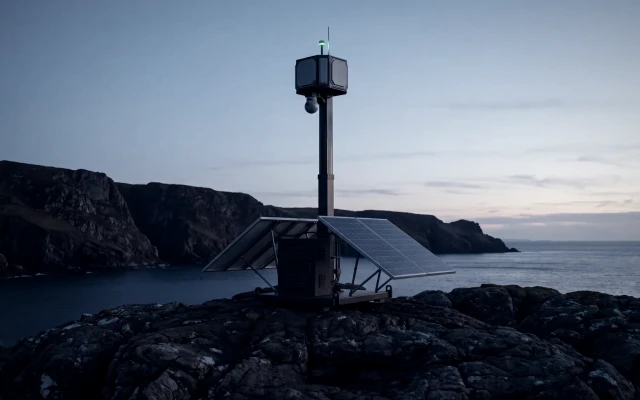
A mobile surveillance tower is a transportable mast or trailer that carries sensors, power and communications, so that an area can be watched without permanent infrastructure. In defence and security use, the sensor set goes beyond a camera: radar, electro-optical and infrared cameras and radio frequency detection are combined, and the result goes to an operator who decides what to do. This guide explains how mobile surveillance towers are built, where they are used, which European rules apply and how they work with aircraft and command software. Information is current as of October 2026.
What a mobile surveillance tower is
The term covers two quite different classes of equipment. At one end sits the mobile CCTV trailer used on construction sites and car parks: a telescopic mast, one or two cameras, a battery bank and a solar panel or generator. It deters and records.
At the other end are towers used by border guards, coast guards, port authorities and operators of critical sites. These carry a larger sensor set, are built for harsher weather and longer unattended operation, and feed a control room rather than a single guard. Their job is to detect, classify and track objects across a wide area, and to pass that information to people who can respond.
Procurement teams in defence, border management and infrastructure protection are almost always asking about the second class, and that is the focus of this guide.
Sensor packages
A capable tower does not rely on one sensor. Each type has blind spots that another covers, and the combination is what reduces false alarms.
Radar
Radar detects moving objects by day or night and, to a degree, in poor weather. Ground and coastal surveillance radars track vehicles, people and vessels. Counter-drone radars are tuned for small, slow, low-flying aircraft. Radar gives position and movement but little about what an object is, so it normally cues a camera.
Electro-optical and infrared cameras
Electro-optical cameras give the detail an operator needs to identify an object in daylight. Thermal cameras show heat signatures at night and through light haze or smoke. A pan-tilt-zoom mount lets one camera cover a wide sector and then zoom on a cue from radar.
Radio frequency detection
Radio frequency sensors listen for the control and video links that many drones emit. They can detect a drone before it is visible, and some indicate the direction of the emitter. They cannot see aircraft that fly without emitting, which is why they are paired with radar and cameras.
Sensor fusion
Fusion turns separate detections into one track with a confidence level. If radar sees a slow object, a radio frequency sensor hears a link and a camera confirms a small aircraft, the system can report a drone with more certainty than any sensor alone. If only one sensor reports, the operator can see that the evidence is thin. Fusion is as much a software problem as a hardware one, and its quality is a better test of a tower than the length of its sensor list.
Power, communications and deployment
Power
Towers operate away from mains electricity, so the power design sets how long they can stay unattended. The common options:
- Solar with battery storage: quiet and free of refuelling, but dependent on sunlight.
- Hybrid systems: solar and batteries with a generator or fuel cell in reserve, trading some logistics for resilience.
- Generator only: simple, but it brings refuelling visits and noise.
Geography matters. At higher latitudes winter daylight is short while radar and cameras draw power continuously, so a design that works on a Mediterranean coast may need a different power budget on the Baltic. Size the system against the worst month, not the average one.
Communications
The data link carries sensor output to where operators sit. Typical choices are cellular data, licensed microwave links, satellite links and mesh radio. Coverage is often weak on borders, coasts and remote infrastructure, so a second path is worth planning. Links must also be secured, since a surveillance feed is itself sensitive.
Rapid deployment
The main advantage over fixed installations is speed: a tower avoids trenching, cabling and electrical works. Fixed systems usually offer steadier power, backhaul and calibration for permanent missions. In practice a tower suits a gap that is temporary or still being assessed, and a fixed installation suits a requirement that has become permanent.
Where towers are used
| Use | What the tower provides | Typical operator |
|---|---|---|
| Land borders | Detection and tracking of people and vehicles in gaps between fixed posts | Border guards and national agencies |
| Coasts and ports | Tracking of vessels and small craft near approaches and berths | Coast guards, port authorities |
| Critical infrastructure | Perimeter awareness around energy, transport, water and data sites | Site operators, national authorities |
| Temporary needs | Cover for incidents, events or while a permanent system is built | Public and private operators |
A mast sees only from where it stands, so operators place several to overlap sectors and use aircraft to look at what lies between them.
European frameworks that shape the requirement
Frontex and EUROSUR
Regulation (EU) 2019/1896 governs the European Border and Coast Guard, including Frontex. The Commission describes EUROSUR, the European Border Surveillance System, as a framework for information exchange and cooperation between member states and Frontex, and a 2021 implementing regulation standardises the information in its situational pictures. For tower design the implication is practical: tower data is most useful when it can enter a shared situational picture, so open interfaces and clear data formats matter more than any single sensor.
The Critical Entities Resilience Directive
Directive (EU) 2022/2557, the Critical Entities Resilience (CER) Directive, required member states to identify critical entities across sectors including energy, transport and water by 17 July 2026. Identified entities must then assess risks and take resilience measures, so many operators are now moving from identification to implementation. Detection of drones and intruders around a site is one physical measure an operator can weigh, and a mobile tower can serve as an interim layer while permanent measures are built. Operators should check their national transposition for the exact obligations.
GDPR and data protection
Any tower that records identifiable people or vehicles processes personal data, which brings in the General Data Protection Regulation. The European Data Protection Board’s Guidelines 3/2019 on processing of personal data through video devices explain how purpose limitation, data minimisation and retention apply to cameras.
Several design points follow:
- Define the purpose of each sensor before deployment, and collect no more than that purpose needs.
- Set retention periods and record who may view or export footage.
- Use privacy masking where a camera’s view includes homes or public spaces outside the mission.
- Carry out a data protection impact assessment where the processing is likely to present a high risk.
- Confirm the legal basis with the operator’s data protection officer, since border and security authorities may fall under separate law enforcement rules.
Radar and radio frequency detection collect far less identifying data than cameras. Layered sensing therefore supports data minimisation: radar cues a camera only when something relevant appears, so footage is not recorded continuously.
Limitations to check before choosing a tower
- Sightlines. Terrain, buildings and vegetation limit what any mast can see. A site survey comes first.
- Power in the worst season. Long overcast spells can exhaust solar systems without reserve power.
- False alarms. Automated alerts are not flawless. Fusion helps, but an operator remains part of the process.
- Repositioning. Moving a tower needs transport and planning, so it is mobile in days rather than minutes.
- Layering. A tower does not replace lighting, access control or a response force.
- Cyber security. A networked sensor is an access point. Encryption, authentication and update management belong in the requirement.
How towers work with drones and command software
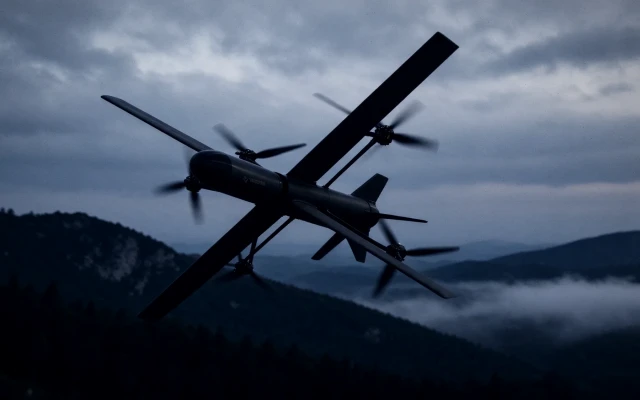
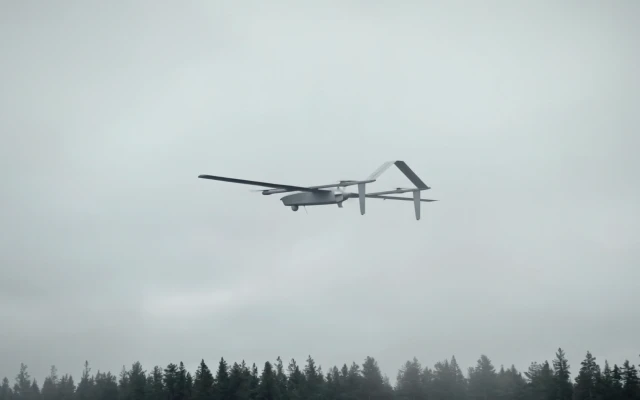
A mast watches a fixed area. An aircraft can be sent to examine a crossing point, a stretch of coastline or a gap between towers, then return. Long-range vertical take-off aircraft suit borders and coasts because they need no runway. Towers provide persistent watch, and aircraft provide flexible reach.
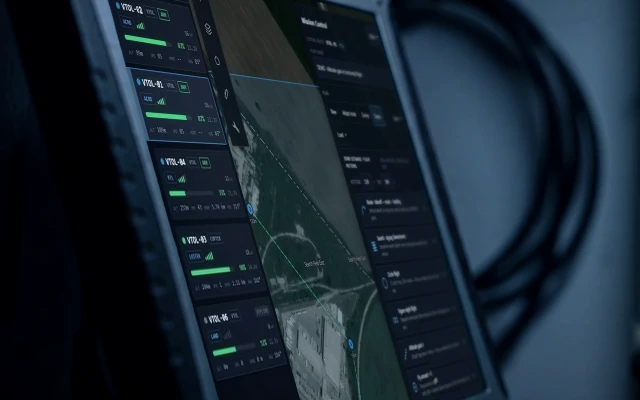
Software joins the two. Without a common operating picture, an operator watches separate screens for each tower and aircraft. With command software, detections from every source appear on one map, aircraft can be tasked against them and a record is kept of what was seen and decided. The principle most European procurement teams apply is that automation proposes and a person decides, especially where any active response is involved.
Vaubren Systems and Bartizan
Vaubren Systems is a European defence technology company incorporated in Bulgaria. It develops aircraft, command software, sensing and electronic warfare as one integrated system, and its surveillance mission brings three of those systems together:
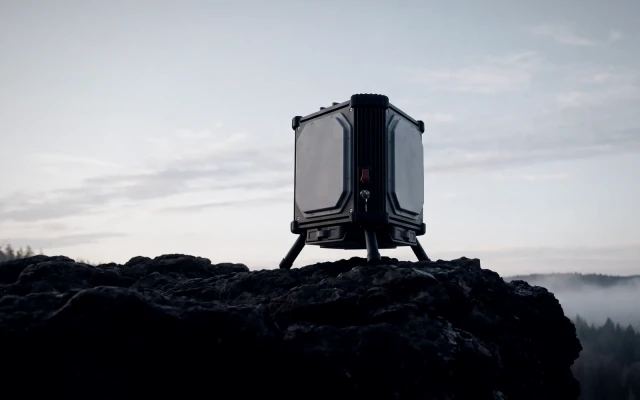
- Bartizan is a self-powered sensing tower for coasts, ports, borders and critical sites. It is a concept in development.
- Glacis is a long-range vertical take-off surveillance aircraft for borders, coasts and critical sites. It is a prototype in testing.
- Redoubt is command and control software that plans missions, shows one live picture and keeps a person in command of every use of force. It is in development.
In that architecture Bartizan provides the persistent watch, Glacis extends reach beyond the tower’s sightlines and Redoubt joins both in one picture. Development, testing and manufacturing are planned at Starfort, Vaubren’s campus in Bulgaria. The full set of systems is on the Armory page.
Other European suppliers
The wider European sensing and uncrewed aircraft market includes companies with different focuses. Dedrone is known for drone detection and airspace security software. Tekever and Quantum Systems develop uncrewed aircraft for surveillance and related roles. Helsing develops defence software and artificial intelligence, and STARK develops uncrewed systems. Buyers should compare any supplier on objective criteria drawn from its own published material and from independent testing:
| Criterion | Question to ask |
|---|---|
| Sensor set | Which sensors are included, and are they fused into one track? |
| Power | How long can the unit run unattended in the worst season at the site? |
| Communications | Which links are supported, and is there a fallback? |
| Integration | Can data feed an existing command system or a EUROSUR-style shared picture? |
| Data protection | Does the design support masking, retention limits and audit logs? |
| Sovereignty | Where are design, software and manufacturing controlled, and who can update the system? |
| Maturity | Is the system a concept, a prototype or in service, and what evidence supports that? |
Cost and procurement
Prices for mobile towers are not standardised. Site-security trailers are commonly hired by the week or month. Radar-equipped border and critical-site systems are bought or licensed through tenders, with cost driven by the sensor set, power, communications and support. Request a quotation against a written requirement and compare whole-life cost, including power, maintenance, software updates and relocation, not only the purchase price.
Border, coastal and infrastructure teams with a surveillance requirement can contact Vaubren.
FAQ
Does a mobile surveillance tower have a camera?
Usually more than one, often pan-tilt-zoom with a thermal channel for night use. Towers for borders, ports and critical sites add radar and radio frequency detection, so the camera confirms what other sensors have found.
How is a mobile surveillance tower powered?
Most use solar panels with battery storage, and many add a generator or fuel cell in reserve. The right choice depends on sunlight at the site in its worst season and on the power the sensors and processing draw.
Do GDPR rules apply to mobile surveillance towers?
Yes, where a tower records identifiable people or vehicles in the EU. The European Data Protection Board’s video device guidelines explain how. State security bodies may fall under separate rules.
How do towers work with drones?
A tower watches a fixed area continuously, while an aircraft can be sent to examine something beyond the tower’s sightlines. Command software places both on one map and records decisions, with a person in command of any response.
Is Bartizan available to buy?
Not yet. Bartizan is a concept in development. Teams with a requirement can contact Vaubren through vaubren.com.
Sources
- Regulation (EU) 2019/1896 on the European Border and Coast Guard, EUR-Lex
- European Commission, Migration and Home Affairs: EUROSUR
- Directive (EU) 2022/2557 on the resilience of critical entities, EUR-Lex
- General Data Protection Regulation, EUR-Lex
- European Data Protection Board, Guidelines 3/2019 on processing of personal data through video devices (30 January 2020)
About Vaubren
Vaubren is a European defence technology company developing aircraft, command software, sensing and electronic warfare as one integrated system, with a person in command of every use of force.
More insights
Critical Infrastructure Protection Against Drones in EuropeHow airports, ports, energy sites and borders protect critical infrastructure from drones: layered detection, response options, and NIS2 and CER duties in Europe.Drone Detection Radar: How It Finds Small, Low-Flying AircraftHow drone detection radar finds small, slow, low-flying aircraft: radar types, clutter and birds, sensor fusion, and what site owners should evaluate.Drone Detection Systems: How They Work and How to ChooseHow drone detection systems work: radar, radio frequency, cameras and acoustic sensors, sensor fusion, false alarms and coverage for critical sites.