
Command and Control Software for Unmanned Systems
Command and control software for unmanned systems explained: how it differs from a ground station, which NATO and EU standards apply and what to ask.
Command and control (C2) software for unmanned systems is the layer that lets a team plan missions, see every aircraft and sensor in one live picture, task vehicles and effectors, and record who authorised each action. A ground control station flies one vehicle or one vehicle type. C2 software coordinates many vehicles, sensors and people across a mission. This guide covers the functions, the European and NATO standards that matter, and the questions an evaluation team should put to any supplier.
What command and control software does
In military usage, command and control describes how a commander directs forces and how information flows back. For unmanned systems, C2 software turns that process into a working tool for operators and commanders. Its functions fall into five groups:
- Mission planning: routes, areas, tasks, timings and contingencies, set before and revised during a mission.
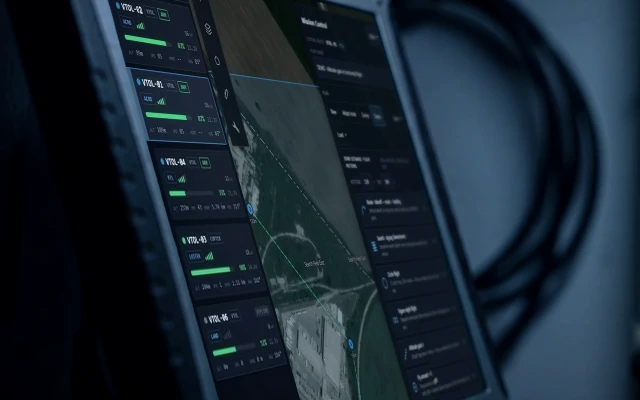
- The live air picture: position, status and track of every aircraft, sensor contact and friendly asset on one display.
- Sensor and effector fusion: radar, radio frequency, electro-optical and other inputs combined into one track, with tasked effectors connected to that picture.
- Interoperability: data exchange with other vehicles, stations and command systems through agreed interfaces.
- Human authority: an accountable person approves consequential decisions, and the approval is recorded.
How C2 software differs from a ground control station
Suppliers use the terms loosely. A ground control station is built around the vehicle: it uploads routes, changes parameters, shows telemetry and payload video, and lets a pilot take off, land or recover the aircraft. Vaubren’s guide to UAV ground control stations covers that layer in detail.
C2 software sits one level higher. It treats vehicles, sensors and effectors as resources serving a mission, and it must handle several aircraft types, often from different manufacturers.
| Criterion | Ground control station | C2 software |
|---|---|---|
| Main focus | One vehicle or vehicle type | A mission across many vehicles and sensors |
| Typical inputs | Telemetry, payload video | Tracks from several sensors, mission plans, friendly air picture |
| Typical outputs | Vehicle commands, flight logs | Tasking, shared picture, authorised actions, decision record |
| Interoperability | Often one protocol or vendor | Several vehicle types and external command systems |
| Human role | Pilot or payload operator | Commander or supervisor who authorises and oversees |
Many products blend the two, and a mature ground control station can grow into a C2 function.
Mission planning and the live air picture
In a ground control station, mission planning often means placing waypoints on a map. In a C2 system the task widens. The planner assigns work to several assets, deconflicts them against other aircraft and airspace, and revises the plan as conditions change.
The live picture is the operator’s working surface. It should show what each aircraft is doing, which sensors are reporting, how old each track is and how confident the system is in each classification. Simulation belongs here too: rehearsing a mission against recorded or synthetic data lets crews test procedures before they depend on them.
Navigation quality feeds straight into the picture. A track reported by an aircraft is only as good as the position behind it, so integrators check how the system behaves when satellite navigation is degraded or jammed.
Fusing sensors and effectors
A single sensor rarely gives a reliable answer. Radar detects objects but may not identify them. Radio frequency detection reveals a control link but not a silent aircraft. Cameras confirm what an object looks like but depend on weather and line of sight. Fusion combines these inputs so the operator sees one track with a stated confidence, rather than three conflicting alerts, and it cuts the false alarms that wear down any team watching a coast, a port or a critical site.
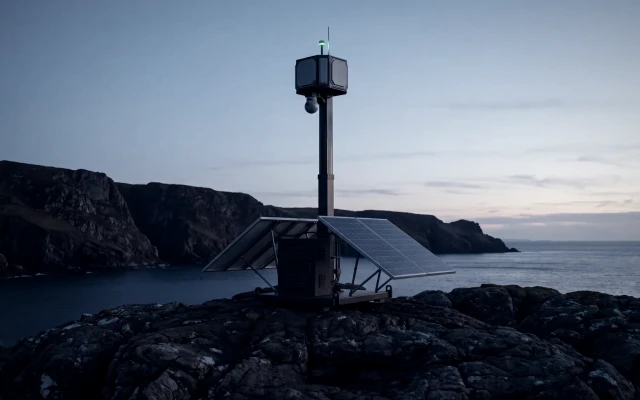
In counter-drone work the C2 layer also connects detection to response. Vaubren’s counter-drone mission joins three systems through Redoubt: Bartizan, a self-powered sensing tower and a concept in development; Stillpoint, a portable counter-drone electronic warfare unit, also a concept in development; and Ravelin, a fast, printed counter-drone interceptor, a prototype in testing.
Whatever the effector, the requirement is the same. The software presents the track, the options and the consequences to a person, and does not act without that person’s authorisation.
Interoperability and open standards
The case for common C2 software is scale. Operators should not have to learn a new interface for every aircraft, and buyers should not pay to rewrite software each time a platform is added. The European Defence Agency summarised the problem in July 2023: every manufacturer has used its own standards.
The main reference points an evaluation team will meet:
| Standard or framework | What it covers |
|---|---|
| NATO STANAG 4586 | Standard interfaces between UAV control systems and air vehicles, including data link, command and control, and human-computer interfaces, to support interoperability in NATO combined and joint operations |
| PYRAMID (UK Ministry of Defence) | An open systems architecture for air mission systems, with Technical Standard Guidance V1.0 published on the programme page |
| INTERACT (European Defence Agency) | Groundwork for a European interoperability standard for military unmanned systems, coordinated by Fraunhofer IOSB under the Preparatory Action on Defence Research |
| SAE UxS Control Segment (UCS) architecture | A service-based architecture for unmanned system control segments, published by SAE International |
The UK describes PYRAMID’s aim as making legacy and future air mission systems affordable, capable and adaptable through an open systems approach and software reuse. INTERACT, funded with €1.5 million from the 2019 PADR call, was designed to let unmanned assets work in single-system operations, crewed and uncrewed teaming, control handovers and swarms, regardless of which nation or company supplied them.
Compliance with a standard is a claim that can be tested. Interface documents, conformance test reports and integration trials with third-party vehicles are better evidence than a logo on a slide.
Keeping a person in command
Automation is useful for routine flight and for managing workload. Authority over consequential decisions stays with people. EUROCONTROL’s 2012 specifications for military remotely piloted aircraft flying as operational air traffic make oversight by the pilot-in-command the primary mode, even with pre-programmed autonomy, and state that the pilot should be able to intervene in the management of the flight at all times. On total loss of data link, the aircraft should revert to a backup autonomous mode designed to keep other airspace users safe.
For C2 software, human authority becomes concrete design features:
- An explicit authorisation step before any active response, tied to a named role.
- A decision record showing who approved what, when, and on what information.
- Clear display of classification confidence, so the approver knows how far to trust a track.
- Defined, tested behaviour when the link to an aircraft is lost.
What evaluation teams should ask for
These questions apply to any supplier. Each asks for evidence a team can request and check.
Architecture and interoperability
- Which open standards and interface specifications does the software implement, and can the supplier provide the interface documents?
- Has it controlled vehicles or sensors from other manufacturers, and in what kind of trial?
- Can new sensor or vehicle types be added without rewriting the core, and who does that work?
Operator authority and safety
- Where does a person authorise an active response, and can configuration bypass that step?
- Can an operator override automated actions at any point, including during link degradation?
- What safety management approach does the supplier follow, and how is conformance shown?
Links, security and data
- What predefined behaviour applies when the command link fails: loiter, return or land?
- How are links encrypted and authenticated, and how are vulnerabilities reported and patched?
- Who holds the logs, where are they stored and who can access them? For European buyers this is a question of sovereign control over the software stack.
Human factors and training
- Does the interface run on the laptops and tablets operators already carry, and can missions be rehearsed in simulation?
- How many people does a typical mission need, and what evidence supports that figure?
Programme maturity
- Is the software a concept, a prototype, in trials or in service? Expect a plain answer and a written scope.
Redoubt: Vaubren’s command and control software
Vaubren Systems is a European defence technology company, incorporated in Bulgaria, that develops aircraft, command software, sensing and electronic warfare as one integrated system. Redoubt is its command and control software. It plans missions, shows one live picture and keeps a person in command of every use of force. It is in development.
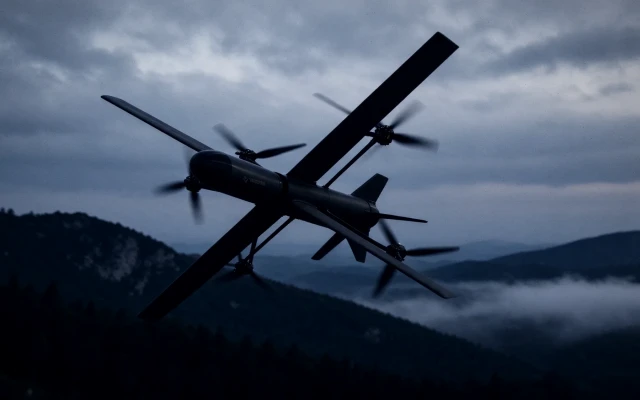
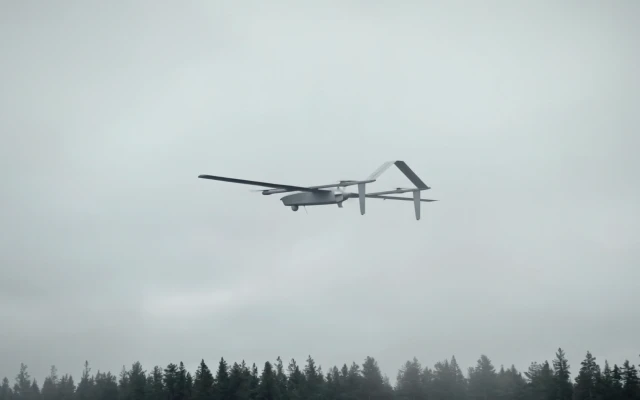
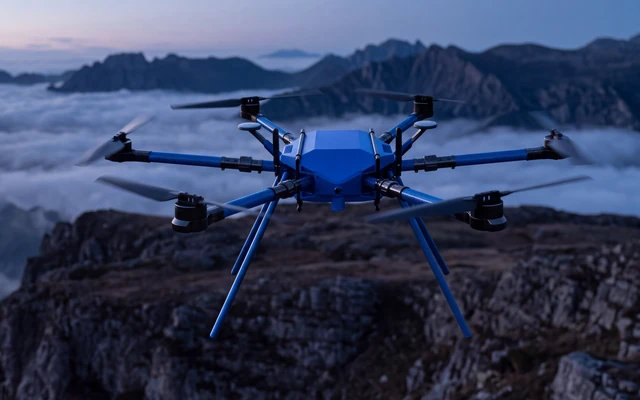
Redoubt is the common layer across Vaubren’s three missions. In counter-drone work it joins Ravelin, Bartizan and Stillpoint. In surveillance it works with Glacis, a long-range vertical take-off surveillance aircraft and a prototype in testing, and with Bartizan. In logistics it plans resupply with Caisson, an uncrewed heavy-lift aircraft that has been tested as a prototype.
Development, testing and manufacturing are planned at Starfort, Vaubren’s campus in Bulgaria, so that design, software and production sit within one European company. The full set of systems is on the Armory page. Teams assessing command software for unmanned systems can contact Vaubren.
FAQ
What is command and control software for unmanned systems?
Software that lets a team plan missions, direct several unmanned vehicles and sensors, share one live picture and record decisions. A ground control station usually serves one vehicle, whereas C2 software coordinates a whole mission.
What software is used to control military drones?
Each aircraft usually has a ground control station from its manufacturer. Armed forces add C2 layers that handle several vehicle types, secured links and authorisation workflows, increasingly built to open interfaces such as NATO STANAG 4586.
Which standards govern interoperability?
No single standard covers everything. Buyers meet NATO STANAG 4586, the UK’s PYRAMID guidance, the SAE UCS architecture and the European work begun under INTERACT. Ask each supplier which it implements, to what level, and what test evidence exists.
Can C2 software act without a person’s approval?
A responsible design does not allow consequential actions without human authorisation. EUROCONTROL’s specifications for military remotely piloted aircraft require that the pilot-in-command can intervene at all times. Redoubt is designed to keep a person in command of every use of force.
Sources
- UK Ministry of Defence, PYRAMID programme (last updated 31 March 2025)
- European Defence Agency, EDA-led project shapes standards for unmanned systems (12 July 2023)
- Fraunhofer IOSB, Interoperability of Unmanned Systems
- NATO STANAG 4586, Standard Interfaces of UAV Control System (UCS) for NATO UAV Interoperability
- SKYbrary, RPAS Pilot-in-Command (citing EUROCONTROL specifications, 2012)
About Vaubren
Vaubren is a European defence technology company developing aircraft, command software, sensing and electronic warfare as one integrated system, with a person in command of every use of force.
More insights
STANAG 4586 Overview: NATO UAV Control InteroperabilitySTANAG 4586 explained: purpose, architecture (CUCS, VSM, DLI), the five levels of interoperability, editions and what compliance means in practice.Responsible AI in European Defence: Rules, Principles and PracticeHow NATO, the EU and the UK approach responsible AI in defence: six NATO principles, the AI Act exemption, human control, assurance, and what suppliers must do.UAV Autonomy Levels: Frameworks, Limits and Human ControlHow UAV autonomy levels are defined, why no single international scale exists, and what each framework means for human control and survivability.