
Drone Swarms: How They Work and How Europe Is Adapting
What a drone swarm is, how swarms coordinate, and how European air defence is adapting through detection, command and control, layered interception and cost.
A drone swarm is a group of at least three drones that coordinate their flight, sensing and tasks through shared algorithms and local communication, with limited human attention to each individual aircraft. The defence question is what happens when massed, low-cost uncrewed aircraft are used against sites and forces that were designed to counter a handful of high-value threats. This article, published by Vaubren Systems, explains the technology, summarises what public research and official sources show as of November 2026, and sets out how European air defence is adapting through detection, command and control, layered interception and the economics of the exchange.
What a drone swarm is
The US Government Accountability Office describes drone swarm technologies as coordinating at least three drones, and up to thousands, to perform missions cooperatively using algorithms and local sensors, with limited human attention and control (GAO, Science and Tech Spotlight, 2023). Two features separate a swarm from several drones flown at once. First, the aircraft share information with each other, so the group reacts to what any member senses. Second, tasks are allocated across the group rather than assigned one aircraft to one pilot.
The same GAO assessment notes that swarms can complete a variety of tasks in parallel and can continue operating when individual drones become inoperable. That tolerance of loss is the property that makes a swarm attractive to those who build one and difficult for those who must defend against one.
The term is also used loosely. Many public reports of drone “swarms” describe a large number of drones launched at the same time by separate operators. These are massed attacks. A true swarm adds cooperative behaviour between the aircraft. For a defender the practical distinction matters less than the number of simultaneous tracks, but it shapes which countermeasures are likely to work.
How many drones make a swarm
The GAO figure of three as a minimum is a technical definition, not a threshold of operational concern. A cooperative group of three can already demonstrate collective behaviour. The planning problems for a defender begin when the number of aircraft in a small area exceeds the number of tracks a sensor and its operators can classify and prioritise at once.
How swarms coordinate
According to the GAO, swarms coordinate using algorithms, local sensing and communication. The control approach falls into three broad types:
- Preprogrammed paths. Each aircraft follows a route set before launch. This needs the least communication but cannot adapt.
- Centralised control. A ground station or lead aircraft assigns tasks and routes to the group. It is easier to supervise but depends on the control link.
- Distributed control. Each aircraft acts on information shared with its neighbours, often inspired by biological swarm behaviour. It tolerates the loss of a node but is harder to predict and verify.
The GAO also observes that human intervention may be necessary for sensitive missions. That point links directly to European policy and doctrine, where keeping a person responsible for any use of force is a recurring requirement.
Where swarm development stands in Europe
Public reporting shows work in several countries. A 2025 analysis by Forecast International reports that Germany, Sweden, the UK and the Netherlands are developing swarm technologies. It cites Germany’s KITU 2 programme, launched in 2023, which tested multi-drone coordination in GPS-deprived conditions, and Saab software designed to control up to 100 uncrewed aircraft systems (Forecast International, January 2025). The same source says Sweden’s planned tests were expected to cover reconnaissance, defence and payload delivery.
In the UK, the Defence Science and Technology Laboratory delivered Phase 1 of a Software Defined Swarms Concept Demonstrator with Army Headquarters and industry. Reporting on the Ministry of Defence statement says the Army completed eight weeks of experimentation with eight uncrewed aerial vehicles, with further trials planned through 2026 and 2027 (Defence Leaders, September 2026). The official announcement is on GOV.UK.
Switzerland’s Taskforce Drones conducted trials at the Hinterrhein shooting range in December 2025 to assess the maturity of attack and defence drone systems (Swiss federal administration, 2025). At European level, the European Defence Agency launched its first Operational Experimentation campaign in 2025 to test autonomous uncrewed air and ground solutions, with the stated aim of narrowing the gap between technological innovation and deployment (European Defence Agency, February 2025).
NATO’s Secretary General Mark Rutte has said that drones have fundamentally altered modern warfare and that the Alliance would become “drone-ready”, as reported by CNBC in July 2026.
Why massed drones strain existing air defence
Three pressures recur in public analysis.
Track count. Air defence sensors were optimised for a limited number of fast, high-value targets. Small drones fly low and slowly, and many of them at once can exceed what an operator can classify. Sector analysis points to false alarms from birds, vehicles and clutter as a further load, which is why sensor fusion matters. Vaubren’s guide to drone detection radar covers how small, low-flying aircraft are found.
Dispersion. Academic work published in 2026 on swarm economics notes that high-power microwave systems are being explored as a counter-swarm technology, but their narrow-beam effectiveness is challenged when drones disperse to dilute target density (Security and Defence Quarterly, 2026). A single answer rarely covers a spread-out group.
Cost. Commentary on NATO air defence argues that quantity and affordability now matter as much as the performance of individual interceptors. The Register, reporting in March 2026 on analysis of Ukrainian experience, says one-way interceptor drones costing as little as $2,000 now account for the majority of drone takedowns in Ukraine, and that integrated air defence must be layered and cost-effective (The Register, March 2026). This is press reporting of a single analysis, so treat the figure as indicative and check current official data before using it in a business case.
How European air defence is adapting
The public literature points to four functions that have to work together. None is sufficient alone.
Detection and sensing
A defender cannot manage what it cannot see. Layered sensing combines radar, radio frequency detection, electro-optical and infrared cameras, and sometimes acoustic sensors. Each has blind spots: radar can struggle with very small, slow targets near clutter, radio frequency detection sees nothing from a drone flying without emissions, and cameras depend on weather and line of sight. Fusing the outputs reduces false alarms and raises confidence in a track.
For fixed and temporary sites, this sensing is often delivered from towers or vehicles. Vaubren’s overview of drone detection systems explains how to choose between sensor types, and its guide to mobile surveillance towers covers the tower approach for borders, ports and critical sites.
Command and control
When many tracks arrive together, the limiting factor is often the speed at which people can build one shared picture and decide what to do. Command and control software has to fuse sensor feeds, present a single live picture, record events and route decisions to an authorised person. Where an engagement is possible, European doctrine and law place the decision with a human, and software should make that authorisation explicit and auditable rather than bypass it. Vaubren’s explainer on command and control software for unmanned systems sets out what buyers should expect from such a layer.
Layered interception
Academic work on air defence deployment against swarms concludes that counter-swarm strategies should use layered defences that combine kinetic and non-kinetic means to manage massed uncrewed systems (Optimization of Air Defense System Deployment, 2023). In practice a layered arrangement has these elements:
| Layer | Role | Typical considerations |
|---|---|---|
| Detection and tracking | Find and classify aircraft early | Sensor mix, false alarms, coverage gaps |
| Electronic measures | Disrupt command links or navigation of hostile drones | Spectrum rules, risk to friendly systems, drones that operate autonomously |
| Interceptor drones | Defeat individual aircraft at low cost per engagement | Availability in quantity, guidance, safe use near people and infrastructure |
| Guns and larger air defence | Handle what the other layers do not | Cost per engagement, collateral risk |
Electronic warfare is a layer with its own constraints. Autonomous drones that do not rely on a continuous control link are less affected by jamming, and reporting indicates that developers are working on exactly this resilience: CNBC notes that Auterion’s operating system is designed to let drones continue their task despite electronic jamming, and that the company plans software for coordinated swarm control (CNBC, July 2026). Vaubren’s primer on electronic warfare explains the spectrum, jamming and protection.
The cost exchange
The cost exchange ratio compares what a defender spends to defeat a threat with what the attacker spent to field it. If a low-cost drone forces the use of a much more expensive missile, the defender loses the economic contest even when the engagement succeeds. The remedy discussed in public analysis is not a single cheaper weapon but a mix: electronic measures and low-cost interceptors for the numerous, cheap threats, with higher-end systems held for targets that need them.
A fair note on limits: cost per engagement is only one input. Reliability, safe employment around civilian infrastructure, training burden and logistics all count, and buyers should assess them through trials rather than headline figures. Vaubren’s guide to drone interceptors and how buyers assess them sets out evaluation criteria.
Risks and open questions
The GAO identifies safety, privacy and cybersecurity concerns for swarms, and notes that a swarm could be hacked or redirected for malicious purposes (GAO, 2023). These risks apply equally to defensive swarms, which is why verification, secure communications and clear human authority are design requirements, not optional features.
Sector analysis, rather than a single verified source, suggests three integration challenges for anyone developing swarm aircraft and the software that supervises them:
- Degraded conditions. Aircraft must continue to operate when satellite navigation and radio links are contested. Germany’s KITU 2 trials in GPS-deprived conditions illustrate the problem.
- Shared picture across mixed fleets. Interceptors, surveillance aircraft and sensors from different makers need common interfaces so that operators see one picture.
- Human authority at scale. The more aircraft an operator supervises, the more the interface must show what needs a decision and what does not, without removing the person from the decision.
Vaubren’s role
Vaubren Systems is a European defence technology company incorporated in Bulgaria and founded by Rafael Zard. Vaubren designs aircraft, sensing, electronic warfare and command software as one integrated set of systems for European defence, across three missions: counter-drone, surveillance and logistics. Its published systems are:
- Ravelin, a fast, printed counter-drone interceptor, a prototype in testing.
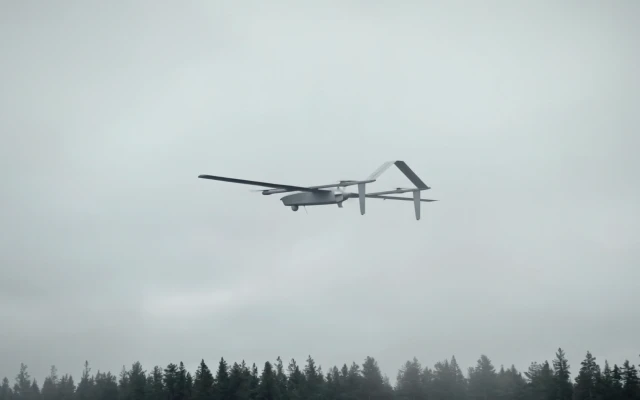
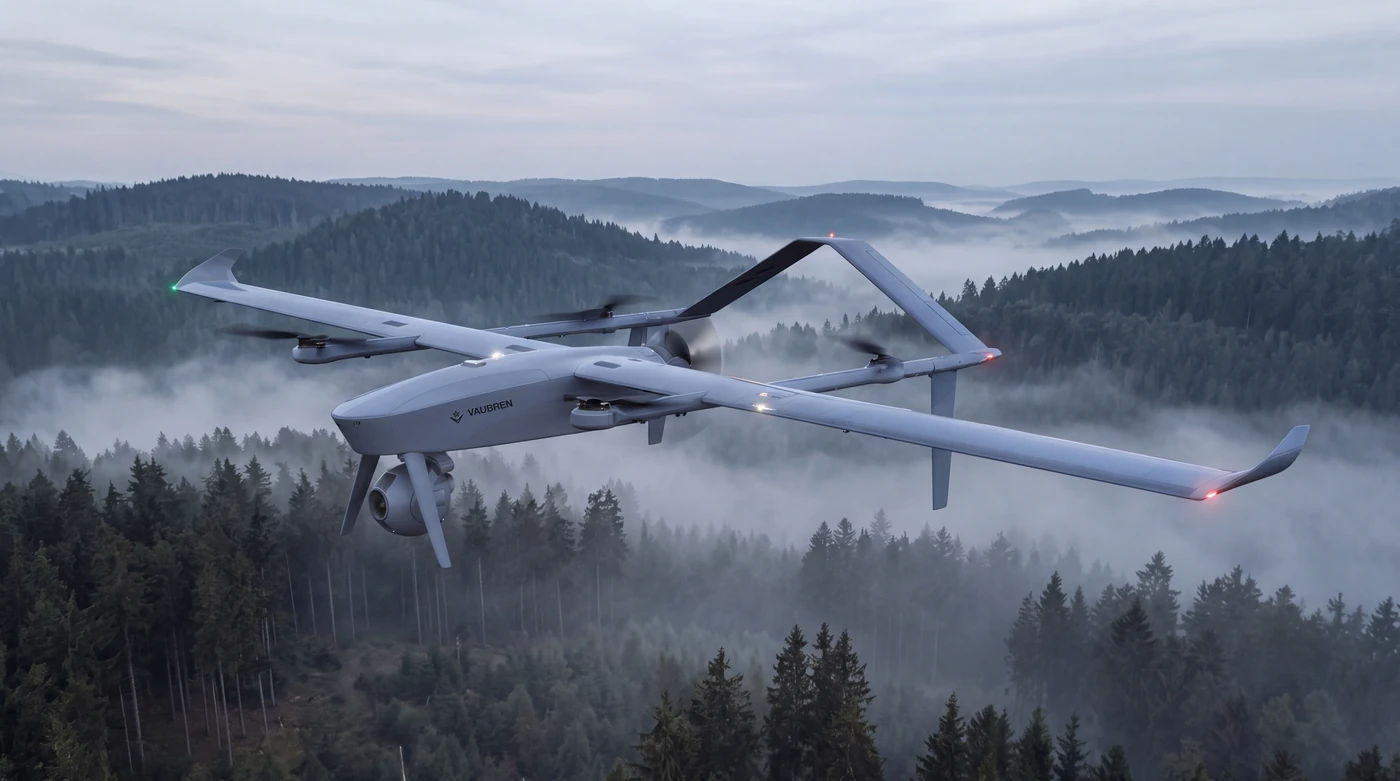
- Glacis, a long-range vertical take-off surveillance aircraft for borders, coasts and critical sites, a prototype in testing. See the border and coastal surveillance page.
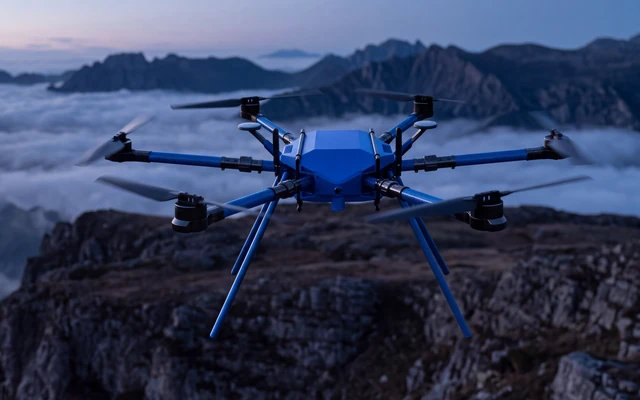
- Caisson, an uncrewed heavy-lift aircraft for resupply, a tested prototype.
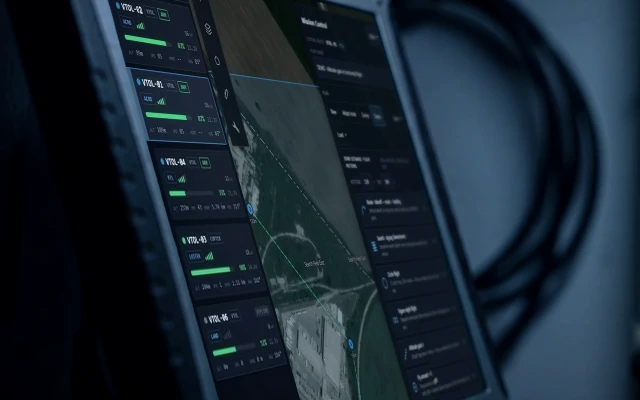
- Redoubt, command and control software that plans missions, shows one live picture and keeps a person in command of every use of force, in development and evaluation.
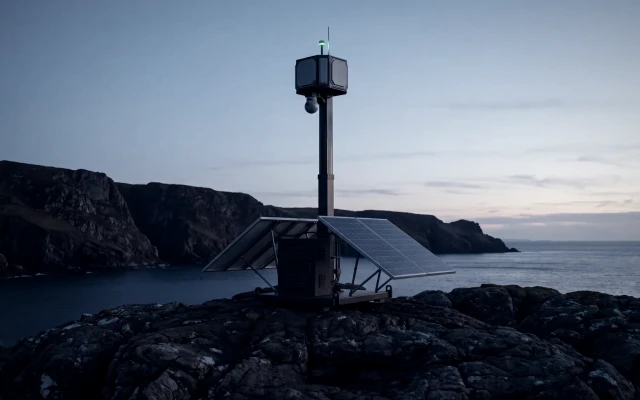
- Bartizan, a self-powered sensing tower with radar, radio detection and cameras, a concept in development.
- Stillpoint, a portable counter-drone electronic warfare unit, a concept in development.
Starfort is Vaubren’s planned development, testing and manufacturing campus in Bulgaria.
The design intent follows the four functions described above: Bartizan for detection and sensing, Stillpoint for the electronic layer, Ravelin for interception, and Redoubt as the shared picture that joins them with a person authorising any use of force. Teams assessing how these fit together can start with Vaubren’s counter-drone systems page or its overview of counter-drone systems in Europe.
Next step for programme teams
Procurement, capability and innovation teams, and manufacturers or research organisations considering joint work, can read Vaubren’s guide to defence R&D partnerships in Europe and then make contact through vaubren.com. Engineers interested in careers in European defence technology can use the same site.
FAQ
What is a drone swarm?
A drone swarm is a group of at least three drones that coordinate their flight, sensing and tasks using algorithms and local sensors, with limited human attention to each aircraft. The GAO notes that swarms can run tasks in parallel and keep operating when some drones fail. Control can be preprogrammed, centralised or distributed.
How many drones are considered a swarm?
The GAO defines swarm technologies as coordinating at least three drones and up to thousands. There is no single operational threshold. For defenders, what matters is whether the number of simultaneous tracks exceeds what sensors and operators can handle.
Which countries are developing swarm drones?
Public reporting names Germany, Sweden, the UK and the Netherlands as developing swarm technologies, and the UK’s Dstl and British Army have run swarm trials with industry. Switzerland has also tested drone and counter-drone systems, and the European Defence Agency runs an experimentation campaign on autonomous systems. Other countries are also active, and this list reflects public sources current to November 2026.
How can drone swarms be countered?
Public research favours layered defence: sensor fusion for detection, a shared command picture, electronic measures, interceptor drones and larger air defence for what remains. No single method is sufficient, because swarms disperse and can be built to keep working when some aircraft are lost. Cost per engagement is a central design factor.
Sources
- GAO, Science and Tech Spotlight: Drone Swarm Technologies (2023)
- Forecast International, Drone Wars: Developments in Drone Swarm Technology (January 2025)
- Defence Leaders, British Army drone swarm trials (September 2026)
- GOV.UK, Dstl drone swarm accelerates Army autonomy ambition
- Swiss federal administration, Taskforce Drones tests technological maturity (2025)
- European Defence Agency, first operational experimentation campaign (February 2025)
- CNBC, Why Europe is suddenly betting big on drones (July 2026)
- The Register, NATO air defences and drone swarms (March 2026)
- Security and Defence Quarterly, swarm UAV battlefield economics (2026)
- Optimization of Air Defense System Deployment Against Swarms (2023)
About Vaubren
Vaubren is a European defence technology company developing aircraft, command software, sensing and electronic warfare as one integrated system, with a person in command of every use of force.
More insights
STANAG 4586 Overview: NATO UAV Control InteroperabilitySTANAG 4586 explained: purpose, architecture (CUCS, VSM, DLI), the five levels of interoperability, editions and what compliance means in practice.Responsible AI in European Defence: Rules, Principles and PracticeHow NATO, the EU and the UK approach responsible AI in defence: six NATO principles, the AI Act exemption, human control, assurance, and what suppliers must do.UAV Autonomy Levels: Frameworks, Limits and Human ControlHow UAV autonomy levels are defined, why no single international scale exists, and what each framework means for human control and survivability.