
European Defence Technology Companies in 2026, by Capability
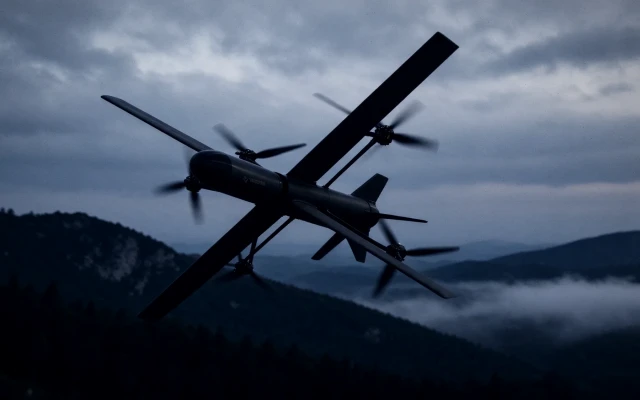
European defence technology companies in 2026, grouped by capability: counter-drone, sensing, electronic warfare, command software and aircraft.
European defence technology companies are best compared by what they build and how far each product has progressed, not by size. This overview groups companies by capability: counter-drone and interceptors, sensing, electronic warfare, autonomy and command software, uncrewed aircraft and heavy-lift logistics. It covers Helsing, STARK, Quantum Systems, Tekever, Dedrone and Vaubren Systems, with other named European specialists where their public activity is documented. It reflects public information as of November 2026. Each description rests on what the company says publicly, and none is a ranking.
How to read this overview
The sector is described in many ways, and company lists on the open web often mix prime contractors, investors’ favourites and component makers. This page uses a narrower frame: companies whose public material places them in unmanned aircraft, counter-drone, sensing, electronic warfare or command software for European defence customers.
Two points on method. First, each company is described only from its own public information, so product names and status can change; confirm them on the company’s website before relying on them. Second, the grouping is by primary capability. Several companies work across more than one group, and the table later in the article shows this.
Counter-drone systems and interceptors
Counter-drone work covers detecting, identifying and responding to unmanned aircraft, and a response may be electronic, kinetic or a mix. Buyers rarely choose one product. They assemble layers, which is why integration matters as much as any single sensor or interceptor.
Public reporting in 2026 names a wide European field, including Robin Radar Systems, Sensofusion, MyDefence, Cambridge Aerospace, TYTAN Technologies, Alta Ares, Alpine Eagle, Frankenburg Technologies, Origin Robotics, Nordic Air Defence, Rheinmetall, MBDA, Ground A and MARSS (Europe Defence Tech, 2026). They are based across the Netherlands, Poland, Finland, Denmark, the UK, Germany, France, Estonia, Latvia and Sweden, which shows how widely the activity is spread.
Two documented examples show how partnerships form in this group. TYTAN Technologies integrated its Interceptor-S system into a KNDS Boxer vehicle during German Armed Forces experiments in autumn 2025 (Drones Magazin, 2026). In June 2026, Alpine Eagle and Origin Robotics announced a partnership to integrate Origin’s BLAZE interceptor into Alpine Eagle’s Sentinel architecture for layered air defence (ESD, 2026).
Where Vaubren fits
Vaubren Systems develops Ravelin, a fast, printed counter-drone interceptor. Ravelin is a prototype in testing. Details are on the Ravelin page, and the wider approach is set out on the counter-drone systems page. For a vendor-neutral explanation of how layered systems work, see Vaubren’s guide to counter-drone systems in Europe.
Dedrone
Dedrone is known for drone detection and airspace security software, combining sensor data into one view for security teams. It was founded in Europe and is now part of the Axon group. Its public material focuses on detection, classification and alerting, so it sits closer to the sensing and software groups than to interceptors.
Sensing and drone detection
Detection is the foundation of every counter-drone layer. Radar, radio frequency detection, electro-optical cameras and acoustic sensors each cover different conditions, and sensor fusion combines them to reduce false alarms. The weak point is any single sensor: radio frequency detection struggles with drones that do not transmit, and the same reporting flags that detection must keep pace with fibre-optic and autonomous drones (Europe Defence Tech, 2026).
European sensing specialists named in 2026 reporting include Robin Radar Systems, Sensofusion and MyDefence, among others in the same source. Their products differ by sensor type, which is why buyers should ask what each sensor sees, in what weather and terrain, and how its output reaches the command system. Vaubren has published a plain explanation in its guide to drone detection systems.
Where Vaubren fits
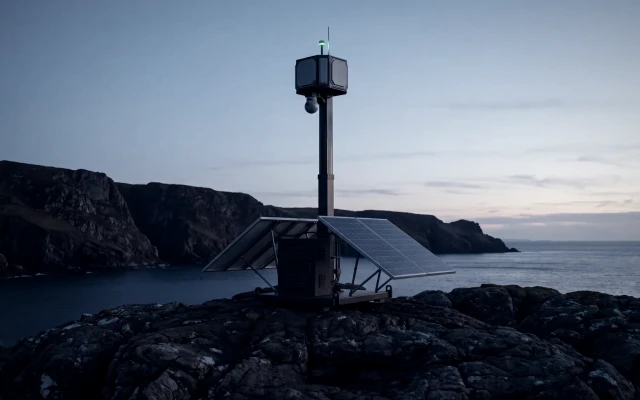
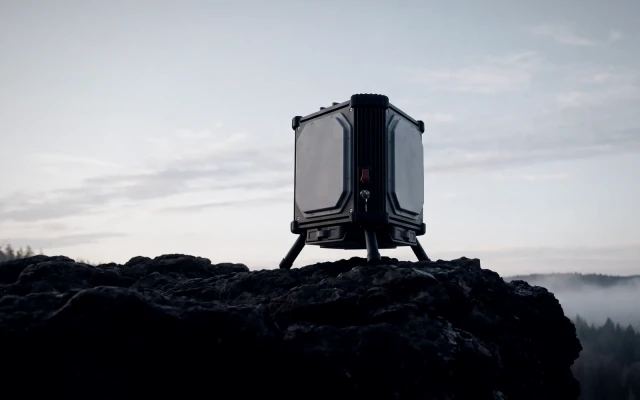
Bartizan is Vaubren’s self-powered sensing tower, combining radar, radio detection and cameras for coasts, ports, borders and critical sites. It is a concept in development. The Bartizan page describes the intended role.
Electronic warfare
Counter-drone electronic warfare aims to disrupt the radio links or navigation signals that a hostile drone depends on. It is a distinct engineering discipline from detection, and it carries legal and spectrum-management constraints that differ between countries. Specialists named in public reporting include MyDefence and Sensofusion, both of which pair detection with electronic response (Europe Defence Tech, 2026). Fibre-optic drones, which have no radio link to disrupt, are one reason buyers do not rely on this layer alone.
Where Vaubren fits
Stillpoint is a portable counter-drone electronic warfare unit. Like Bartizan, it is a concept in development. See the Stillpoint page for how Vaubren describes it.
Autonomy and command software
Command and control software is the layer that turns separate sensors and aircraft into one operating picture. Its job is to plan missions, show tracks from several sources and record what happened, and in responsible designs it keeps a person in command of every use of force.
Helsing
Helsing describes itself as a European defence company working on artificial intelligence, software and uncrewed systems. Its public material emphasises software that processes sensor data for decision support, alongside its own aircraft and other platforms. It is headquartered in Germany with operations in other European countries. Check Helsing’s own pages for current product names and their status.
Vaubren and Redoubt
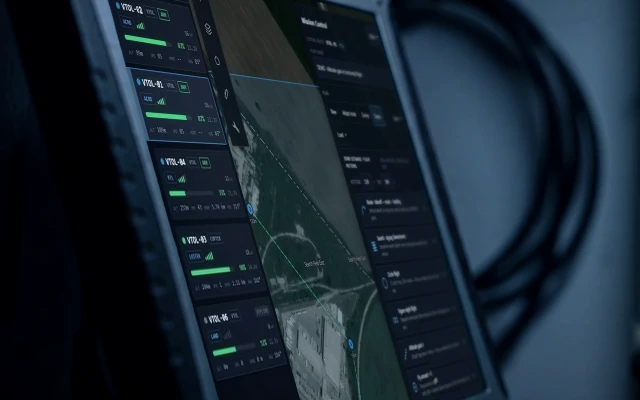
Redoubt is Vaubren’s command and control software. It plans missions, shows one live picture and keeps a person in command of every use of force. It is in development and evaluation, and the Redoubt page sets out its intended role. Its design goal is to join Ravelin, Glacis, Caisson, Bartizan and Stillpoint in a single picture.
A wider European example of why shared architecture matters is the NATO Support and Procurement Agency contract awarded to IVECO Defence Vehicles to develop and test operational concepts for robotic and autonomous systems, with the programme centred on a shared, interoperable command architecture (Defense Here, 2025).
Uncrewed aircraft
Uncrewed aircraft for surveillance and reconnaissance are the most established category in this overview, and several European manufacturers have been active for years. The category now spans small tactical aircraft to long-endurance maritime and border platforms.
Quantum Systems
Quantum Systems is a German manufacturer of vertical take-off fixed-wing uncrewed aircraft for reconnaissance and mapping, serving both commercial and defence users. Its public material presents combined aircraft and data software. Product lines and customer information are on the company’s own website.
Tekever
Tekever is a Portuguese company that builds uncrewed aircraft, with a focus on long-endurance surveillance including maritime missions, alongside related data and analysis services. Its own pages describe its range of platforms and mission types.
STARK
STARK is a Berlin-based company developing uncrewed aircraft for defence. Its public positioning centres on low-cost, scalable uncrewed systems. Details of its current programmes are on its own website.
Documented European demonstrations
In August 2025, six companies, Beyond Vision (Portugal), Altus LSA (Greece), Schiebel (Austria), Alysis (Spain), PIAP (Poland) and ARX Robotics (Germany), demonstrated unmanned systems in Italy during the European Defence Agency’s HEDI innovation campaign (Drones World, 2025). It shows how European institutions test several national suppliers side by side.
Where Vaubren fits
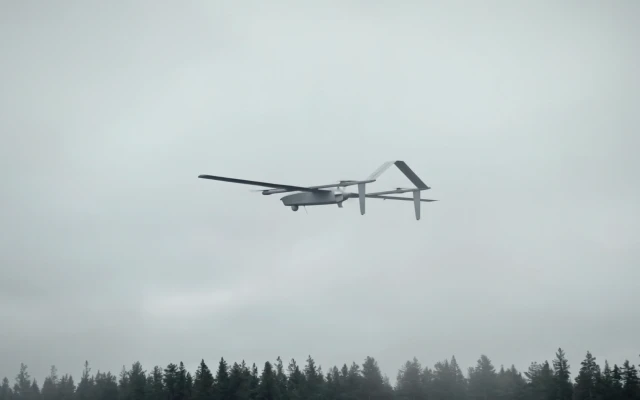
Glacis is a long-range vertical take-off aircraft built to watch borders, coasts and critical sites. It is a prototype in testing. Vaubren’s approach to this mission is described on the border and coastal surveillance page.
Heavy-lift logistics
Uncrewed resupply is the least crowded group in this overview. The use case is moving supplies to places that are hard or dangerous to reach by road, and the questions that matter are payload, reliability, handling and how the aircraft joins existing logistics planning.
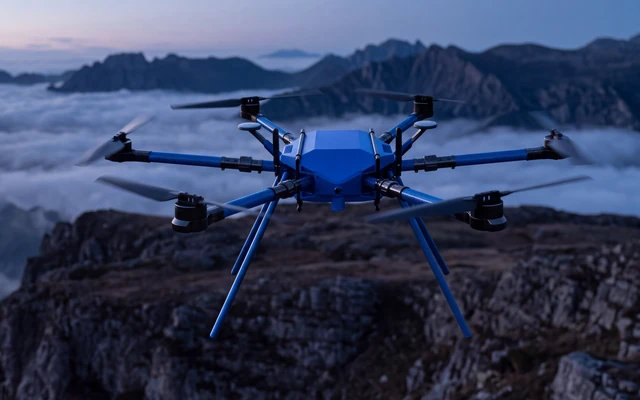
Caisson is Vaubren’s uncrewed heavy-lift aircraft for resupply, designed to move supplies to places that are hard or dangerous to reach by road. It is a tested prototype. The logistics page explains the mission. Other companies named above, including Tekever and Quantum Systems, publish their own logistics or cargo information, so compare each against your actual load and range requirements.
Capability comparison
The table summarises primary capability as each company describes itself publicly. A blank entry means the company’s public material does not centre on that area, not that it has no work there.
| Company | Main public focus | Counter-drone | Sensing | Command software | Uncrewed aircraft |
|---|---|---|---|---|---|
| Helsing | AI, software and uncrewed systems | Not central | Sensor data software | Yes | Yes |
| STARK | Uncrewed defence aircraft | Not central | Not central | Not central | Yes |
| Quantum Systems | VTOL fixed-wing aircraft and data | Not central | Payload sensing | Data software | Yes |
| Tekever | Long-endurance uncrewed aircraft | Not central | Surveillance payloads | Data services | Yes |
| Dedrone | Drone detection software | Detection and response | Yes | Airspace software | Not central |
| Vaubren Systems | Integrated aircraft, sensing, electronic warfare and command software | Ravelin, Stillpoint | Bartizan | Redoubt | Ravelin, Glacis, Caisson |
For maturity, Vaubren’s own status is stated plainly: Ravelin and Glacis are prototypes in testing, Caisson is a tested prototype, Redoubt is in development and evaluation, and Bartizan and Stillpoint are concepts in development.
What Vaubren offers
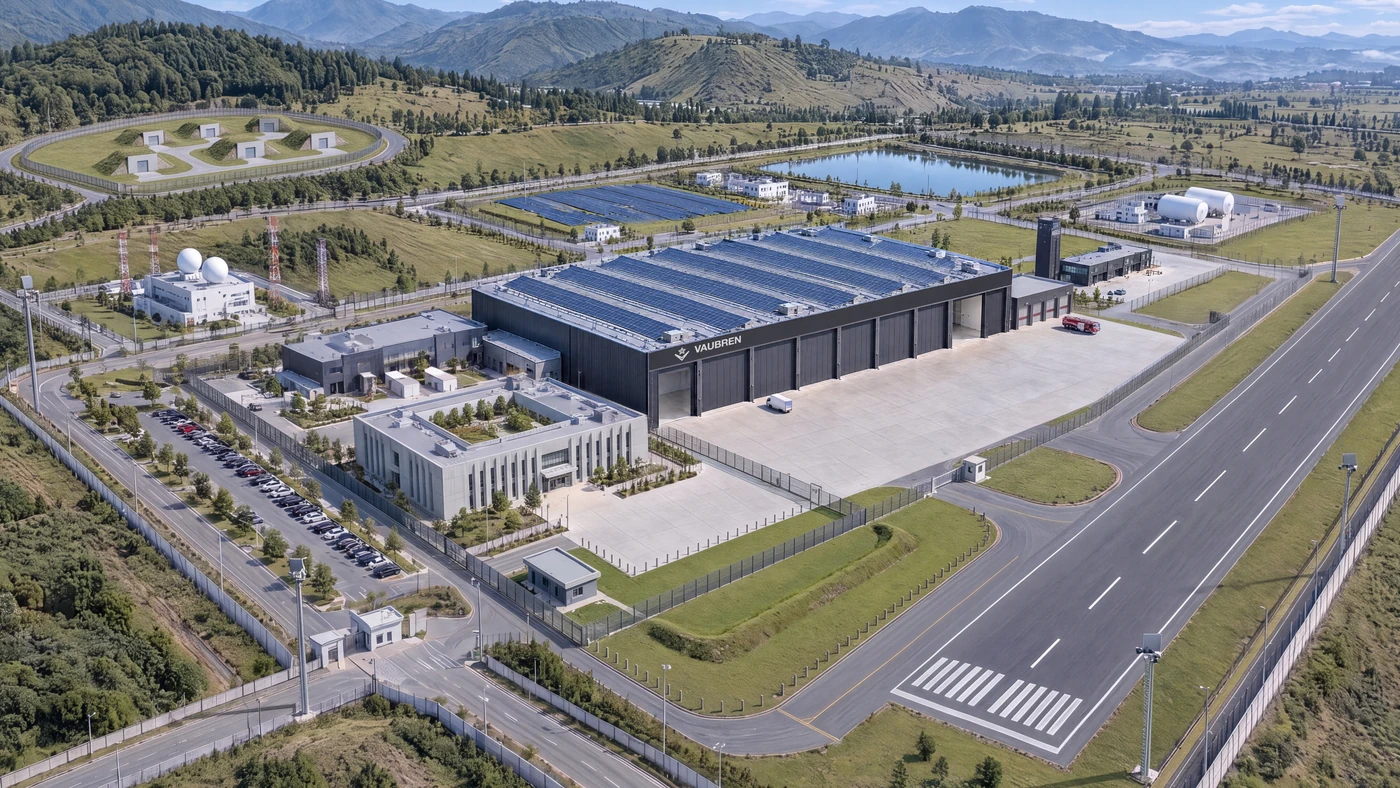
Vaubren Systems designs its aircraft, sensing, electronic warfare and command software as one integrated system for counter-drone, surveillance and logistics missions, with design, software and planned manufacturing in one company. Starfort, a planned development, testing and manufacturing campus in Bulgaria, is planned to bring development, testing and manufacturing together on one site. Procurement, capability and partnership teams can see all six systems in the Vaubren Armory, read about the mission and the leadership, or start from the Vaubren home page. Industry and research partners can read the guide to defence R&D partnerships and the suppliers page.
What to verify before choosing a company
A company’s name in a list says little about its readiness. Procurement teams, investors and prospective employees can use the same short checklist.
- Status of the product. Is it a concept, a prototype in testing, or a product that is delivered? Ask for evidence from a named trial or contract.
- Production capacity. Reporting on the counter-drone market asks whether interceptor makers can produce thousands affordably (Europe Defence Tech, 2026). The same question applies to aircraft.
- Detection against new threats. Ask how the sensor set handles fibre-optic and autonomous drones.
- Integration. Buyers tend to favour layered systems over single products, so ask which command systems and data formats the product connects to.
- Human control. Ask how the software keeps an authorised person in command of any response.
- Sovereignty. Establish where design, software and manufacturing take place, and who controls the whole stack.
- Regulation. Dual-use and export rules affect what can be sold and to whom; see Vaubren’s explanation of dual-use technology.
FAQ
Which European companies make counter-drone systems?
Public reporting in 2026 names Robin Radar Systems, Sensofusion, MyDefence, Cambridge Aerospace, TYTAN Technologies, Alpine Eagle, Origin Robotics and several others. Dedrone is also widely associated with drone detection software. Vaubren Systems is developing Ravelin, a counter-drone interceptor prototype in testing.
Is this list a ranking?
No. The companies are grouped by capability and described from their own public information. Size, funding and visibility say little about whether a product fits a particular requirement.
How mature is Vaubren’s equipment?
Vaubren describes Ravelin and Glacis as prototypes in testing and Caisson as a tested prototype. Redoubt is in development and evaluation, and Bartizan and Stillpoint are concepts in development.
Can Vaubren be contacted about partnerships?
Yes. Defence procurement, industry and research teams can start from the contact page or the suppliers page. Engineers can see open roles in Bulgaria on the careers page.
Sources
- Counter-Drone Companies in Europe: The 2026 C-UAS Guide, Europe Defence Tech
- KNDS and TYTAN Technologies deepen cooperation, Drones Magazin
- Alpine Eagle and Origin Robotics partner to strengthen layered air defence, ESD
- 1st EU-Level OPEX Campaign Tests UAV and UGV Systems in Italy, Drones World
- IVECO to lead NATO project on robotic and autonomous military systems, Defense Here
About Vaubren
Vaubren is a European defence technology company developing aircraft, command software, sensing and electronic warfare as one integrated system, with a person in command of every use of force.
More insights
Loitering Munitions: Definition, Law and European ProcurementWhat a loitering munition is, how it differs from drones and missiles, and how international humanitarian law, export control and European procurement apply.European UAV Procurement in 2026: Routes, Funding and EntryHow European governments buy unmanned aircraft and counter-drone systems in 2026: EDIP, SAFE, NATO's marketplace, national tenders and what new suppliers need.Aerospace Supply Chains in Bulgaria: Who Makes WhatHow Bulgaria's aerospace and defence supply chain is built: manufacturers, research centres, export controls, logistics and what partners should check.