
European Defence Fund: Purpose, Budget, Calls and How to Join
How the European Defence Fund works: purpose, 2021-2027 budget, annual calls, consortium rules and how newer companies can take part, sourced from the Commission.
The European Defence Fund (EDF) is the European Commission’s programme for co-financing collaborative defence research and development from the EU budget. Companies, research bodies and universities from several countries apply together, and the Commission funds the project with grants. This guide explains the fund’s purpose, budget cycle, annual calls, consortium rules and the routes open to companies entering European defence. Information is current as of 29 October 2026, and the Commission’s official pages govern every deadline and condition.
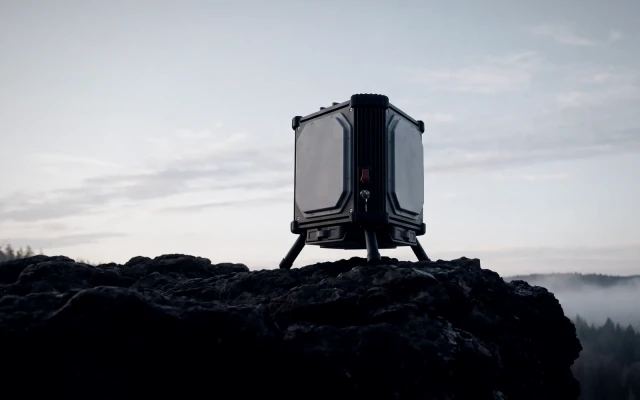
Vaubren Systems is a European defence technology company developing Ravelin, Glacis and Caisson (aircraft), Redoubt (command software), Bartizan (sensing) and Stillpoint (electronic warfare).
What the European Defence Fund is for
The Commission describes the EDF as its key initiative to support collaborative research and development of defence capabilities with the EU budget. The legal basis is Regulation (EU) 2021/697. Its general objective is to foster the competitiveness, efficiency and innovation of the European defence technological and industrial base, which in turn contributes to the Union’s strategic autonomy (consolidated version of 23 December 2025).
Three features distinguish it from national defence spending:
- Collaboration is a condition. The fund pays for cross-border projects, not for a single company’s product line.
- It covers research and development, not procurement. The Commission’s page describes support across the entire cycle of research and development for defence products and technologies.
- Priorities come from Member States. The Regulation ties the fund’s priorities to those agreed by Member States within the Common Security and Defence Policy, particularly the Capability Development Plan. It also allows support for activities that lead to harmonised capability requirements and common technical specifications or standards, particularly where they foster interoperability.
For a company, the practical meaning is that an EDF project is built around a capability need that several governments share. A strong application shows that need first and the technology second.
Budget and programme period
The EDF belongs to the 2021-2027 multiannual financial framework. According to the Council of the EU, it started with nearly €7.3 billion and was later reinforced by a further €1.5 billion from the Strategic Technologies for Europe Platform (STEP). Other summaries, including a European Parliament think tank note of 8 October 2025, quote the round figure of €8 billion for 2021-2027, which matches the combined total.
The money is not released in one block. The Commission adopts an annual work programme, publishes calls under it, evaluates proposals and signs grant agreements with the winning consortia. A company entering the field in 2026 or later is therefore working with the final years of this budget period. Arrangements for the period after 2027 depend on the EU’s next budget negotiations, so check the Commission’s EDF page for the latest position before building a multi-year plan around the fund.
The annual call cycle
The Commission’s official page states that the EDF is implemented through annual work programmes structured along 34 thematic and horizontal categories of action, defined in close cooperation with Member State representatives, including the European Defence Agency and the European External Action Service.
The 2026 work programme
The same page records that the Commission adopted the 2026 Annual Work Programme on 17 December 2025, earmarking €1 billion. It covers 31 call topics: seven thematic calls, three non-thematic calls, one action on threats from hypersonic glide vehicles and two actions supporting the EU Alliance for defence medical countermeasures.
The Commission splits the budget roughly in three:
| Share of budget | Purpose | Examples named by the Commission |
|---|---|---|
| About half | Collaborative R&D on major defence capabilities | An EU endo-atmospheric interceptor, a main battle tank, a multiple rocket launcher, a semi-autonomous vessel |
| About one quarter | Critical technologies and capabilities | Quantum-secured networks, electronic warfare, multi-domain operations cloud, high-performance energy systems |
| About one quarter | EU Defence Innovation Scheme (EUDIS) | Around €60 million for disruptive technologies and €60 million for non-thematic calls for SMEs |
The pattern matters more than any single date. Calls open after the work programme is adopted, remain open for a period set in each call document, and close on deadlines published in the EU Funding and Tenders Portal. Because those dates change every year, treat the portal as the only authority on the current schedule.
What the fund supports
The fund covers all military domains and key enabling technologies, including artificial intelligence, cyber defence, drones, quantum technologies and electronic warfare. That breadth is why firms working on unmanned systems, sensing and electronic warfare follow the calls closely. Further background on the technology areas is available in the Vaubren guide to counter-drone systems in Europe.
Who can take part: eligibility and consortium rules
The Commission’s eligibility guidance sets out the following core conditions:
- Consortium size. A standard consortium consists of at least three entities from at least three Member States or associated countries. Disruptive technology calls allow smaller consortia of at least two entities from two Member States or associated countries.
- Location. Participants must be established in the EU or an associated country, with their executive management structure in the EU.
- Control. Participants should not be controlled by a non-associated third country, unless specific approved guarantees are in place. The same rule applies to subcontractors.
These conditions are drawn from the Commission’s official EDF page, which also hosts an eligibility checker for individual cases.
Companies outside the EU
Readers in the United Kingdom should note that control and location rules apply to the entity, not to the nationality of its staff. A UK-based company should check the Commission’s eligibility pages and take legal advice on its own position before planning to join a consortium. The EDF is separate from the EU’s defence loans scheme, where, according to the BBC on 28 November 2025, talks on a larger UK role broke down over money. Status can change, so confirm any current arrangement with official sources.
Funding rates
Support is primarily given as grants covering up to 100% of eligible costs. The Commission describes a bonus system that rewards the participation of SMEs and mid-caps and alignment with Permanent Structured Cooperation (PESCO) projects. The Regulation treats the participation of SMEs and mid-caps as a core mechanism for a more open internal market and more diverse solutions. The rate for any given project depends on the call type and the action, so the call document, not a general summary, sets the final figure.
How newer companies enter the programme
A company without EDF history has four practical routes.
Join an existing consortium
Most newcomers begin as a partner in a project led by a larger prime contractor or a research organisation. The role is usually defined by a specific technical work package, such as a sensor, a software component or a test activity. Preparing a concise capability statement, with evidence of technical maturity and a clear fit to the call topic, helps a coordinator decide quickly.
Use the SME and disruptive calls
The 2026 programme includes about €60 million for non-thematic calls aimed at SMEs and about €60 million for disruptive technologies, both under EUDIS. The disruptive calls accept a smaller consortium of two entities from two countries, which lowers the coordination burden for a first application.
Use financial support to third parties
Financial Support to Third Parties, also called cascade funding, is described by the Commission as a mechanism that simplifies funding access and eases integration of smaller stakeholders into collaborative projects. Funded consortia redistribute part of their grant through their own open calls, so a small company applies to the consortium rather than to the Commission.
Build the partnership network first
Consortia form months before a call closes. Industry events, national defence ministries, national contact points and sector associations all help. Vaubren’s guide to defence R&D partnerships in Europe covers how such relationships start, and its page for suppliers and supply chain describes how companies can approach Vaubren.
The application process in practice
The Commission’s tutorial on the submission process lists the main administrative steps:
- All participants must be registered in the Funding and Tenders Portal and hold a Participant Identification Code (PIC).
- The coordinator prepares the proposal, with Part B and the mandatory annexes, including the Detailed Budget Table.
- The application is uploaded as an encrypted zip archive containing Part B and all mandatory annexes.
The Commission also runs information days and publishes tutorials for each call. Registration, partner validation and budget tables take longer than most first-time applicants expect, so these steps are best started well before the call window.
What evaluators look for
The Commission’s evaluation criteria vary by call, but proposals are generally judged on excellence, impact and implementation. Clear technical objectives, a credible work plan, a defined contribution from each partner and a link to an agreed capability priority are the common threads. The call document is the reference for scoring and thresholds.
Where unmanned systems, sensing and electronic warfare fit
The EDF’s stated technology scope includes drones and electronic warfare, and the 2026 allocation for critical technologies names electronic warfare explicitly. This makes the fund relevant to companies developing counter-drone, surveillance and logistics capabilities. Relevance does not mean any particular company has applied, won or been selected, and this article makes no such claim about Vaubren.
The following describes the Vaubren systems as presented on vaubren.com, and is not a statement of EDF participation:
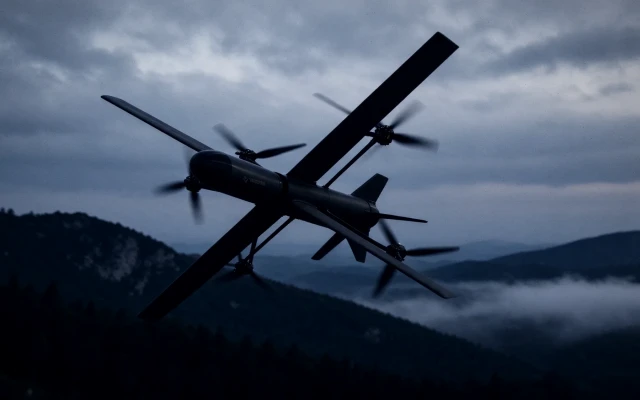
- Ravelin is a fast, printed counter-drone interceptor, a prototype in testing.
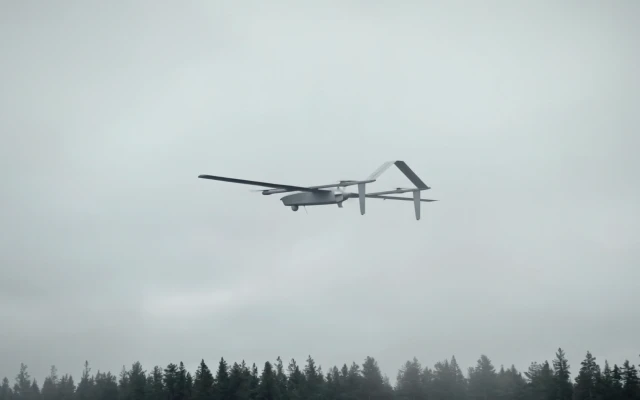
- Glacis is a long-range vertical take-off surveillance aircraft for borders, coasts and critical sites, a prototype in testing. Vaubren’s page on border and coastal surveillance describes the mission.
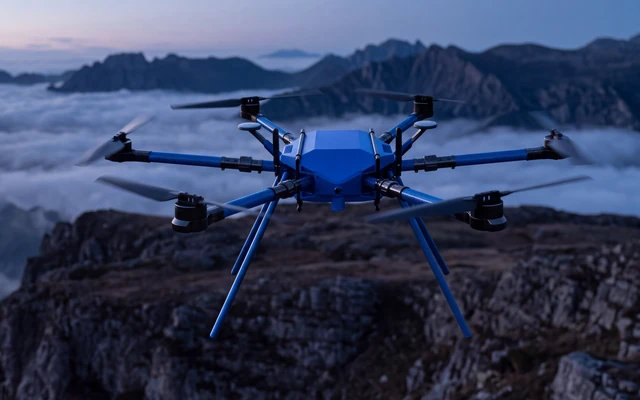
- Caisson is an uncrewed heavy-lift aircraft for resupply, a tested prototype. The logistics page covers heavy-lift drone logistics.
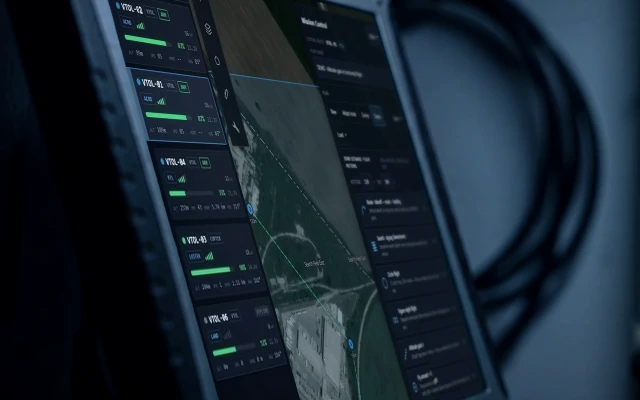
- Redoubt is command and control software that plans missions, shows one live picture and keeps a person in command of every use of force. It is in development and evaluation.
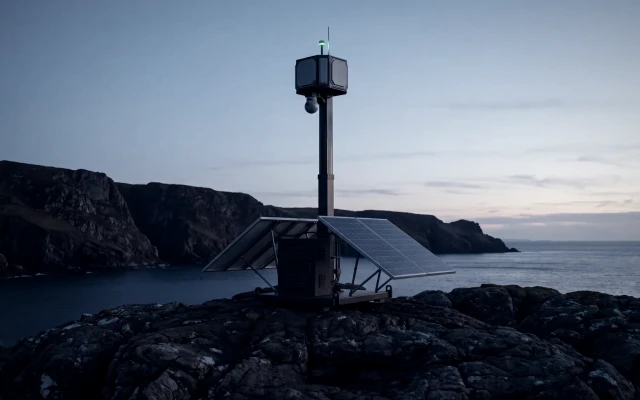
- Bartizan is a self-powered sensing tower with radar, radio detection and cameras, a concept in development.
- Stillpoint is a portable counter-drone electronic warfare unit, a concept in development.
For context, the sector includes established European companies such as Helsing, STARK, Quantum Systems, Tekever and Dedrone, each of which describes its own products on its own public pages. The EDF does not rank applicants by brand. It funds proposals that meet a call’s conditions and score well against its criteria.
Vaubren and European collaboration
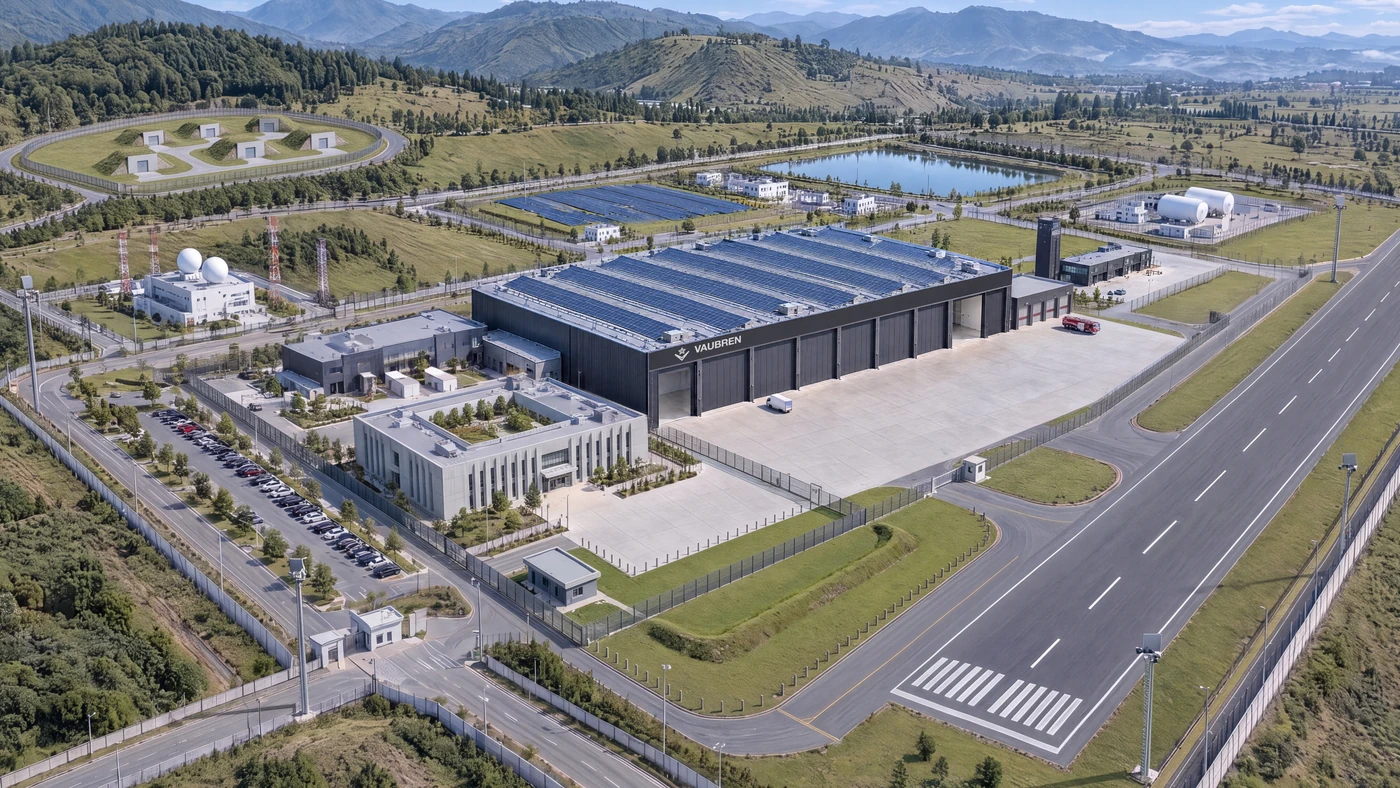
Vaubren designs aircraft, sensing, electronic warfare and command software as one integrated system for European defence. Starfort, a planned development, testing and manufacturing campus in Bulgaria, is a planned facility and not an operating one. Organisations interested in development or integration work with Vaubren can read about the company on its mission page, review the Vaubren Armory for the full system set, or start from the company overview. Vaubren states that design, software and planned manufacturing sit in one company, so European customers keep sovereign control of the whole stack. Dual-use questions often arise in joint projects, and the guide to dual-use technology and export rules explains the basic terms.
Practical checklist before a first application
- Read the current work programme and identify two or three call topics that match your technology.
- Check eligibility, including ownership and control, with the Commission’s official guidance.
- Register in the Funding and Tenders Portal and obtain a PIC for each partner.
- Contact a national contact point or ministry for the countries in your consortium.
- Prepare a short capability note: what your organisation does, at what maturity, and what it can contribute.
- Agree intellectual property and security arrangements early, since both shape consortium negotiations.
- Confirm the call opening and closing dates directly on the portal.
FAQ
What is the European Defence Fund?
The EDF is the European Commission’s programme for funding collaborative defence research and development from the EU budget. It aims to strengthen the competitiveness and innovation of the European defence industry. It operates within the 2021-2027 budget framework.
How large is the EDF budget?
The Council of the EU reports an initial budget of nearly €7.3 billion for 2021-2027, later reinforced by €1.5 billion from STEP. The 2026 annual work programme earmarks €1 billion, according to the Commission’s page, which was updated on 17 December 2025.
Can a small company apply to the EDF?
Yes. Smaller companies can join consortia, apply to SME-specific and disruptive technology calls, or seek funds through financial support to third parties. They must still meet the location and control rules. Check the current call text for exact conditions.
Is the European Defence Fund an investment fund?
No. It is a grant programme run by the Commission, not an investment product or exchange-traded fund. It pays for collaborative research and development projects selected through competitive calls. It offers no financial return to the public.
Sources
- European Defence Fund, official Commission page (Defence Industry and Space)
- Regulation (EU) 2021/697, EUR-Lex
- EU funding for defence, Council of the EU
- European Defence Fund, European Commission funding programmes page
- EDF tutorial: Submission process (PDF)
- Talks over UK joining EU defence fund break down, BBC News, 28 November 2025
About Vaubren
Vaubren is a European defence technology company developing aircraft, command software, sensing and electronic warfare as one integrated system, with a person in command of every use of force.
More insights
European UAV Procurement in 2026: Routes, Funding and EntryHow European governments buy unmanned aircraft and counter-drone systems in 2026: EDIP, SAFE, NATO's marketplace, national tenders and what new suppliers need.Aerospace Supply Chains in Bulgaria: Who Makes WhatHow Bulgaria's aerospace and defence supply chain is built: manufacturers, research centres, export controls, logistics and what partners should check.Defence Engineering Careers in Europe: Roles, Routes and PayDefence engineering careers in Europe: the roles that exist, the skills employers want, entry routes from apprenticeships to graduate schemes, and pay.